Art,
Time and
Metamorphosis
Broadly
speaking, there are two kinds of
questions one can ask about the relationship between art and time.
First, there
are questions about individual works of art. How
is the experience of time portrayed in Rousseau’s Confessions,
for example, as compared
with A La Recherche du Temps Perdu? Do
the paintings of Vermeer or Georges de la Tour possess a sense of
stillness and
atemporality not found in, say, Rubens or Delacroix? Is
the music of many Romantic composers imbued
with feelings of nostalgia, or perhaps of aspiration for an ideal
future, which
is much less evident in Baroque composers such as Vivaldi or Telemann?
These are not simply stylistic questions – questions of artistic ‘technique’. They often go to the very heart of a work’s significance, and one has only to reflect briefly on our experience of time to see why this might be so. For others, our lives are essentially chronologies – a sequence of events, a curriculum vitae; but for ourselves, our past, present and future constitute a much more fluid domain whose components often intermingle, and which rarely take the form of a simple chronology. (André Malraux once described this difference in point of view by saying that we hear the lives of others with our ears but our own lives through our throats.) If one of the functions of art – literature, visual art or music – is to capture our experience as living individuals and not simply as ‘life histories’ perceived from an external vantage-point, then the portrayal of time in a work of art may well be one of its most important and compelling elements, with a significance going well beyond the merely ‘technical’.
There
is, however, a second, quite
different question one can ask about the relationship between art and
time. In this case, one is no longer
considering
the significance of time in this or that individual work, but the general relationship between art and
time – the temporal nature of
art. Surprisingly little has been
written about this topic in recent times, even in those academic
disciplines
such as the philosophy of art in which one would most expect to
encounter it. A
number of interesting aspects of the question are discussed in the
present
collection of essays. Without trespassing
unduly on the ground covered in
those
contributions, it may however be useful to offer some further comment
here as
background to the issues raised.
The Western cultural tradition has bequeathed us a conception of the temporal nature of art which is so familiar, and so much a part of how we think about art, that we rarely give it a second thought. We say that a great work of art is one that has ‘lasted’ – unlike an ephemeral work which, like Macbeth’s poor player, struts and frets its hour upon the stage and then is heard no more. By ‘lasted’ we do not of course mean that such works have been able to resist physical destruction. In his recent book What Good are the Arts?, John Carey writes that ‘No art is immortal and no sensible person could believe it was. Neither the human race, nor the planet we inhabit, nor the solar system to which it belongs will last forever. From the viewpoint of geological time, the afterlife of an artwork is an eyeblink…’(1) This remark comprehensively misses the point. Our belief that a (true) work of art ‘lasts’ or ‘endures’ has nothing at all to do with a claim that it is able to resist destruction. (How many great works of the past, one wonders, have been destroyed by wars, natural disasters, iconoclasms, re-use for other purposes, or simple neglect? Indeed, the fragility of many works of art no doubt made them more vulnerable to the effects of time than other more robust objects.) The belief in question is of a quite different order and has to do with the apparent capacity of certain works – a Hamlet, a Mona Lisa, a Magic Flute, for example – not only to impress their contemporaries but also to exert a fascination on subsequent ages, while so many other works have faded into oblivion. It has to do with a power of certain works to transcend time in the sense that, unlike so much else – ranging from the latest fad to beliefs about the nature of man, the gods, and the universe – they are able to escape consignment to what André Malraux aptly terms ‘the charnel house of dead values.’(2)
In a sense, all this is a statement of the obvious: as we have said, the idea that a great work of art ‘endures’ is so familiar to us that we rarely give it a second thought. Yet once we begin to reflect seriously on the proposition, it is surely a puzzling one, and even – if we choose to set aside the abundant evidence in its favour – rather implausible. How, after all, could certain works ‘transcend time’? What precisely does that mean? What property could such works possess that might bring this about? And then, assuming one could answer those questions satisfactorily, what significance might we place on this apparent power to defy the ravages of time, and how might it affect our thinking about the human importance of art? Resolving all these dilemmas is a task beyond the compass of these introductory remarks, but some brief reflections on our Western cultural inheritance, and the world of art as we now know it, may help point the way forward.
It is
useful to begin with the
Renaissance which was confronted with these questions in a form that
made them difficult
to ignore. How could it be that the
rediscovered
works of
The impression this pattern of thinking has left on Western culture has been deep and lasting. By the eighteenth century when, somewhat belatedly, philosophers began to offer a systematic account of art – to be christened ‘aesthetics’ – the notion of beauty was at the centre of its explanation, and writers took it for granted that the finest works foregathered, along with those of Greece and Rome, in a timeless realm of balance, order and harmony, sometimes called the realm of the beau idéal. In many quarters, moreover, this thinking continues to have its advocates. The vocabulary has altered somewhat, and references to Greek mythology are usually omitted, but for many critics and aestheticians today, art, whether visual art, music or literature, is still explicable essentially in terms of ‘beauty’; and while most writers of this persuasion would, in this materialist age, doubtless shrink from terms such as ‘immortal’, ‘eternal’ or even ‘timeless’, there remains, as we have said, a widespread, if seldom clearly formulated, assumption that a true work of art is one that possesses a capacity to ‘last’ or endure’ which its weaker rivals do not.
The question that confronts us today – the question that largely motivated the conference of which the essays in this volume are the outcome – is whether or not this traditional explanation of the relationship between art and time is still viable, and, if not, what kind of account might be put in its place. For while it seems as true now as it apparently seemed to thinkers in previous centuries that art possesses a peculiar power to endure which other products of human culture do not, the explanation we have inherited from those thinkers has begun to look decidedly threadbare and unconvincing.
Three factors in particular have weakened its hold. The first is the disintegration of the idea of beauty. The proposition that art is explicable in terms of a beau idéal started to lose plausibility in the early decades of the twentieth century when the rubric ‘art’ began to encompass works which no longer seemed to have any connection with such an ideal – that is, when the boundaries of art began to extend beyond Michelangelo, Raphael, Titian and their post-Renaissance successors to take in the visual worlds of (for example) Pre-Columbian gods and African masks, modern artists such as Picasso, and pre-Renaissance Western art such as Romanesque sculpture or medieval paintings such as the Isenheim Altarpiece. Advocates of the theory of beauty have, of course, tried to adjust to this new situation by expanding the theory to cover cases such as these, but the result, not surprisingly, has been a concept of beauty so abstract and anaemic that it ceases to be of any explanatory use.
Second, there was the nineteenth’s century’s fascination – which we still largely share – with the idea of history. Though seldom stated simply and clearly, the problem this poses for the traditional explanation of the relationship between art and time is quite straightforward. If something is understood as timeless, then in its essence (one can perhaps make concessions at the margin) it is exempt from change: it is unaffected by the vicissitudes of time and circumstance. If art is timeless, it would therefore be essentially outside history and beyond the reach of history’s explanatory categories. This implication was, unsurprisingly, not acceptable to a number of nineteenth century thinkers. It was challenged very directly by Hegel who placed art firmly within the ambit of history and made it the subject of a teleology – ending, indeed, with art’s demise – and the assaults continued with Taine and Marx and a series of post-Marxist thinkers up to the present day, all of whom have declined to exempt art from the historical process (however conceived). Art, on this view, is fundamentally a creature of its times. No less – and perhaps, some suggest, even more – than all other human activities, it bears the marks of its times, and plays its part in strengthening or subverting dominant ideologies and social arrangements. To locate its essential qualities in a changeless, ‘eternal’ realm removed from the flow of history would be an ‘idealist’ illusion, false to art and history alike.
Serious though it has been, this attack on the notion of timelessness has not been fatal. The argument has its own Achilles' heel which, curiously enough, Marx himself identified, in a passage in the Grundrisse (which, incidentally, many of his followers seem to have overlooked):
Due allowance made for a degree of deference to Antiquity which we today would probably regard as excessive (do we still regard Greek art ‘the standard and model beyond attainment’?), the underlying point here is difficult to ignore. The more strongly one insists on the importance of the links between a work and a particular historical context, the greater the difficulty one has in explaining why it should be able to transcend that context and evoke the admiration of subsequent ages, perhaps centuries, or even millennia, afterwards. To choose a different example, Richard III and the countless politico-religious tracts that circulated in Elizabethan England were both, one might say, ‘products’ of the same historical context, but the latter have been long forgotten, except by specialist historians, while Richard III lives on and continues to impress us. History alone, in other words, seems to leave something crucial out of account where the relationship between art and time is concerned. The more heavily and exclusively one relies on it – irrespective of the theory of history one might choose – the more, as Marx seemed to recognise, the temporal nature of art eludes explanation.
Today,
however, there is a third factor at
work whose implications for the traditional explanation are much more
serious. The nature of the problem
soon becomes clear
if one takes account of the full
extent
of the realm of art as we know it today. ‘Art’
no longer simply means, as it did for more than four
centuries
during the reign of the ideal of beauty, the works of the
post-Renaissance West
and selected works of
This process is most easily discernible over long periods of time, which is why the examples chosen in this discussion have mostly been from the field of visual art where the evidence remaining to us is so much more plentiful. (What do we know of the music of ancient Sumerian civilizations – or even of ancient
There is much more to be said on this topic. If our modern concept of art does not depend on the notion of ‘beauty’, on what does it depend? If there was a major expansion in the scope of art in the early years of the twentieth century, what brought it about? If art survives through a process of metamorphosis, how do we explain this capacity – that is, what quality in art makes is possible? And what precisely is the importance of this power of metamorphosis and resurrection for our understanding of the human significance of art? These major questions are beyond the scope of these introductory remarks whose aim has simply been to sketch in the outlines of some of the issues raised by the topic ‘Art and Time.’ As indicated earlier, the topic has suffered from widespread neglect in recent times even in fields such as the philosophy of art in which one would certainly not expect this to be the case. The present volume will perhaps be a first step towards remedying this situation.
This essay is the
introduction to
a collection of essays entitled Art and
Time
recently published by the
Surprisingly
little has been
written about [the temporal nature of
art] in recent times, even in
those academic
disciplines
such as the philosophy of art in which one would most expect to
encounter it.
The belief that a (true) work of art ‘lasts’ or ‘endures’ has nothing at all to do with a claim that it is able to resist destruction ...
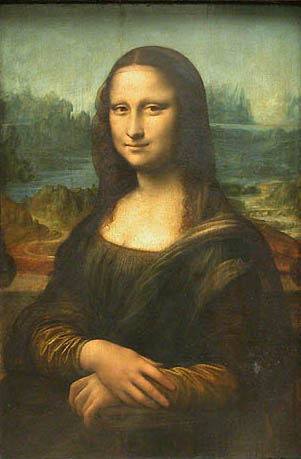
... It has to do with a power of certain works to transcend time ...
The answer that was given is familiar to us: the works of Antiquity, like those the Renaissance artists were themselves bringing into being, possessed a demiurgic power called ‘beauty’, and beauty, like the goddess Venus so often chosen as its supreme representative, is ‘immortal’.
The question that confronts us today ... is whether this traditional explanation of the relationship between art and time is still viable, and, if not, what kind of account might be put in its place.
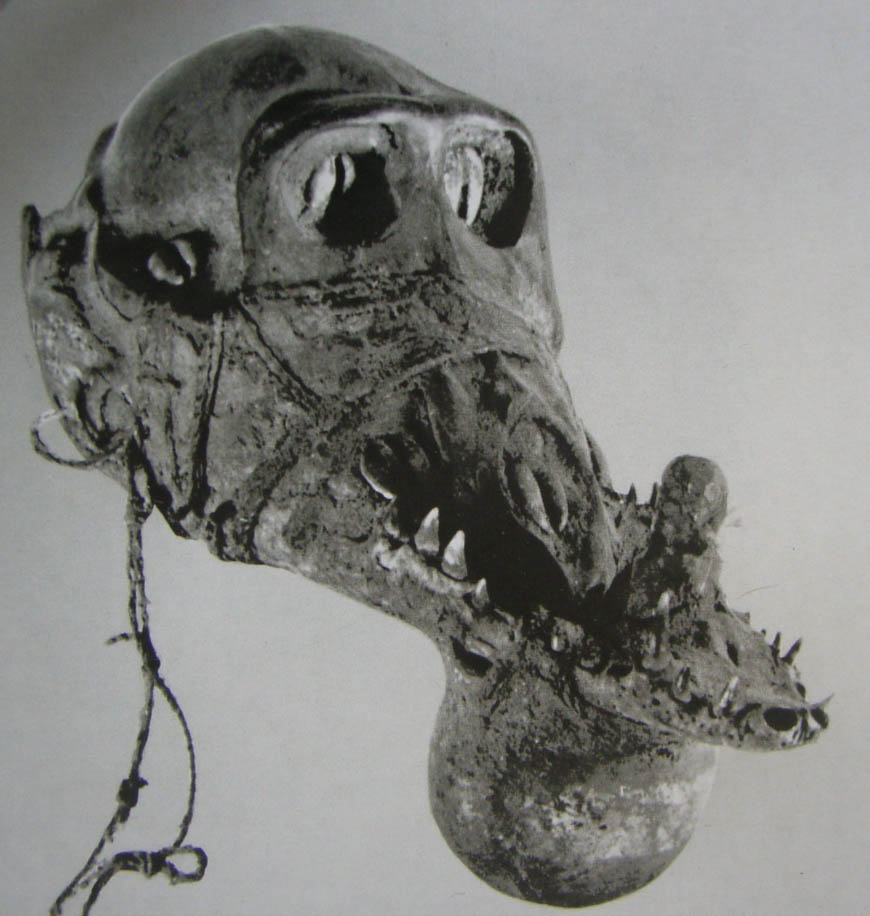
Voodoo mask
- Dahomey
Art, on this [historical] view, is fundamentally a creature of its times. No less ... than all other human activities, it bears the marks of its times, and plays its part in strengthening or subverting dominant ideologies and social arrangements.
History alone ... seems to leave something crucial out of account where the relationship between art and time is concerned.
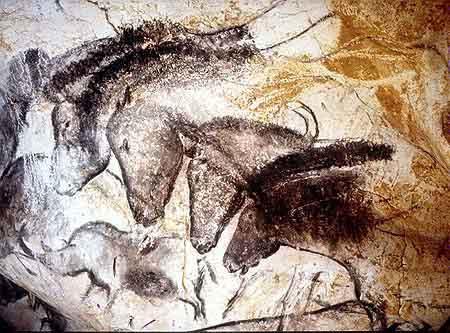
Horses - Chauvet, France. (approx
30,000 BC)
Art as we know it today ... seems far less beholden to a quality of timelessness than, as André Malraux has argued, to a capacity for resurrection and metamorphosis, processes in which time has played an integral part.
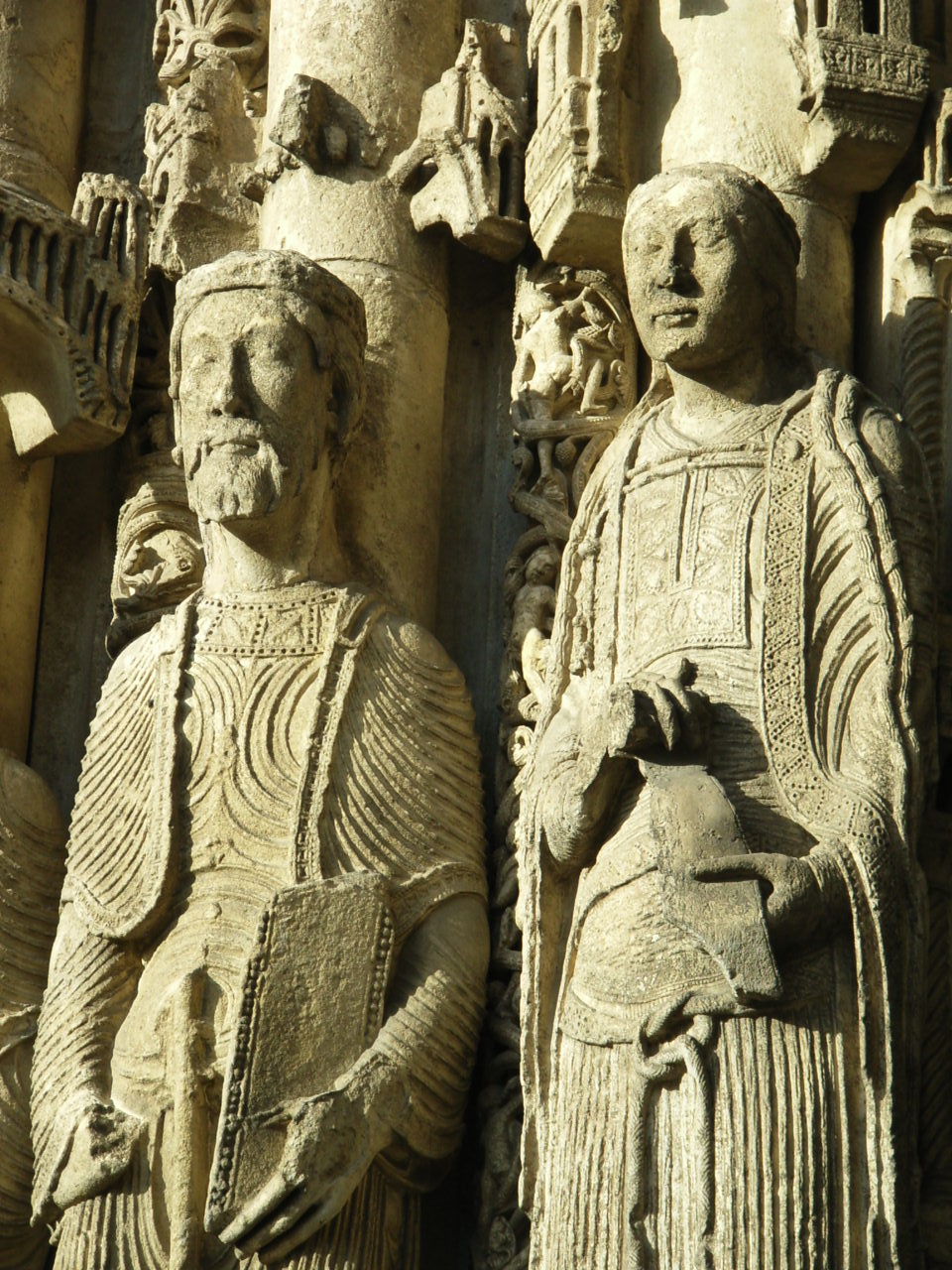
Chartres
... Such works have
certainly
‘lasted’ (unlike many others that have not); but how
have they lasted? Timelessly,
or though a process of metamorphosis?