Home
THE ART OF OTHER CULTURES

We have few qualms about asserting that a Rembrandt self-portrait, Delacroix's Lion Hunt, or Picasso’s Guernica, are ‘works of art’.  These objects, we know, were created to be works of art in a Western cultural context in which the concept 'art' was familiar and accepted.  What justification can we have, however, for  categorising as 'art' objects such as an African tribal mask, an Aztec rain god, or an Indian bodhisattva - that is, objects created for religious or ritual purposes in cultures in which the concept 'art' did not exist?1

The following analysis considers two answers that have been given to this question in the theoretical literature.  The first argues that the key factor to consider is the relationship of the artefact to the culture from which it came.  If an artefact can be seen as ‘expressive’ of its culture, and appears to have enjoyed a status within that culture similar to the status accorded to works of art in our own, there are, according to this view, good grounds for regarding the artefact as a work of art.  The second approach focuses heavily on the visual characteristics of the object.  The key consideration in this case is whether or not the artefact possesses certain visual qualities that are characteristic of works of art everywhere and at all times - qualities that are regarded as, in effect, elements of a ‘universal aesthetic’.  The following discussion examines both these propositions.2

***

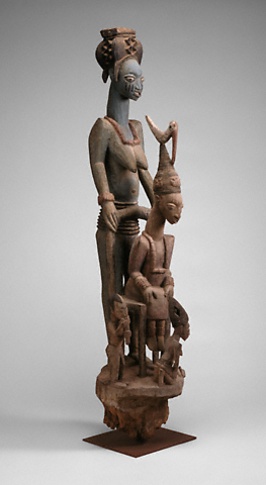
The first claim - that the key consideration is the relationship of the object with the culture from which it comes - is set out concisely in a paper by David Novitz.  Taking his examples principally from African tribal societies such as the Baule, Venda, and Yoruba peoples, Novitz argues that the essential prerequisite for evaluating artefacts from such cultures is a thorough understanding of the values and beliefs of the cultures concerned.  A basic requirement for Western art critics, Novitz writes, is that they should ‘have understood enough of the relevant culture to describe tribal artifacts, correctly and equivocally, as “works of art” - that is, as “works of art” in the very same sense that Michelangelo’s David is a work of art’.  Expanding on this idea, Novitz argues that

… we cannot decide whether an artifact is a work of art until we know an awful lot about the society that it came from, the way such artifacts are regarded and treated, the values that they embody and express, and the lives that they enrich ...  In other words, we have first to know that an artifact is authentically expressive of Yoruba values and beliefs before we can hope to identify it as an authentically Yoruba work of art.  And we can identify it as a work of art in Yoruba culture, only if the social arrangements that surround it are sufficiently similar to the social arrangements that allow us to regard certain artifacts as art in our own culture.3
In Novitz’s view, then, there are two key conditions to satisfy before an object from another culture can be classified as a work of art:  first, one needs to understand the values and beliefs of the culture, and feel confident that the object is an authentic expression of those values and beliefs; and second, one must decide whether or not the social arrangements surrounding the object in its original cultural setting are sufficiently similar to those applying to works of art in our own culture.

The proposition seems attractive enough at first glance, not least because it seems to suggest a kind of ‘cultural equity’.  That is, Novitz seems to be suggesting that the values of the culture in which the artefact originated should, to some degree at least, influence the evaluation placed on it by contemporary Western society.  Yet, on closer examination, problems begin to emerge.  To begin with, there is the straightforward, practical question of what one can know about many of the cultures in which artefacts now regarded as works of art originate.  Novitz uses African tribal cultures as his main examples, and it is true that for cultures such as these that are still extant (albeit often heavily influenced by Western thinking) much can be learnt about traditional values and beliefs, and even, on occasion, about attitudes towards specific objects.  There are, however, many cases where this is not true. There are many cultures for which our understanding of values and beliefs is fragmentary at best, and our knowledge of the purposes of particular objects non-existent.

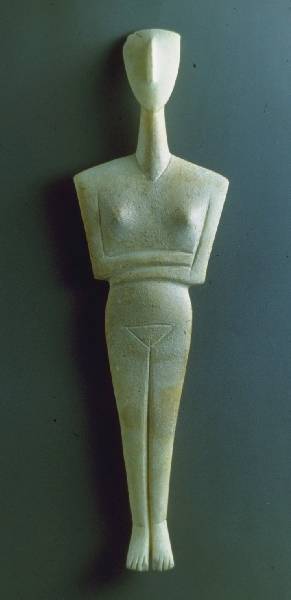
The cultures responsible for the Palaeolithic cave paintings at Lascaux and Altamira are examples.  The meagre information archaeology has been able to glean about the cultures that created these superb images covers little more than matters such as diet, tool use, burial customs, and approximate numbers of people in each community.  Nothing at all is known (as distinct from conjectured) about the values and beliefs of the communities concerned, or about the original purposes of the paintings.  Some commentators suggest that the paintings had a ‘magical significance’ or played a role in ‘hunting rituals’, but this is, and is always likely to remain, nothing more than speculation.  There are many other instances where information is similarly scarce.  Some of the marble figurines from the Neolithic culture of the Cyclades feature today as prize exhibits in art museums; 4 yet very little is known about the values and beliefs of the Cycladic culture, and virtually nothing about the significance of the figurines.  The situation is often similar for vanished cultures closer to us in time.  While archaeologists and historians have managed, for instance, to learn a considerable amount about the civilisations of ancient Mesopotamia, the Indus Valley, and Meso-America, many gaps remain, and there are numerous artefacts from those cultures now regarded as works of art whose original significance is quite unknown.  Educated guesses are of course always possible, but one is still a long way from knowing, in Novitz’s words, ‘an awful lot about the society that [the artefact] came from [and] the way such artefacts [were] regarded and treated’.

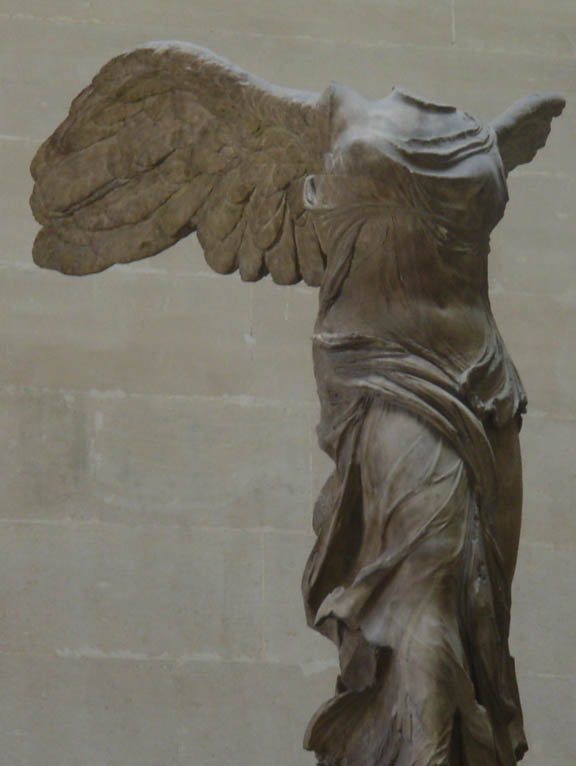
There is a further interesting dimension to this problem.  In those cases where we have a reasonably good understanding of the values and beliefs of vanished cultures, and even of the original function and significance of artefacts now regarded as a work of art, this very knowledge can itself generate perplexities.  The sculpture of ancient Greece affords ready examples.  After centuries of scholarship into aspects of ancient Greek culture, we may perhaps be reasonably confident that we have a good understanding of the values and beliefs of (for instance) the Hellenistic society for which the Niké of Samothrace was created.  We even know with reasonable certainty that the statue’s intended purpose was to render thanks to the goddess of victory for a triumph in war - probably a battle at sea.  One can very easily forget, however, that the famous Victory of Samothrace that now lifts its wings majestically above the main staircase of the Louvre, and seems justly admired as one of the glories of Western art is, in fact, like many other damaged pieces of sculpture from ancient civilisations, a mutilated version of the original - missing its head and arms.  One can only conjecture how the statue as it is now might have been ‘regarded and treated’ (to employ Novitz’s terms) by the community that originally placed it - presumably then intact, and in all probability brightly painted - on a hillside on Samothrace around 200 BC.  One must surely admit the very real possibility that the 'Winged Victory' that we now admire might well have been roundly rejected by that community, and regarded as a spoiled object quite unfit for its intended purpose.  In other words, paradoxically enough, ‘knowing an awful lot’ about the society in which an artefact originated, and about the ways in which it was likely to have been 'regarded and treated', may well pose problems no less substantial than knowing little or nothing about these matters.  Far from helping us decide whether an object is a work of art, our knowledge in such a case (and there are many similar examples) can, oddly enough, call into question the appropriateness of judgments we have made - judgments which, if the admiration we readily accord a work such as the Niké of Samothrace is any guide, we would often be extremely reluctant to alter.

Thus far, the discussion has focused principally on issues related to the artefact's original cultural setting.  Novitz’s proposition, however, also raises an important matter concerning the role of art in the contemporary Western context.  As we have seen, one of the two conditions his statement requires an artefact to satisfy if it is to qualify as a work of art is that ‘the social arrangements that surround it are sufficiently similar to the social arrangements that allow us to regard certain artifacts as art in our own culture.’  The word ‘sufficiently’ is obviously somewhat question-begging here, but there is another, more important issue at stake.  Novitz’s condition obviously cannot be satisfied unless we are able to describe, as one element, the ‘social arrangements that allow us to regard certain artifacts as art in our own culture’.  What then are the relevant contemporary ‘social arrangements’?  The answer one gives will obviously depend in large measure on how broadly one interprets the phrase ‘social arrangements’ - which might cover a multitude of factors, large and small.  In fairness to Novitz, however, it does seem possible to identify at least some of the more obvious features of the arrangements that now surround works of art - features, that is, that can be readily observed today in most Western and Western-influenced societies.  In the case of moveable objects, a basic feature is that works of art are usually kept in art museums - that is, in places where they can be carefully preserved, placed on public display, and located among other objects regarded as having the same status. 5  In the case of objects difficult to move, such as large sculptures, mosaics, frescos, and stained glass windows, similar arrangements are usually made in situ - that is, efforts are made to protect and preserve the object, and make it accessible to the public wherever possible.  In short, the art museum - or, for fixed objects, the ‘philosophy’ of the art museum - plays a very prominent role in contemporary social arrangements surrounding objects regarded as works of art.  Indeed, one might almost say that, for moveable objects at least, visual art in contemporary Western society is, in practical terms, largely synonymous with what is found in, or destined for, the art museum.6

If this is so, however, Novitz’s proposition - that artefacts from other cultures qualifying as works of art should be surrounded by social arrangements similar to those applying to works of art in our own - would surely have unacceptable consequences.  Such a requirement would in fact disqualify artefacts from all cultures other than our own - simply because nothing similar to the art museum as we now know it has ever existed in any culture other than our own.  The well-established place of the art museum in Western society can easily lead us to overlook this fact.  As André Malraux wrote in The Voices of Silence in 1951,

So vital is the part played by the art museum in our approach to works of art today that we find it difficult to realise that no museums exist, none has ever existed, in lands where the civilisation of modern Europe is, or was, unknown; and that, even amongst us, they have existed for barely two hundred years.7
One might perhaps reply that, while the art museum as an institution did not exist in other cultures, the ‘social arrangements’ that did apply were nonetheless broadly similar in kind.  The argument bears little scrutiny.  To begin with, as we have noted, a key aspect of art museum practice is a commitment to the careful protection and preservation of works in a collection - a policy based on the view that each item is unique and irreplaceable.  Yet even this idea, which modern Western society takes for granted where art is concerned (whether in a museum or not), is far from universal among the cultures from which artefacts now regarded as works of art have been drawn.  The anthropology of African tribal societies, for instance, records numerous instances in which the preservation of carvings, masks, and other items of a kind now often found in art museums, was not regarded as necessary or important.  Essential though they often were for ceremonies and rituals, such objects were not infrequently neglected and allowed to decay.  Uniqueness, similarly, was not always an important consideration since, as Jennifer Wilkinson points out in relation to certain African tribal communities, ‘when artefacts become damaged or weathered and are no longer suitable for the purposes for which they were made, they are discarded and replaced by new ones.’8


This essay deals with some of the issues raised by classifying objects from other cultures as art.  The paragraphs given here were originally part of a longer essay, the rest of which I was subsequently not happy with.  These extracts may, however, be of some interest as they stand since they deal with some of the key  issues in the theoretical literature.
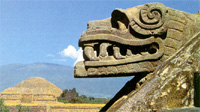
  

Teotichuacan
Feathered serpent,
Teotichuacán


Yoruba - Verandah post


Cyclades - Female Figurine (2500-2000 BC) marble
Cyclades - Female Figurine
(2500-2000 BC) marble


Nike of Samothrace

The emphasis on public exhibition, which is another major aspect of art museum practice, is also quite foreign to the practices of many cultures whose artefacts are now found in art museums.  Ancient Egypt is an obvious example.  Large numbers of Egyptian artefacts now on display in art museums were originally created for the express purpose of being sealed up permanently in tombs, a practice with many parallels in other early cultures.  In addition, anthropology provides numerous examples of tribal societies in regions such as Oceania and Africa in which items such as ritual carvings or masks were kept strictly away from prying eyes and shown only to a select circle of initiates on rare occasions.9   Practices such as these run quite contrary to the notion of public exhibition and are clearly quite at odds with contemporary ‘social arrangements’ for works of art.

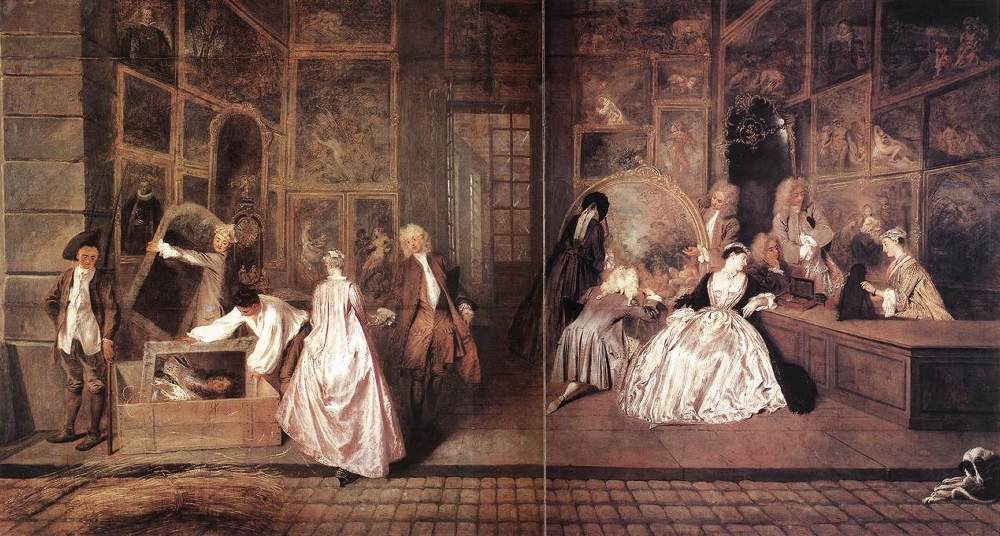
Finally, an important characteristic of the major, non-specialist, art museum is that it often brings together under the same roof, and even within the same gallery space, objects from a range of different cultures - cultures often geographically distant from each other or separated by long periods of time.  This practice has no equivalent in other cultures, even in those in which trade or conquest brought relatively frequent contact with other societies.  In many cases, of course, the style of one culture's sculpture or painting was influenced over a period of time by the styles of others, but that is a different proposition.  The art museum as we know it provides a space in which objects in different styles and from different cultures are displayed together, often side by side, a practice quite foreign to other cultures and even to Western culture itself for much of its history.  'Sculpture' for Phidias and his co-workers meant achievements such as the Parthenon frieze, not exhibitions of their work side by side with sculpture from Egypt or Mesopotamia.  Even as late as the eighteenth century, as paintings such as Watteau’s L’Enseigne de Gersaint suggest, a European connoisseur’s encounter with the ‘fine arts’ was usually confined to a relatively circumscribed European catalogue.10

Watteau - L'Enseigne de Gersaint

In short, even setting aside the art museum as an institution, and thinking only in terms of the practices and attitudes it represents, Novitz’s proposition - that an artefact from another culture can only be considered a work of art if the social arrangements surrounding it are similar to those applying to works of art in our own - would still exclude as sources of art large numbers of cultures whose artefacts are in fact widely represented in today's art museums - and would even exclude Western culture itself for much of its history.  One might perhaps attempt to overcome this problem by describing the 'social arrangements' surrounding works of art in an even looser fashion - avoiding, for example, any reference at all to the art museum or its practices.  This option, however, simply generates problems of another kind.  To accommodate all other cultures, the description would need to be very general indeed, since it would be required to encompass social arrangements surrounding artefacts that served a wide variety of religious, ritual and commemorative purposes, and which, in many cases, came from societies in which the very notion of art, in anything approaching its contemporary sense, was quite unknown.  Such a broad, non-specific description is no doubt conceivable (at least for those cultures where the relevant social arrangements can still be ascertained), but the obvious problem is that its very breadth and lack of specificity would render it virtually useless as an analytical tool.  When applied to the contemporary Western context, such a description would almost certainly encompass large numbers of objects that one would not wish to categorise as works of art (such as objects valued in contemporary society for religious, ritual or commemorative reasons.)  Loose interpretations of Novitz’s proposition such as these seem, in short, no more promising than that already considered.

In summary, then, the general position Novitz outlines does not stand up well to scrutiny.  As we have seen, the suggestion that identifying works of art depends on ‘knowing that [one has] understood enough of the relevant culture’ runs into major problems when put to the test.11  In many cases, this requirement is simply impossible to fulfil because the necessary information is not available; and, paradoxically, even where it is available, other problems emerge, as the example of the Niké of Samothrace illustrates.  Casting about for similarities between 'social arrangements' surrounding artefacts from other cultures and those surrounding works of art in our own also turns out, as we have seen, to be an unpromising option.   Novitz's approach seems, in short, to offer no satisfactory basis for the classification of artefacts from other cultures as works of art.   The remainder of this discussion will consider another alternative that has often been proposed.

***

As indicated earlier, the alternative approach pays little attention to cultural values and beliefs, but focuses instead on the visual characteristics of the object itself.  In essence, the claim here is that an object from another culture is a work of art if it displays certain aesthetic properties common to works of art everywhere and at all times - that is, if it embodies certain ‘aesthetic universals’.  The viability of this proposition as a practical, explanatory tool obviously depends crucially on whether one is able, as the first step, to specify what the aesthetic universals in question might be.  Attempts to do this in the relevant literature are in fact relatively scarce and tend quite frequently to have come from writers approaching art from the perspective of the social sciences rather than the philosophy of art.12   One example is Ellen Dissanayake's book, Homo Aestheticus - Where Art Comes From and Why which discusses art from a perspective that the author describes as ‘the long view of human biological evolution.’  Dissanayake argues that certain ‘aesthetically special’ activities - art being a key example - have been ‘selected-for’ in human evolution for their emotional, perceptual and cognitive benefits.  The key characteristics of the ‘aesthetically special’, she contends, are that it indicates that ‘something is wholesome and good: for example, visual signs of health, youth, and vitality such as smoothness, glossiness, warm or true colours, cleanness, fineness, or lack of blemish, and vigor, precision and comeliness of movement’.13

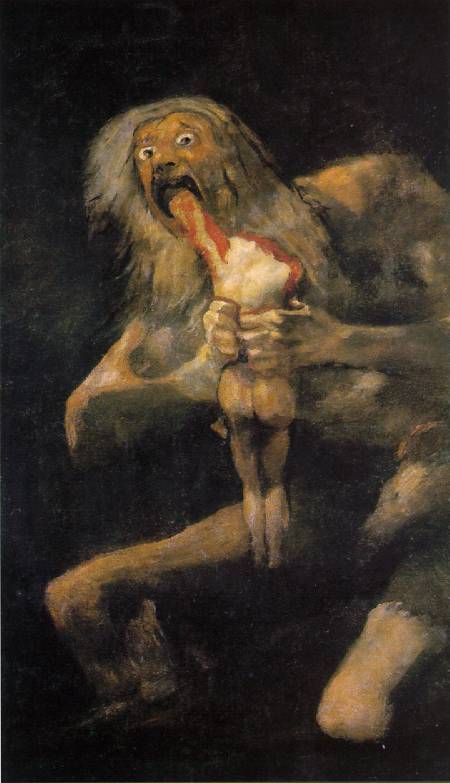
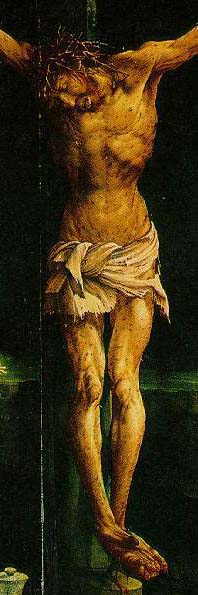
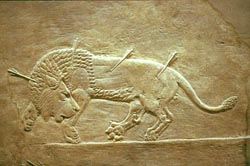
If proposed as a description of an 'aesthetic universal' - and this certainly appears to be Dissanayake's intention - this statement runs into obvious difficulties.  Even within the field of Western art there are many examples of widely admired works that can scarcely be said to portray the ‘wholesome and good’.  Much of Goya (such as Saturn Devouring His Son, or the Disasters of War etchings), Bosch's evocations of Hell, and even certain Rembrandts (such as The Slaughtered Ox), spring to mind. ‘Comeliness of movement’ (to choose just one of Dissanayake's suggested indicators of the ‘wholesome and good’) might perhaps be a relevant description of Classical Greek sculpture, and perhaps of the treatment of the human figure by painters such as Raphael or Botticelli, but it hardly seems a phrase one would apply to the figure of Christ on the cross in the Isenheim Altarpiece or the figures in the Romanesque tympanum at Autun.  Examples are no less readily at hand in the art of other cultures.  African and Oceanic art includes many fine masks and carvings whose uncanny evocations of the supernatural seem often to derive from qualities directly opposite to those listed in Dissanayake's formula.  Similarly, the pitiless worlds depicted in Assyrian and Pre-Colombian art often seem more concerned with the supremacy of violence and death than with the anything resembling the wholesome and the good.14   Further examples are perhaps unnecessary.  Exceptions to Dissanayake's formula abound, and while it may no doubt apply to some works of art, the characteristics it lists could scarcely be regarded as aesthetic universals.

The topic of aesthetic universals has also, not surprisingly, been of considerable interest to the discipline of anthropology.  Here a somewhat different approach has prevailed.15   Central to much anthropological writing on the topic has been the idea of skill.  ‘In the western world’, writes the anthropologist Richard Anderson, ‘art has traditionally referred to “skill in performance, acquired by experience, study or observation” ... or to the results produced by such skill’.  In addition, he continues, ‘there is historical precedent for using this definition cross-culturally, with Boas saying as early as 1916 that “all art implies technical skill”’.  Enunciating the idea as a formal definition of visual art, Anderson writes that

Those things are considered to be art which are made by humans in any visual medium and whose production requires a relatively high degree of skill on the part of the maker, skill being measured, when possible, according to the standards traditionally used in the maker's society.16
A preliminary point to notice here is that one element of the definition relies on the kinds of factors analysed in the previous section of this discussion.  If skill is to be measured by ‘the standards traditionally used in the maker's society’, the terms of the definition have immediately referred to matters beyond the object's purely visual characteristics.  The values of the culture in which the object originated have now been introduced into the equation, and with them the kinds of problems this involves - including whether these values can even be known.  The phrase ‘when possible’ in Anderson's definition does not remove this difficulty, merely serving to introduce an element of uncertainty about how important the standards in question are.


Saturn devouring one of his sons
Goya: Saturn devouring his son


Christ - Isenheim Altarpiece


More importantly perhaps, defining art in terms of skill runs the obvious risk that the definition will encompass far more than one would wish to include under the heading 'art'.  Skill - even a ‘relatively high degree of skill’- is required for the production of a wide range of objects, such as weapons, dwellings, boats, baskets, clothes, and footwear.  If produced by another culture - a so-called ‘primitive’ society or an ancient civilisation - such items may well have anthropological or archaeological interest but will very often not be regarded as works of art.  Recognising this difficulty, anthropology has sometimes sought to limit the definition of skill in various ways.  One has been to suggest a distinction between skill directed to purely ‘utilitarian’ ends and skill that appears to be devoted to purposes beyond the merely useful.  The distinction is sometimes illustrated by examples such as weapons embellished with carved motifs where the motifs appear to serve no practical purpose in terms of the efficacy of the weapon.  Skill directed to such a ‘non-utilitarian’ end, it is suggested, is skill devoted to what one can legitimately call artistic or aesthetic purposes.  The argument quickly runs into difficulties.  A key problem is the question-begging nature of the term ‘utilitarian’ when applied to cultures other than our own.  In a society that believed firmly in divine powers, for example, images of the gods are unlikely to have been seen as mere decoration or embellishment.  If the religious beliefs were strong enough, they were quite possibly seen not simply as useful but as necessities.  Similarly, even motifs on a weapon, which might now be interpreted simply as decoration, could well have been seen in their original context as potent additions to the weapon's power and reliability.  In short, the distinction between the utilitarian and the non-utilitarian is likely to be much less straightforward than it first seems.  While it may superficially appear to be a standard that appeals to nothing more than visual appearance, it cannot in reality be invoked without introducing questions about the values and beliefs of the society in which the object was produced - with all the problems this involves.17

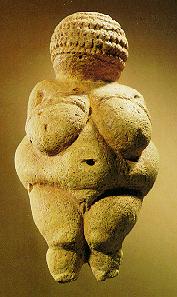
Another suggested way of characterising the kinds of skill required by art is to introduce the idea of the ‘aesthetically pleasing’.  According to this proposition, the kind of skill required in the production of art is skill intended to produce aesthetic pleasure.  Formulating this as a ‘working definition’ of art (and expanding it to include music and dance), the anthropologist Gary Ferraro writes that the term art refers to ‘both the process and the products of applying certain skills to any activity that transforms matter, sound, or motion into a form that is deemed aesthetically pleasing to people in a society’.18   This proposition raises problems similar to those just discussed.  Once again, the definition goes beyond the visual appearance of the object and appeals to the values and beliefs of the culture in which the object originates.  While in some cases there may be evidence that members of a particular society would have applied a term equivalent in meaning to ‘aesthetically pleasing’ to a given object (assuming such a term were available to them), there will be many instances, especially where vanished cultures are concerned, where it will simply not be possible to say with any confidence what was thought or felt about the object.  Moreover, it is quite conceivable that an item found aesthetically pleasing by the society in which it was made (assuming that one could be confident that this was their perception) might not be so regarded in Western society today.  It is presumably possible, for example, that prehistoric artefacts such as the obese ‘Venus’ of Willendorf were regarded as ‘aesthetically pleasing’ by their Palaeolithic contemporaries.  Certainly, the numbers of such figurines produced suggests they were looked upon favourably in some way.  Yet while now regarded as important archaeological items, figurines of this kind are not always seen as works of art.  There is a converse to this thinking.  Many African dance masks, for example, that are now viewed as works of art might well have been designed to inspire a sense of supernatural dread, rather than ‘aesthetic pleasure’, in those who originally beheld them.  Similarly, the Egyptian sculptors of colossal statues such as those of Rameses II at Abu Simbel might well have been more interested in evoking feelings of awe and reverence in the Egyptian peasantry who gazed up at them than in affording the kind of visual delight that the term ‘aesthetically pleasing’ suggests.  In short, a definition such as Ferraro's raises as many questions as it answers.  Attempting to rescue Anderson's ‘skill’ definition of art by adding the idea of aesthetic pleasure seems no more promising an option than linking it to the notion of the ‘non-utilitarian’.

Finally, it is worth commenting briefly on an amended version of Anderson's definition that he himself has proposed in his more recent study of the anthropology of art, Calliope's Sisters.  Anderson continues to regard evidence of the maker's skill as an important feature of art but now adds that art must also be understood as ‘culturally significant meaning’, because, he explains, ‘art reaches its highest purpose when it conveys meanings of significance for a culture's spiritual, philosophical or ethical traditions’.19   In the light of what has been said above, little perhaps need be added to indicate the problems this proposition gives rise to.  Once again, the definition relies on information related to an artefact's cultural origins.  The notion of an artefact ‘[conveying] culturally significant meaning’ is in essence similar to Novitz’s concept of an artefact that is ‘authentically expressive’ of a culture's values and beliefs - and runs into the same difficulties.  Just as one would need to understand a culture's values and beliefs before one could decide if an object were expressive of them, so one would need to understand a culture's ‘spiritual, philosophical or ethical traditions’ before one could assess whether an object conveyed ‘meanings of significance’ for those traditions.  And as we have now seen, this path often leads straight into the realm of conjecture and guesswork.

***

Visual art today encompasses objects from a wide variety of cultures, many with values and beliefs very different from those of the West, and often very distant in time.  Countless objects that were once - and often as late as the early twentieth century - regarded as the earnest but clumsy attempts of untutored primitives are now to be found among the prize exhibits of art museums - and not simply as examples of a supposed ‘childhood’ of art, as nineteenth century commentators were prone to argue, but as objects as much a part of what art now signifies as a sculpture by Michelangelo, or a painting by Picasso.  The present discussion has not sought to identify the causes of this huge shift in perception and sensibility - important though that issue is - but simply to consider how effectively some of the relevant thinking in the philosophy and anthropology of art has responded to these vastly expanded horizons.  Specifically, the discussion has considered the question of how artefacts from other cultures might justifiably be classified as works of art, and has examined the two prevailing answers given to this question: the view exemplified by David Novitz’s article, 'Art by Another Name: The Identification of Art Across Cultures', that the key to this process lies in understanding the culture in which the artefact originated; and second, the proposition illustrated by the work of Ellen Dissanayake and anthropologists such as Richard Anderson and Gary Ferraro, that an artefact from another culture can be considered a work of art if it exhibits certain visual characteristics shared by all works of art at all times.  Both propositions have been shown to have major weaknesses.  Among the difficulties encountered by the first are: the practical problem that in many cases a reliable understanding of the relevant values and beliefs is simply not available; second, the puzzling realisation that, as the example of the Niké of Samothrace illustrates, we may in fact prefer our own judgement about a particular object to that which the values and beliefs of its culture of origin might perhaps lead us; and third, the evident futility of attempts to identify works of art by seeking to identify social practices and attitudes in the cultures of origin similar to those applying to works of art in contemporary Western culture.  The second proposition - the notion of the universal aesthetic - would, if it were to furnish statable reasons for the classification of particular objects as works of art, need to be able to describe what the universal aesthetic features of works of art might be.  The analysis given above suggests there are major shortcomings in the versions so far proposed - a result that is scarcely surprising, one might add, given the lengthy and generally unimpressive history of attempts in the broader field of aesthetics to identify such universals.  As David Novitz - who roundly rejects this approach - aptly comments, ‘...were it true that some artifacts are works of art just because they instantiate an artistic universal, what could such a universal look like, and why have scholars been so slow to isolate it?’ 20  .....

(End of extract)


'Venus' of Willendorf


ENDNOTES

1.  Cf, Raymond Firth's comment that ‘the concept “art” as such is alien to the practice and presumably the thought of many of the peoples studied by anthropologists.’  (Raymond Firth, ‘Art and Anthropology’, in Jeremy Coote and Anthony Shelton (eds.), Anthropology, Art and Aesthetics, (Oxford: Clarendon, 1992), 26.)  For a useful discussion of this issue see also: Wilfred van Damne, ‘Do Non-Western Cultures Have Words for Art’, in Pacifica: Proceedings of the Pacific Rim Conference in Transcultural Aesthetics, University of Sydney, June 18-20, 1997, edited by Eugenio Benitez, (Electronic Publication, ISBN 0-646-28504-1, Sydney, 1997).  On World Wide Web at
http://www.arts.usyd.edu.au/departs/philos/ssla/PacRim97.html
Van Damne comments that ‘there may be a significant semantic overlap between the Western notion of art and certain non-Western concepts’, but stops well short of claiming equivalence.

2.  Some writers attempt to combine both propositions despite their fairly obvious differences.  See for example: H. Gene Blocker, The Aesthetics of Primitive Art, (Lanham: University Press of America, 1994.), esp.288-289.  There is no space in the present essay to examine such combined approaches.  A brief comment on an aspect of Blocker's argument is given in Note 11 below.  A third approach, considered only in passing in this essay, claims that in all cultures art is always identifiable through its association with certain distinctive 'cultural practices'.  I have discussed this proposition briefly in the essay 'André Malraux and the Challenge to Aesthetics'. My own view is that it is seriously flawed.  For a defence of the proposition, see Denis Dutton, ‘But they don't have our concept of art’, in Noël Carroll (ed.), Theories of art today, (Madison: University of Wisconsin Press, 2000), 217-238.)

3.  David Novitz, ‘Art by Another Name: The Identification of Art Across Cultures’, in Pacifica: Proceedings of the Pacific Rim Conference in Transcultural Aesthetics, 1997, http://www.arts.usyd.edu.au/Arts/departs/philos/ssla/PacRim97.html.  Novitz’s italics.  (This article was subsequently printed in the British Journal of Aesthetics.)

4.  For example, the Louvre, Metropolitan Museum of Art, National Gallery of Australia, Museum of Cycladic Art, Athens.

5.  With the obvious exception of objects in private collections to which the public is not always granted access, though even here the objects are normally carefully preserved and placed among other art objects.

6.  This is intended simply as a factual observation not as support for so-called ‘institutional’ theories of art such as that developed by George Dickie.

7.  André Malraux, The Voices of Silence, trans. Stuart Gilbert, (St Albans: Paladin, 1974), 13.  Les Voix du Silence was first published by Gallimard in 1951.  As Malraux recognises, there were of course private art collections in the hands of royalty and the wealthy nobility before the emergence of the art museum.

8.  Jennifer Wilkinson, ‘What's African about African Art and Thought?’ in International Yearbook of Aesthetics, Vol.3, 1999, http://davinci.ntu.ac.uk/iaa/iaa3/african.htm.  Cf: Jacques Macquet, Introduction to Aesthetic Anthropology, (Malibu: Undena Publications, 1979), 38 who writes:  ‘When taking office, a Bamileke chief … had his statue carved.  After his death, the statue was respected but it was slowly eroded by the weather as his memory was eroded in the minds of his people.’

9.  The anthropologist, Robin Horton, observes that among the Kalabari, sculpture was ‘frequently housed in a small, ill-lit shrine, which most people can neither get into nor see into’.  Sometimes, a fear of evil influences led to a complete screening of the object to make it ‘invisible both for the congregation and for the priest’.  Robin Horton, Kalabari Sculpture, (Department of Antiquities, Federal Republic of Nigeria, 1965), 13.

10.  Enthusiasms for the exotic, such as those for chinoiserie, notwithstanding.  These are the exceptions that tend, if anything, to highlight the general rule.  Despite their influence (for example, the influence of chinoiserie on the Baroque and Rococo styles), vogues of this kind did not signify a general elevation of objects from non-European cultures to a status equivalent to European art.  Indian sculpture, for example, was often denigrated by Victorian art critics, and African masks and carvings, as is well known, were regarded seriously as art only from the early decades of the twentieth century.

11.  Although there is no space to pursue the issue here, one should add that the extent to which other cultures can be genuinely understood even where substantial anthropological information is available, is itself a matter of considerable theoretical debate.  The topic has been discussed at length within the fields of anthropology and the philosophy of the social sciences, a seminal text being Peter Winch's article ‘Understanding a Primitive Society’, in American Philosophical Quarterly, Vol.1, No.1, October 1964.  307-324.  This debate has obvious implications for the position Novitz exemplifies.  In view of the recent growth of interest in the ‘aesthetics’ of other cultures, one should perhaps add that there is no obvious reason why aesthetic values and beliefs would be exempt from this debate or from the other difficulties identified in the present discussion.

H. Gene Blocker argues that it is possible to understand other cultures sufficiently through ‘the persistence of Ur-, or root-concepts underlying cultural divergences which can be recovered by sympathetic imagination’.  (The Aesthetics of Primitive Art, 289).  In the fields of anthropology or archaeology this proposition seems likely to be regarded as highly debatable.  An obvious objection is the difficulty of distinguishing between what is ‘recovered by sympathetic imagination’ and what is simply a projection of one's own culture's thought forms.  Problems of distortion are likely to be particularly acute where (as with Stone Age cultures for example) there are no written records and the evidence one is relying on is principally what remains of the visual art.  One wonders how accurate a picture one might form of Roman civilisation if little else remained but the frescos in the Villa of the Mysteries at Pompeii.

12.  This is possibly because philosophers of art are more aware than social scientists of the lengthy and chequered history of attempts within the field of aesthetics to identify aesthetic universals.  There is not space in the present article to pursue this aspect of the matter.  Similarly, it has not been possible to discuss the history within aesthetics of the notion of art as cultural expression which underlies Novitz’s position.

13.  Ellen Dissanayake, Homo Aestheticus - Where Art Comes From and Why, (New York: Macmillan, 1992), xvi, 54.  For a somewhat similar claim advanced by a writer in aesthetics see Stephen Davies, ‘Non-Western art and art’s definition’, in Noël Carroll (ed.), op.cit., 207.  Davies speaks of a ‘transcultural notion of the aesthetic’ made up of properties ‘such as beauty, balance, tension, elegance, serenity, energy, grace, vivacity’.
 

14.  Assyrian art such as the bas-reliefs of Ashurbanipal's Lion Hunt, from the royal palace at Nineveh (Kuyunjik); Pre-Colombian art such as the carvings of the Feathered Serpent at Teotihuacán.
Wounded lion, detail of relief from royal palace at Nineveh (Kuyunjik). ca. 668-627 B.C.

15.  It should be added, however, that the notion of a universal aesthetic is by no means generally accepted in the field of anthropology.  In describing the views of the conference whose proceedings were published in the book Primitive Art and Society, Anthony Forge writes that ‘whether there is a universal aesthetic remained a matter of faith, those who believed in a basic, presumably genetic, set of responses to certain forms, proportions and so on were as unable to prove their case as those who did not were able to disprove it.’  Anthony Forge, Primitive Art and Society, (London: Oxford University Press, 1973), xxi.

16.  Richard L. Anderson, Art in Primitive Societies, (Englewood Cliffs, New Jersey: Prentice-Hall, 1979), 9,11.  Franz Boas (1858 - 1942) is best known for his anthropological work among the Kwakiutl Indians from Northern Vancouver and the adjacent mainland of British Columbia.

17.  Anderson himself seems to agree that the notion of the non-utilitarian does not offer a convincing means of limiting his definition.  See Art in Primitive Societies, 12,13.

18.  Gary P Ferraro, Anthropology: An Applied Perspective, (Minneapolis: West Pub.  Co., 1994), 464.

19.  Richard L. Anderson, Calliope's Sisters: A Comparative Study of Philosophies of Art,  (Englewood Cliffs, New Jersey: Prentice-Hall, 1990). 287.  Anderson's revised definition reads in full: ‘Art is culturally significant meaning, skilfully encoded in an affecting, sensuous medium.’ (238).  The reference to ‘an affecting, sensuous medium’ seems confused.  Visual art appears capable of using any visible medium.  ‘Affecting’ and ‘sensuous’ describe impressions created by a medium, and sometimes only when treated in certain ways.  Visual art scarcely seems limited to using media that are in themselves ‘affecting’ and ‘sensuous’.

20.  David Novitz, ‘Art by Another Name: The Identification of Art Across Cultures’. (See above, Note 3.)