Essays on
Australian National University derek.allan@netspeed.com.au |
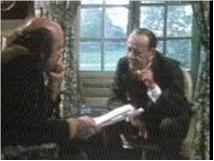 André Malraux in a television
program about art (1975) André Malraux in a television
program about art (1975) |
|
'On this earth of ours where everything is subject to the passing of time, one thing only is both subject to time and yet victorious over it: the work of art.' André Malraux, TV program: Promenades imaginaires dans Florence, 1975. |
Essays on
Australian National University derek.allan@netspeed.com.au |
André Malraux in a television
program about art (1975) |
Malraux and the theory of art New: The Very Idea of Art See text in my Philpapers section. André Malraux's Theory of Art - Challenges to Traditional Aesthetics (avec version française - e ora anche in italiano) "Reckless Inaccuracies Abounding": André Malraux and the Birth of a Myth. Journal of Aesthetics and Art Criticism. Vol. 67, Issue 2: pp 147-158. Debunks the persistent myth, fostered by E.H. Gombrich and others, that Malraux's use of art history is unreliable. AbstractAndré Malraux and the Challenge to Aesthetics Journal of European Studies. March 2003, 33: pp 23-40. Concerns two of Malraux's major works on the visual arts, The Voices of Silence and The Metamorphosis of the Gods. Argues that these works present aesthetics as traditionally conceived with a fundamental challenge and invite us to think about art in a radically different way. André Malraux, the Art Museum, and the digital Musée Imaginaire. A brief paper on this topic. An entry on André Malraux's theory of art in the Encyclopedia of Aesthetics published by OUP. The
Death of Beauty : Goya’s Etchings and Black Paintings through the Eyes
of André Malraux
Art and Time The general relationship between art and the passing of time is a crucial aspect of the nature of art but one that is neglected in contemporary aesthetics. These items address key aspects of the question: Analytic Aesthetics and the Dilemma of Timelessness. A paper presented to a seminar in the ANU School of Philosophy, 11 November 2014.Time: The Forgotten Dimension of Art. Discusses key questions to be asked about the temporal nature of art. An intellectual revolution: André Malraux and the temporal nature of art. Journal of European Studies. 2009, 39: 198-224. Explains Malraux's revolutionary understanding of the relationship between art and time - the notion of metamorphosis. Art and History: Taking the Past Seriously Examines arguments in contemporary aesthetics that marginalize historical and anthropological evidence concerning art. André Malraux, l’art et le temps. A paper delivered at a seminar on Malraux at the Sorbonne. What the question of art and time is not about. Comments on some potentially misleading ideas. “Malraux,
l’art et le temps : Un défi à l’esthétique traditionnelle" in
Malraux et le temps, La Revue des lettres modernes. Série: André
Malraux, n° 14,
Classiques Garnier ,
2018. 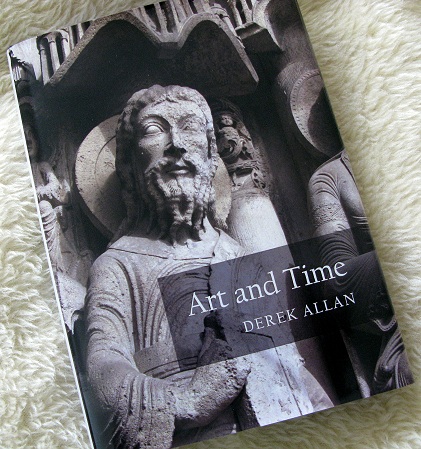 Comments on Art and Time in the Australasian Journal of Philosophy
"Derek Allan’s accomplished and insightful book tackles a philosophical
problem that has been neglected in contemporary aesthetics: the
relationship between art and time… One admirable feature of Allan’s
book is that it is well versed in art history and the history of
aesthetics… Art
and Time
is
a well-researched, elegantly written, and lucidly argued book... a welcome contribution to
broadening the often parochial, ahistorical character of contemporary
aesthetic debates."
(avec version française)
|
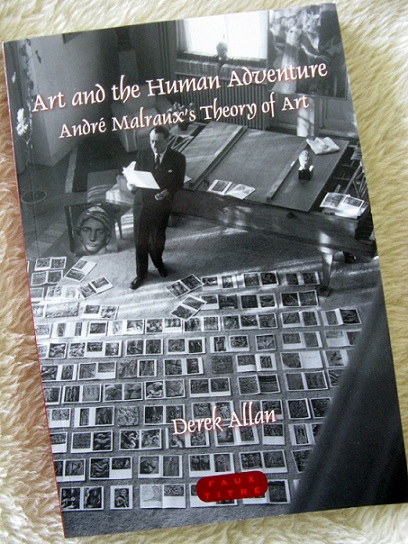
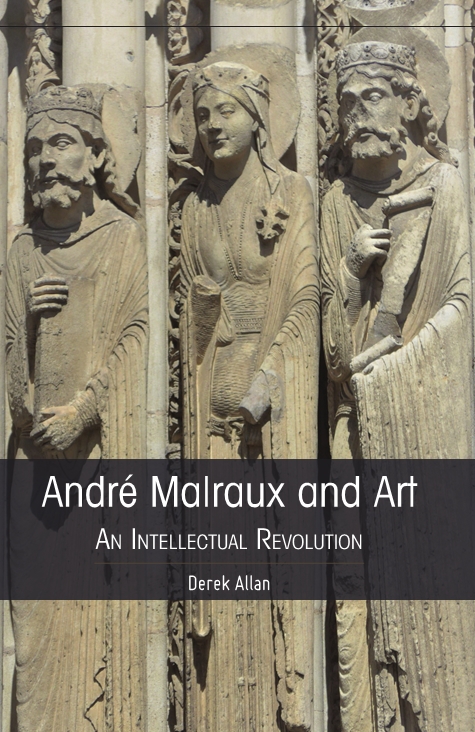 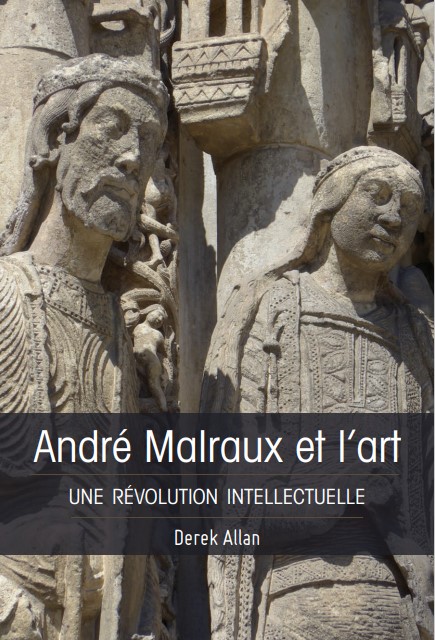 New book on Malraux and art, in English and in French.
30 illustrations, 23 in colour. Extracts from a review
of Art and the Human Adventure*:
|
| Malraux's first three novels | 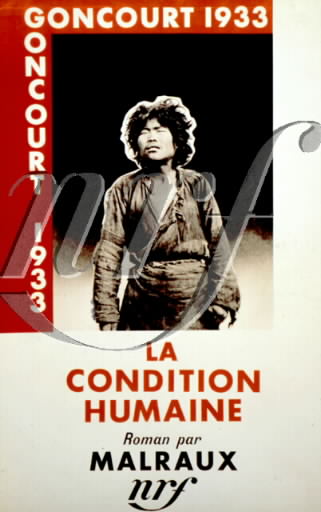 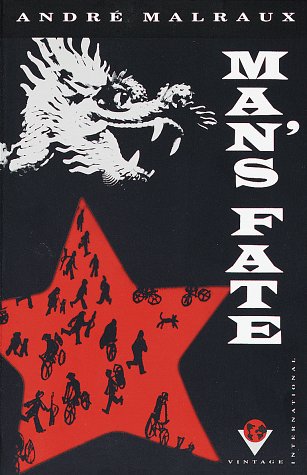 |
Miscellaneous Why art is never representation (even when it represents). Art and
"the real world".
A conference paper. “Goya and
the Dark Side of the Enlightenment”, a paper delivered at a
conference entitled Rethinking
the Enlightenment at Deakin University, Melbourne A logical redeemer: Kirillov in Dostoevsky’s Demons The Power of an Idea: Raskolnikov in 'Crime and Punishment'. Literary Imagination (2016) Les Liaisons dangereuses through the eyes of André Malraux. Journal of European Studies. June 2012.Myths about Malraux's Theory of Art.André Malraux wrote to a friend in 1973: "Of all my books, those I’ve written about art are certainly the ones that have been most seriously misunderstood." This page comments on some common misundertandings. Is aesthetics based on a mistake? Argues that aesthetics remains straightjacketed in a conception of art inherited from the eighteenth century that now hinders our understanding of art. Art and Freedom Is there an intrinsic relationship between art and freedom – and if so what kind of freedom might that be? Letter to Quadrant concerning an article on Malraux in their May 2007 issue. Art and the Metaphysical - A Challenge to Aesthetic Orthodoxy A conference paper. Creation ex nihilo: André Malraux and the Concept of Artistic Creation NEW: "Beauty, Art and the Western Tradition" (See Philpapers) NEW: Has André Malraux’s imaginary museum come into its own? |
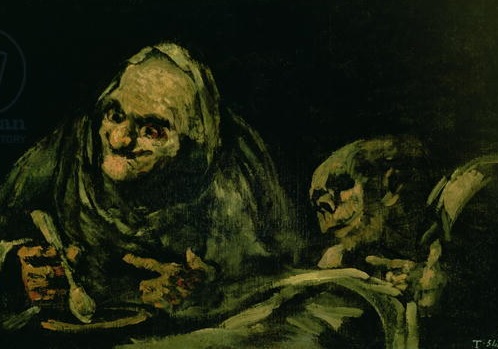 Goya. Old People Eating “If the words art and beauty had the same
meaning, Goya would not be an artist.” André Malraux. |
|
|
Some
painting and sculpture I like:
|