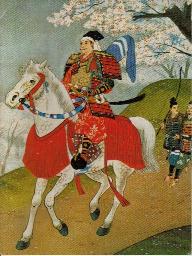
This is something I’ve been working on for many years. For the purposes of this bibliography, ‘historical novel’ means a novel which is deliberately set in the past. Thus Yoshikawa’s Taiko qualifies but Genji Monogatari or the works of Saikaku do not because as far as their authors were concerned, they were writing about the here and now. Likewise Western authors writing in 19th century Japan about (then) contemporary events unless it is plain their work is set in an earlier century. Thus you will find, for example, only two novels by the pseudonymous Onoto Watanna (an American author hiding - as well she might - under a pseudo-Japanese nom de plume) as these appear to be set some decades earlier than she was writing.
SCOPE
Earliest times up to the end of the Meiji period (1868-1912). As can be seen the Restoration and Meiji periods are by far the favourites with Western authors, though there is also a small cottage industry devoted to Will Adams and also the Heian period. Please feel free to add to this as I want to make it as complete as possible. Email me at reguli@netspeed.com.au.
It is also a bit idiosyncratic in that I don't review every book in a series I have reviewed negatively (e.g. Rowland's Sano series).
NOVELS SET IN A QUASI-JAPAN OR A JAPAN WHICH ISN'T JAPAN
I have decided to separate out those examples of that curious sub-genre, the cod-Japanese historical. These are stories where Japan usually has another name, the geography might be slightly different, the historical events are rather mashed up so, for example, the Genpei War and the Mongol Invasion, or the Battle of Sekigahara and the Shimabara Revolt happen in one lifetime, or dragons, tengu and others are part of the native fauna. These can be found at Clayton's Japan (the Japan you have when you are not having Japan).
BIBLIOGRAPHY DIVIDED IN TO TWO PARTS
WHERE TO BUY
Try Amazon (either http://www.amazon.com/ or www.amazon.co.uk for new and secondhand), Alibris (www.alibris.com for secondhand books) or Books and Collectibles (www.booksandcollectibles.com.au another portal to secondhand bookshops like Alibris). You could also try the Asia Bookroom (www.AsiaBookroom.com as they have this type of novel from time to time. In fact I was able to obtain Kumagai from them when I lucked out at Amazon).
Those marked with an asterisk are available from Googlebooks. Of course, many of the others which I have reviewed are also available there but I've just indicated the ones I haven't seen (usually because they are way out of print).
Authors' websites are listed where I could find them. These are worth a look as they often have additional information and background about the the novels and/or series as well as something about the authors themselves.
Below this there is a set of tables where the novels are arranged by when they are set to make it easier to find novels set in an era which interests you.
Nikki White
A B C D E F G H I J K L M N O P Q R S T U V W X Y Z
Abelard, Max, Magnificent Samurai. London, Paul H. Crompton, 1969 (1974 printing) Sengoku Period
A sort of sequel to the Kurosawa film, The Seven Samurai in that the hero, Kakemon, is the son of the swordsman, Kyuzo and returns to the village to visit his father’s grave. While there he encounters a girl who has escaped from the villainous Lord Yoshimatsu. Kakemon wants vengeance on Lord Yoshimatsu because he took his father’s lands. He gathers together the remnants of his father’s retainers and plans to assassinate Yoshimatsu. This is believed to be nearly impossible so he seeks out ninja to gain the necessary skills.
This is a serviceable pot-boiler with no great depth of characterisation and not much description to give a sense of time and place. Some of the names are really strange such as "Samsukuo", the girl who escaped Yoshimatsu. However, the sequences dealing with the ninja have a certain eerie fascination reminiscent of The Samurai.
Abelard, Max , Night of the Ninja. London, Paul H. Crompton, 1983. ISBN 0901764612 Set in 17th century
Someone has hired ninja to kill off, one by one, members of the Kunitoki clan - or so it seems. Retainer Sugura sets out to discover who and why. Unknown to him, the scarred ninja, Honshu, has discovered someone is using the ninja to further his own ambitions, the Kunitoki clan being incidental to the plan.
Written some 15 years after Magnificent Samurai and set somewhat later, apparently the 17th century, this is a more assured work with more complexity and more of a feel for the period though obviously written by someone without any knowledge of the language. Again the ninja sections are the strongest. However, we still have some rather weird names and carelessness in copy editing (‘nekode’ is also spelled ‘nekade’). The ending is rather abrupt suggesting a possible sequel which does not seem to have eventuated.
*Adams, I. William, Shibusawa, or the Passing of Old Japan. New York, Putnam, 1906 Restoration
Not sighted
*Adams, I. William, Yodogima New York, Mikilosch Press, 1911
Akunin, Boris, The Diamond Chariot. London, Phoenix, 2012 ISBN 9780753828199
This is a translation by Andrew Bromfield. The story opens in 1905 during the Russo-Japanese War in Moscow and St Petersburg (and points in between) as we meet a number of colourful characters including one Vasilii Alexandrovich Rybnikov whose missions of sabotage (against the Russian rail system to hinder the Russian war effort) make up most of the first section. We also meet Erast Fandorin, a man of the world with many skills including knowledge of the Japanese language and people (and martial arts) who is attached to the railway department. In the second part, the narrative moves back 27 years to 1878 and across the sea to Yokohama. Here we meet a young Fandorin who is newly arrived in the foreign settlement and attached to the Russian Consulate there. The period of civil war which heralded the Meiji Restoration is over but there are still some malcontent samurai among the Satsuma clan (the feudal fiefs and samurai have just been abolished). Fandorin finds himself embroiled in a plot to kill a prominent minister which causes the death of a Russian national. It is during his investigation of this that he encounters a mysterious old man and the last of the Momochi clan of ninja.
This is a very well written book which holds one's attention despite its length (over 500 pages of small print, well it is a Russian novel). The characters are well drawn and complex - no one is quite what he (or she) seems. Fandorin's trying to discover who the true villain is resembles someone peeling layers off an onion. A plus is that for once, in a tale of Meiji Japan, the foreigners are neither British nor American, but Russians (and Tsarist Russians at that). This gives a different perspective and angle and for the most part, lacks the false exoticism of many other works set in the same period. The parts dealing with the ninja are sound (even if we do get regaled with the ninja-in-the-toilet version of Uesugi Kenshin's death). In fact the first part of the book contains one of the best depictions of a ninja going about his work I have read anywhere and not once is the word 'ninja' (or any of its synonyms) mentioned. The only whinge I had was a small number of typos which an editor should have picked up.
Albery, Nobuko, House of Kanze. London, Sphere, 1987, c.1985 ISBN 0722110677
Ms Albery (who is the former wife of Japanologist Ivan Morris and the widow of the English impresario, Sir Donald Albery)) was a theatrical producer and apparently did quite a bit of research, including time in Japan for this book (so manages to avoid the gaffes and solecisms of Shogun) It’s a novel about noh drama in the 14th century and depicts three generations of the Kanze family, most particularly the actor-playwright Zeami. It certainly gave me a new appreciation and insight into both noh (which I’ve always considered the best cure for insomnia outside of listening to parliamentary broadcasts) and of Zeami (who had hitherto been more a name on a goodly number of catalogue cards to me, even though I have catalogued quite a few of his works or books about him in Japanese). It’s well written and doesn’t fall into the ‘false exoticism’ trap. The people emerge as real characters - all the more astonishing when you get to the postscript and discover there isn’t very much documentary material on any of them so she had to virtually create them from scratch. Unlike Clavell ,but like Thornton Wilder in The Ides of March, she points out where she has deliberately departed from history and why she has done it, thus giving her readership some credit for intelligence and of prior knowledge of her subject. There are no samurai wielding great swords in this one (though there are some interesting portraits of some of the Ashikaga shoguns, notably Yoshimitsu) but for a look at another side of Japanese history, an important cultural and social side, I’d recommend this book.
Ariyoshi, Sadako, The Doctor’s Wife. Tokyo, Kodansha International, 1978. ISBN 0870113372. Set in 18th century.
This is a translation by Hironaka Wakako and Ann Siller Kostant of a historical novel about Kae, the wife of Hanaoka Seishu (1760-1835) who was the first doctor to develop and use anaesthetic in performing operations and is known for his pioneering work in surgery for breast cancer - some 40 years before doctors in England and the United States used chloroform. However, it is as much as about the conflict between Kae and her beautiful and clever mother-in-law, Otsugi, which in turn reflects the situation still found in Japan today.
The story is told in a series of scenes, beginning when Kae was 8 and begs to be able to see Otsugi who was famous as a beauty and for having crossed the river to marry into the Hanaoka family in Kishu province (now Wakayama Prefecture). Captivated by her, Kae is eager to marry Otsugi’s son, Unpei (later called Seishu) when Otsugi herself audaciously proposes the match to Kae’s father some years later, despite the fact that Kae’s family is of a much higher rank than the Hanaokas. The marriage is rather surreal as Unpei is in Kyoto studying medicine so his place is taken by a medical treatise. Things go well at first and Otsugi and Kae form a close bond as all the efforts of the pair plus Otsugi’s two daughters are bent to earning money to send to Kyoto to support Unpei. However, this all changes when Unpei returns and Otsugi pushes Kae aside, only mentioning the contributions of the sisters, not Kae, and even preventing Kae from sharing her husband’s bed, or even spending any time alone with him. Kae never forgives her and her earlier admiration turns to hate. Otsugi is likewise cold. Their rivalry intensifies when Unpei’s attempts to perfect an anaesthetic require a human subject and each puts herself forward.
This is a compelling study of two strong-willed, courageous women put in conflict by the system which focuses totally on the son/husband who blithely accepts everything they can give him without noticing the friction between the two. When he was studying and the women of the family worked so hard to support him financially, he never wrote home, much to his ailing father’s sorrow. When he came home, the situation didn’t change much as the famines of the 1780s were still affecting everything and later when prosperity returned, the focus changed from the women working together to sacrifice everything for the good of the son to a rivalry between mother and daughter-in-law as to who should undergo the experiment with the anaesthetic, how often and suffer how much. The loss of a child for both parties draws them together briefly but the forces which are at the root of the rivalry prove stronger and a tragedy occurs that leaves Otsugi feeling defeated and she withers away. Sharpest commentators on this are Unpei’s two sisters, particularly Koriku, the younger, who sees what Unpei does not, Unpei isn’t heartless, just self-centred and unobservant, totally focussed on his work as a doctor and on his research.
The characters are complex and well drawn and, part from the rivalry between the women, it draws a picture of the difficulties of a poor rural family and of the state of medicine in the late 18th century Japan.
Ariyoshi, Sadako, The Kabuki Dancer. Tokyo, Kodansha, 1994. ISBN 4770017839 Set in 17th century
This is a translation by James Brandon of Ariyoshi’s Izumo no Kuni, a work originally published in 1972, after being serialised in a magazine in the late 1960s. It is a historical novel about Okuni, the woman who founded and created kabuki. It covers her life from 1588 to 1609. This has a wealth of detail and description to evoke time and place, as well as vividly depicted characters with depth. It’s a novel you can live in with its rich detail and lively style.
It begins with the young Okuni aged 17, part of a troupe of travelling players who come to a festival in Osaka. There her spirited, high-stepping dancing (unlike the shuffling noh) catches the eye of the festival’s patron, a personal assistant to Hideyoshi. This is the start of her career and the story follows her, a woman of great warmth, spirited, independent and driven by a desire to dance, through the vagaries of those turbulent times - her troupe patronised by this lord, then dropped only to be taken up by another. It shows her relationship with various members of her troupe, with the dandy Sanza, her spiteful betrothed from her village, Kyuzo, and others. I really enjoyed this work.
Avery, Ellis, The Teahouse Fire. New York, Riverhead, 2006 9781594489300 1865 onwards
Novel about a Aurelia, a French/American orphan who escapes from her missionary uncle in Kyoto and is taken in as a servant by Yukako, the daughter of a prominent family of tea ceremony practitioners.
Bailey, Douglass, Shimabara. New York, Bantam, 1986. ISBN 0553251155 Set in 17th century
This is a novel about the Shimabara Revolt wherein a group of Christians and others oppressed by the tyranny of the daimyo of Arima seized the abandoned castle of Hara on the Shimabara Peninsula in 1637. The Shogunate laid siege and finally succeeded in storming the castle in April 1638 with the aid of Dutch ships shelling the castle from the sea. All the defenders not dead of starvation were put to death. The novel is about some of the people caught up in these events: Akane, rescued from the flames of Osaka Castle and trained as a samurai; Tajima Jubei, her adopted brother, a swordmaster with ninja connections; Jan Kriek, a brilliant young Jesuit; Maria, a noble Japanese Christian convert and Lord Sanjo, a prince of the Imperial Court, devious and treacherous despite his effeminate appearance. It is entertainingly written, and reads like a chanbara film with lots of colourful characters, action, swordfights, treachery, ninja and noble and not so noble samurai, plus Byzantine Tokugawa politics. Told chiefly from the Japanese characters’ points of view with less emphasis on the Europeans, it makes a contrast with other novels dealing with this period. There is a good sense of period despite the fact Bailey plays fast and loose with dates. Ieyasu died in 1616 not some time in the 1620s, Sen-hime survived the fall of Osaka Castle, Hara Castle fell in 1638 not 1635, and a whole generation of Tokugawas is skipped over - what happened to No. 2 Shogun, Hidetada? But these don’t detract from the enjoyment of the story.
Baker, Nancy, Blood and Chrysanthemums London, Penguin 1995 ISBN 0140238662
A sequel to her vampire novel The Darkness Inside, one of its major characters is a thousand-year-old Japanese vampire. Fujiwara no Sanemori was a high-born courtier who met a ghostly woman in 1045 who turned him into a vampire. His story continues over the centuries taking in the Sengoku period (where he was a daimyo) and the Tokugawa era (where he was involved with a duel), ending with him as a yakuza boss (how the mighty are fallen!). The historical bits are well told, like an ancient legend with a poetic quality in places. Well worth a read.
Barr, Pat, Kenjiro. London, Corgi, 1986. ISBN 0552125407. Set in 19th century
This concerns an Englishwoman, Elinor Mills, who comes to Japan to visit her physician brother in Yokohama in 1862,and falls in love and marries a young samurai, Kenjiro, of the Satsuma clan. It makes a refreshing change to read one of these ‘Europeans-in-Japan’ sagas written by and about a woman. It is a paean - with some reservations - to the virtues of the Japanese male, his innate poetry of soul and sundry other virtues over the rather cloddish European males. occasionally, Ms Barr gets on her soapbox a bit too often in arraigning both the European treatment of and attitude to the Japanese at the time, and the attitude of men in general toward women. If some of it leaves a few men grinding their teeth, then they’ll have some idea how most women feel when reading some of the other, male fantasy bodice-rippers - the same ‘looking down the wrong end of a telescope’ sensation.
It’s quite an interesting novel with a number of fascinating subplots regarding others of the European community. A lot of it was very amusing and pleasantly familiar as I’d become familiar with the foibles of the Europeans, the types who were to be found in the treaty ports their prejudices, attitudes, life-styles, etc. through compiling a bibliography of the Harold S. Williams Collection, one of the finest collections in the world of books by and about foreigners in Japan, particularly in the early years.
Of course, some of the novel borders on the soap opera, particularly the second half which deals with the next generation (the book covers 1862-1869,then there is a break, and part two covers the 1880s onwards). It’s a colourful read, by and large, of a Japan undergoing transition from shogun and samurai to modern 19th century state. A number of historical figures are mentioned and other characters appear who are obviously based on others (e.g. Desmond Hand is surely an analogue of Thomas B. Glover and Taneo Takahashi might well be Fukuzawa Yukichi among others). Events such as the killing of the two Englishmen at Kamakura form important parts of the first part of the book.
The main glitch is that Ms Barr has been ill-served by her copy-editor. The Daibutsu at Kamakura appears constantly misspelled as ‘Diabutsu’, for example. But my favourite was ‘bakafu’ for ‘bakufu’. Yes, well - if you are anti-Tokugawa. it makes a succinct neologism (‘government of fools’ rather than ‘tent government’). There are lots of’ lesser ones - ‘Emperor Komnei’ for ‘Emperor Konmei’, ‘Keike’ (the last shogun) for ‘Keiki’. Silly but annoying, because like Guest’s book, this is well researched. Barr has written other non-fiction books on this period and she knows her stuff. It shows in the ease with which she handles her characters. Unlike a lot of historical novels these days, her people actually talk like 19th century people (I grew up on 19th century literature, so I know).
*Bennet, Robert, The Shogun’s Daughter McClurg,1910 Perry Expedition
Not sighted.
Birkin, Malcolm, The New Shogun. Waterkloof, South Africa, Sanford Ridge Publishing, 2011 ISBN 9780620476072 17th century see Clayton's Japan
Blaker, Richard, The Needle-Watcher. Tokyo, Tuttle, 1973 (originally published in 1932). ISBN 080481094X
As a historical novel dealing with Will Adams, this invites comparison with the much later Shogun. Indeed, the Japanese-language wrapper does just that with the word ‘Shogun’ written in the same style as on the Japanese translation of the Clavell work.
However, the style and treatment of its subject sets this work apart from the Clavell novel. In the first place, all the historical characters have their own names. Secondly, while it begins in 1600 with Adams’s arrival in Japan, like Shogun, it continues his story until his death in 1620. Thirdly, it is told purely from his point of view. We are not privy to any conversations or actions where he is not present, unlike Shogun where we get inside the heads of shoguns, samurai, noble ladies, Jesuits, etc.
Drawing on the diaries of Cocks, Saris and Adams himself, Blaker tells a story that is more straightforward and not as cluttered with lurid detail as Clavell’s. There are no irrelevant and lengthy disquisitions on some aspect of Japanese culture which made Shogun so annoying at times (he thus also avoids Clavell’s anachronisms). The narrative is not allowed to bog down in false exoticism. Japan and the Japanese are presented naturally as a rugged 16th century sea-dog might encounter them. Things are not as sensational (Adams’s fellow shipwrecked sailors are not boiled alive or ill-treated).
Adams himself emerges as an inventive man quick to learn and apply his knowledge, not without a touch of arrogance, evolving into a certain pathos with his obsession with finding the Northwest passage while the world changes around him. I could sympathise with his situation - oddly - of finding a niche and being secure and happy for about 15 years, doing what he did best, then finding gradually the goal posts got moved and the arrival of a number of johnny-come-latelies and wannabes on the scene, creeping into his area of expertise without possessing his knowledge and generally muddying the waters while those at the top have changed and have other ideas of his worth.
There’s humour in it - Blaker has captured both the ponderous sinicised Japanese of polite discourse between samurai and something of the flavour of 16th century English. And we don’t get gratuitous lessons in Japanese (there is not a Japanese word used in the book).
Worth a read for a different and more economical approach to the subject, particularly if you found Shogun a bit indigestible.
Boal, Nina, Snow Tiger. lulu.com. 2011 ISBN 9781105069949
Set in 1765, in the Shinano region of Japan, this novel concerns four people, all samurai, but of differing backgrounds, and their understanding (or lack) of the true meaning of being a samurai.
The first one we meet is Fujii Yukitora (the eponymous "snow tiger"), reduced to teaching the village children and making women's hair ornaments on the side to support his two children and himself, when his lord is forced to commit suicide and the fief disbanded. Then there is Tange Sakura, a wandering swordswoman, disfigured in an attack on her family when she was a girl - think a female Tange Sazen (one-armed, one-eyed and deadly with a sword). Thirdly, there is the hapless Suzuki Hidemasa, a young samurai serving the local clan lord, who scorns Yukitora as a ronin and opposes his teaching Confucius to peasant children, yet he himself is the victim of his mentor's brutal training regime. Finally there is Saito Banzaemon, Hidemasa's mentor and chief retainer of the clan. He is a complex man, capable of generosity ton those less fortunate and yet completely callous if not cruel to others.
Intelligent, thoughtful historicals on Japan written for adults are far and few between these days and are to be treasured. This is one of them. Step by step, Boal shows us her characters' mental journey, the reasons why they act as they do. It is also a study how easily actions can be easily misinterpreted or interpreted in a way that fits the speaker's world view and how corrosive this can be.
The style is spare and elegant, focused on the characters and not on their material culture, as a lot of Japanese historicals can be. They really come to life even if you could hit some of them over the head with a brick at times. This books is well worth seeking out. I got mine from Amazon.
Bradford, Chris, Young Samurai: The Way of the Warrior. London, Puffin Books, 2008. ISBN 9780141324302
It is August 1611. Twelve year old Jack Fletcher is accompanying his father, the pilot aboard the Alexandria, on a quest to reach Japan. Near their destination, the ship is attacked by ninja pirates. Jack's father is killed by the ninja leader, a strange creature with one green eye, who demands his "rutter" (a book of handwritten navigation charts and notes kept by pilots to guide them around the oceans). His father's last words to Jack instruct him to secure the rutter and keep it safe as it will be the key to his way home. Jack does so. All aboard are killed but he washes up near the village of Toba where he is rescued by the master swordsman, Masamoto Takeshi, who sets his broken arm. Masamoto's sister and her family (particularly the daughter, Akiko) nurse him back to health. Masamoto's son, Yamato, is the only unfriendly face but despite that, Jack gets him to teach him how to use the bokken by sheer persistence. He also learns Japanese from a dying Portuguese priest. He later saves Yamato's life with a lucky strike against a ninja. As a result Masamoto adopts him to replaced the son he lost two years earlier to the same green-eyed ninja who killed Jack's father. Yamato is not best pleased. Things get worse for Jack when Masamoto sends him, Akiko and Yamato to his dojo in Kyoto to train in the arts of a samurai. There he is met with suspicion, prejudice and hostility though he does make some new friends and one bad enemy with imperial connections. However, he sees this training as the way to defeat the green-eyed ninja, who he now knows is called Dokugan Ryu (Dragon Eye), and who is still stalking him after the rutter.
I really enjoyed this despite some plot similarities to Simon Higgins' Tomodachi and some slightly dodgy Japanese given names (Yamato? That'd be like an Englishman calling his son 'Albion', possible but a bit unlikely. Or 'Tenno" (Emperor)?). It is fast paced, with engaging characters and vividly written, particularly the fight scenes which have the immediacy which authors with martial arts backgrounds (and there are a number of them writing these days such as Higgins and Snow) can bring. Jack is interesting, brave and resourceful, also honourable, stubborn and determined. His frustration with being among people who are really nice to him but with whom he cannot communicate is well realised and his confusion at or ignorance of some customs or words allows the author to explain in a natural way these things to the reader without an info dump.. His 17th century background is not forgotten, either, in some of his reactions. Akiko is well drawn as is the conflicted Yamato.
The first of a series, there is also an interesting website connected with it.
Bradford, Chris, Young Samurai: The Way of the Sword. London, Puffin Books, 2009. ISBN 9780141324319
It is now August 1612. Jack is studying hard and training at the Niten Ichi Ryū School despite the harassment of his nemesis, Kazuki and some of the other students. Adding to his problems is word of a rise in anti-Christian feeling especially with the warlord Kamakura Katsuro who has put some Christians to death and expelled others. He is also concerned over the fate of his little sister, Jess, left alone in England with an aunt. However, he is determined to be good enough to compete in the Circle of Three which tests courage, skill and spirit. If he is successful, he will then progress to train in the Two Heavens sword technique. He believes that if he can master that, he will be unbeatable and in a far better position to travel safely with his father's rutter to a port and a ship to sail home. That rutter causes him more trouble because the ninja, Dragon-Eye, reappears still after it. Jack's quest to find a secure place and secrete it puts in jeopardy his relationship with Masamoto.
More adventures in the dojo with Jack making some blunders and severely putting his friendships to the test, particularly with Akiko who seems to be a girl of mystery. He learns some valuable lessons, though, as a result of his bravery and his own efforts. This is all written in a flowing, engaging style with plenty of action. M y only whinge is that the school does sound like a modern dojo. They may have been like that back then, too, I don't know. All I know is that I keep seeing the students in modern dress and short hair.
Bradford, Chris, Young Samurai: The Way of the Dragon. London, Puffin Books, 2010 ISBN 9780141324326 (1613)
It is now 1613 and things are getting grim, at least for Christians as Lord Kamakura has begun moving against them in earnest. Added to this danger is the threat of civil war. Jack, Yamato and Akiko are still training in the Two heaven technique but are also trying to track down Dragon Eye. They discover Dragon Eye's true identity in a deserted village. Jack thinks he has a rival for Akiko's affections in a newcomer to the school, Takuan, the son of a famous poetess (no, not that Takuan). However, things are drawing to a head and by the end of the novel, Jack's life has completely changed with the deaths of a close friend and an enemy, the sacrifice of another to save his life and the end of just about everything he has come to know.
The novel concludes the first trilogy in fine style, finishing off Jack's training phase and setting him on a new road. As in the earlier volumes, there are plenty of vivid sword fights and martial feats. Jack is maturing though still somewhat inclined to misjudge people. There are quite a few shocks, twists, turns and revelations. My only whinge, and it is a slight one, was the "last samurai standing" schtick (in the novel, a type of free-for-all contest between samurai) - the name echoes "last man standing" with its World War I associations, not to mention it being the name of a Torchwood episode.
Bradford, Chris, Young Samurai: The Ring of Earth. London, Puffin Books, 2010 ISBN 978041332536
1614 and Jack is on his own, making his way to Nagasaki in the hopes of getting passage back to England and his sister, Jess. He has left Akiko and his other friends behind because it is too dangerous for them to be involved with him, with the anti-foreign policies of the shogun. Doubly so since the shogun has sent samurai after him. In escaping them he runs straight into a trap set by a ninja boy, Hanzo, who believes him to be a tengu. Thus Jack finds his worldview completely upended as he is taken into training in a ninja village in the mountains of Iga. Although not all accept him - their prejudice arises from his being a samurai, rather than a foreigner, he finds that not all ninja are like Dragon Eye, in fact, quite the opposite. Their code may not be that of the samurai but they are honourable, wise, pragmatic and the skills they teach him could be useful if he is to survive to get to Nagasaki.
This was a terrific book, I really enjoyed it. For ninja fans, there is a lot of information about them and their skills and a look at life in a ninja village. There's plenty of action with secret missions to castles, dastardly warlords who want to wipe out the ninja, and a traitor in their mist plus an old friend makes a brief return. What makes it work for me is that, unlike some other books where the young hero gets taken in by ninja, there is a good reason why this is done and also, Jack's earlier training, both as a samurai and a rigging-monkey, stand him in good staid allowing him to hold his own and to gain some ninja skills convincingly. Another reason I liked it so much was it seemed more tightly written than the earlier ones. It has also moved away from the dojo scenario of the first trilogy which always seemed a bit modern to me.
Bradford, Chris, Young Samurai: The Ring of Water. London, Puffin Books, 2011 ISBN 9780141332543
It is now autumn 1614 and Jack wakes up in a barn behind a wayside food stall with no idea how he came to be there, bruised, groggy, not in his own clothes and without his swords, the pearl Akiko gave him and, most importantly, without his father's rutter. In the shop he encounters a drunken rōnin whose apparent clumsiness manages to disarm and generally discombobulate some dōshin (police) sent by the shogun to arrest him. This rōnin offers to help him find his missing belongings. He is not the only odd bod Jack encounters. There is also a mad monk who poses a riddle he must solve.
In this outing, Jack is very much reliant on his own resources, not only his training as a samurai, then as a ninja but also his earlier experiences as a rigging-monkey. He decides, early on, the only way to survive is to drawn on the concept of the ring of water (which he learned from the ninja), that is go with the flow. As if to emphasise this, water features a lot in this book, either in the form of rivers or in the almost constant rain.
The two new characters, Ronin, the rōnin, and Hana, the outcast thief, are engaging and each gains something from Jack just as he does from them.
Another excellent entry in the series with lots of action, in the form of sword fights and a pace which never lets up.
Bradford, Chris, Young Samurai: The Ring of Fire London, Puffin Books, 2011 ISBN 978041332550
This outing is basically retelling of the film The Seven Samurai but done with Bradford's customary panache. It is still 1614 but now winter and Jack is the only one to answer the call for help from a village in Okayama which is being terrorised by bandits. He manages to assemble a small team of young samurai plus one ninja who demonstrate to the doubtful villagers that they may be kids but they know what they are doing. It was good to meet some old friends again as well as some new ones. Another ripping yarn in this series.
Bradford, Chris, Young Samurai: The Ring of Wind. London, Puffin Books, 2012, ISBN 9780141339719
Ninja pirates, a pirate queen with a secret base and the return of an old enemy, things just keep happening in this, the penultimate book of the series. The ninja pirates are actually the Fuma who indeed did turn to piracy after the fall of the Hojo and Odawara Castle, according to some traditions. And yes, they have a "dragon ship" like the one in The Samurai but they are a thoroughly bad lot. Plus there is the band of samurai anti-pirate squad who are, in their way, as big a menace as the pirates they are trying to eradicate. Jack finds himself having to help the Fuma as the only way to save his friends. He also gets to use another technique, shown him by an old man who may or may not be the spirit of Taira Masamori, a pirate-queller of old. He also revives his skills as a sailor and a "rigging monkey", and indeed the story is mainly set on ships of various kinds and on the sea, and seems to foreshadow the fact that soon, if his luck holds, he will be on a ship to England. Despite the fact the series is nearing its end, the action, the inventiveness of plot and characterisation doesn't let up. And I did rather like the Pirate Queen.
Bradford, Chris, Young Samurai: The Ring of Sky, London, Puffin Books, 2012 ISBN 9780141339726
The final novel in the series and Jack finds himself alone after being shipwrecked when a storm hit the skiff he and his friends escaped from the pirates in. He was washed up in northern Kyushu and soon finds shogunate samurai on his trail and a bloody reunion with a former teacher. He also finds a new friend, a trickster named Benkei, who is as resourceful as he is colourful. He is reunited with Akiko and the friends he thought he had lost as he makes his way to Nagasaki, hindered not only by shogunate samurai but also his old nemesis, Kazuki. His road across the volcanic land is difficult and he loses a friend before he reaches his goal.
The action does not let up. Every time you think things can't get worse for Jack, they do, just as every time you think he is going well, something awful happens. The ending is satisfying, though does leave the way open for a possible continuation though this time in England.
Bradford, Chris, Ninja: First Mission Barrington Stoke, 2011 ISBN 9781842999397
Taka, a young ninja, has yet to win the grandmaster's blackbelt and so be worthy of going on a mission. He is bullied mercilessly by one of the other ninja boys. However, he gets his chance when the grandmaster sends him with Cho, a more experienced ninja girl, to retrieve the ninja clan's secret scrolls which have been stolen and are now in the possession of Lord Oda. Since it is set in 1580, this is most likely Oda Nobunaga, no friend to ninja, This is the story of that first mission. It is gripping enough but aimed at a lower age group than the Young Samurai series. The print is large, the lines are double spaced and there are only 63 pages, many of them artwork. Most likely if set out with the same size typeface as Bradford's other books, it would only be about 30 pages. Not a bad read but a bit juvenile for me. Oh and the artist has an odd idea of Japanese castles - or any castle - as she has the young ninja scaling what looks like a bog standard brick wall of the type which surrounds my old primary school in London. For Bradford or ninja completists only.
Butler, William, The Ring in Meiji. New York, Putnam, 1965. Set in 19th century
This is a large, epic novel covering the Restoration period thought to about the 1890s, and involving a large canvas of characters all of whose lives somehow touch on each other, no matter in how slight a degree.
These characters consist of the brothers Shimizu, sons of minor samurai of Choshu, the elder of whom is fanatically anti-foreign and warlike, the younger who goes to work for foreigners in Yokohama and takes to following a French socialist. Then there is Ken the orphan raised in a San Francisco gambling house who drifts from protector to protector; Couzot the embittered, impassioned French socialist; Ulyana, the beautiful daughter of a Russian diplomat who follows her own destiny; Shio, the peasant who becomes a soldier in Japan’s modem army; Hirugo, the wandering Buddhist priest, and so on. And beyond them, the great figures of the era, Itagaki, Yamagata, Ito, Saigo, all of whom have their parts to play in the tapestry.
It is extremely well researched but unlike other sprawling sagas of Japan, that research has been assimilated and does not impede the narrative. Butler writes with a real feel for his disparate characters and each one lives and is real. He also has a real feel for Japan, the land, evoking it effortlessly and naturally. His writing is vivid, even poetic with some really lyrical passages and others where he uses the English language to build word-pictures and make word-games that reminded me at times of Gerard Manly-Hopkins.
It is thoughtful and intelligent in its depiction of the birth throes of modem Japan, occasionally foreshadowing Things To Come (Shio’s experiences in the modern Japanese army, for example, Couzot’s strictures on Japanese nationalism and, more obviously, Shio’s encountering a samurai named Tojo).
For a Japanese historical with a bit more meat than usual - no bodice-ripper, this - and one that doesn’t choke you with tedious minutiae of Japanese social life and customs whether relevant or not, or insult your intelligence by depicting the Japanese as types rather than individuals - recommended.
Campbell, Stuart, Black Dove Kindle 2012 14th century Jaoan (Kamakura Shogunate) Young adult
*Carlson, Dale, Warlord of the Genji. New York, Atheneum, 1970 Set in 12th century.
Story of the 16 year old Yoshitsune escaping the monastery and joining his brother, Yoritomo to lead the Minamoto against the Taira. Not sighted.
Charney, David, Sensei. London, Panther, 1984, c1983. ISBN 0586060820. 12th century
This novel is set in the 12th century at the time of the conflict between the Taira and the Minamoto. The hero is Yoshi, the illegitimate son of the sister of the lord of Okitsu. A most unlikely hero he is when we first meet him, returning from a period at the imperial court at Kyoto when he is an over-refined social butterfly. However, a series of losses, first his cousin killed accidentally by the rather brutal Lord Chikara, then a series of mentors, hardens him, and teaches him skills with the sword, and about himself until he is ready to face his nemesis.
This is full of all kinds of anachronisms I won’t even bother to list. I am no expert on Genpei period Japan but most of what Charney described (metal armour, fencing academies, tea drinking, etc. etc.) seem to belong to a much later era, Sengoku and Tokugawa. And the names are equally as improbable for that era (or at all in some cases). However, the story is well told and well written, so much so that I found myself ignoring all but the most egregious.
Charney, David Sensei II: Sword Master. New York, Charter Books, 1986. ISBN 0441792642 Set in 12th century
This sequel concludes the story begun in Sensei and one is not left with the impression, as with some other two-parters, that a third (or more) novels were planned but never written or published (e.g. the Daimyo series). It begins the night after the first book ends with Yoshi returning with his father’s body from the cemetery where they duelled. The political situation deteriorates with the death of Kiyomori. At the latter’s funeral, Yoshi is forced to kill some of the young Taira ‘red guards’ and loses his only friend. Feeling himself cursed, he renounces the use of the sword, though he is prepared to teach it. With his now widowed childhood sweetheart, Nami, he makes his way to Yoritomo on the orders of the Cloistered Emperor who is considering giving his support to the Minamoto. On his way, a chance encounter makes him the enemy of Kiso Yoshinaka, though Yoshinaka’s companion, Tomoe, befriends Nami.
Much of the book details Yoshi and Nami’s adventures with Yoshinaka’s forces (where Yoshi is sent as an advisor) while civil war rages, culminating in Yoshi’s joining an acting troupe to enter Kyoto and secure it for Yoritomo from Yoshinaka who has grown too independent.
This is a better book than the first because the anachronisms are less glaring and there is more a feel for the era (even if the conceit that Yoshi might have started noh was a bit much and wisely Charney does not pursue it). There’s plenty of action from duels with war-fan against sword to full scale battles. Charney preserves the conventions of his sources (Heike Monogatari etc.) of describing the wardrobe of the combatants and this, plus the poetry sundry characters compose and exchange adds to the atmosphere.
Some things grated such as the character of Yukiie - weak, cowardly, obese and mincingly gay but I still enjoyed it because it was never boring and not many English-language historical novels are set in this period. Charney, we are informed at the end of the book, is a martial artist of 20 years standing (at the time), winner of the All-American and senior karate title in 1970 and 1975, who also studied assorted other Asian martial arts styles plus the sword. This explains the tendency to transpose the modern dojo to pre-feudal Japan that irritated me in the first novel and also his knowledge of sword-strokes put to good use in the second.
Clavell, James, Gai-Jin. London, Coronet, 1994 (c.1993) ISBN 0340597666 Restoration
Not reviewed yet.
The plot is almost too well known after over a quarter of a century, a TV mini-series and a film, to need repeating. Basically it’s the Will Adams story with the numbers filed off. The Dutch ship on which pilot John Blackthorne is serving is wrecked off the coast of Japan. The crew is rescued but is incarcerated. It is 1600 and Japan, after a century of civil war, is divided between the forces of two powerful warlords, Lord Toranaga (the Tokugawa Ieyasu analog) and Lord Ishido (Ishida, one of the regents of the Toyotomi heir, here called Yaemon). Blackthorne’s knowledge of ship-building and piloting makes him valuable to Toranaga who befriends him, gives him samurai rank, a household and a wife. However, it is Mariko, the Christian wife of a local daimyo whom Blackthorne loves but she, like so many others of his new friends is embroiled in the plots and counter-plots of Toranaga and his enemies as the two factions head toward a final battle.
This is a great sprawling novel, with lots of colourful characters and a vivid, almost cinematic writing style. Its strengths are the characterisations, the descriptions, all the plotting and intrigue and the sheer adventure. The weakness is that it is far too long, padded out with too much of the fruits of Clavell’s decade-long research. Some of these are extraneous to the plot and merely bog it down such as the disquisition on geisha (which appears to have been lifted holus-bolus from House of a Thousand Pleasures) and the lengthy language lessons ("Yomimasu", "Mimasu" etc straight out of a 20th century primer and not reflecting the speech of 17th century samurai). It is a common problem with putting in everything one has read that one is bound to introduce anachronisms and other errors (my favourite is the scene in Osaka jail where a character is said not to have a personal name but one derived from his occupation - porter which is rendered as ‘Akabo’, that is ‘Redcap’ i.e. a railway porter. Sorry, the Shinkansen won’t be through here for another 3 ½ centuries!) There is also some really strange Japanese such as ‘Mama-san’. The other minus is that towards the latter half of the book, it does become rather bogged down in dialogue. That said, it is still a rattling good read despite the verbiage, a classic ‘Mary Sue’ story but really so much better than some of the bodice-rippers which it inspired because not only can Clavell write but he treats all his characters, good and bad, men and women, with respect.
Cooper, Iver, 1636: Seas of Fortune (Ring of Fire series) New York, Baen, 2014 978-1451639391 see Clayton's Japan
Courtenay, Christine, The Scarlet Kimono. Camberley, Surrey, Choc Lit, 2011 ISBN 9781906931292
Set in the 17th century. A young English woman stows away on a ship to avoid an arranged marriage, and survives disguised as a boy. When the ship reaches Japan, she is kidnapped by a warlord who had been warned about her by a seer. There is a clash of cultures but gradually an attraction develops between them despite everything. Romance.
*Crofford, Emily, Born in the Year of Courage. Minneapolis, Carolrhoda, 1991 Set in 19th century
Story of Nakahama Manjiro (1827-1898) from age 13 when he is shipwrecked then rescued and taken to America. Juvenile fiction. Not sighted.
Dalby, Liza, The Tale of Murasaki. London, Chatto & Windus, 2000. ISBN 0701169303. Set in 11th century.
Told in the form of a memoir, written at the end of her life and based on her diaries, this is the fictional autobiography of Murasaki Shikibu, the author of Genji monogatari. It begins with Murasaki, then called Fuji, attending her mother’s funeral, aged 16 and discovering the need and ability to write. It traces her life looking after her father, a scholar of Chinese verse, her younger brother and her friendships with various young women which are the catalysts for her series of tales about an imaginary court prince, "Genji" which she circulates privately. Never once believing she will be summoned to serve at the court, she relies on her father and later her husband to describe the life there. Finally, in her 30s, she is called to serve the empress but by this time her feelings about Genji and his world are changing.
This is a very elegant novel, written in the leisurely style of the diaries of Heian court ladies. Dalby has used Murasaki’s diary as well as Genji monogatari to furnish background and narrative, augmented by Akazome Emon’s Eiga monogatari. It is no surprise to read that Dalby became engrossed in 11th century Japan after being captivated by reading a translation of the Genji as a teenager because she has absorbed that world so well that she recreates it effortlessly and gracefully. The style is limpid and easy to read and there is no need for any real prior knowledge of the era, though to have read the Genji or at least the works of Murasaki’s contemporaries adds depth.
Murasaki develops, becoming disillusioned with her creation, restless and the other characters are well drawn, too, such as the rather self-centred Michinaga, Murasaki’s husband. The work concludes with a "lost" final chapter of the Genji which sets forth some of the ideas Murasaki was toying with in her narrative.
Dalkey, Kara, Genpei. New York, Tor, 2001 ISBN 03128970710 12th century.
This is a retelling of the conflict between the Taira and the Minamoto clans, focusing on Taira no Kiyomori, Minamoto Yoshitomo, Yoritomo and Yoshitsune and the Emperor Go-Shirakawa. It is based largely on the Heike Monogatari, the Gikeiki and similar war poems. Written in a fluid, vivid style, it gives a fantastic twist to the familiar material by including the ghosts, demons, gods, portents and magic found in some of the sources to create almost an alternate world where such things are real and can shape events. By focusing on only a few of a rather large cast of characters, Dalkey can give them a bit of depth and colour and make the story easier to follow.
A major whinge is the constant misspelling of ‘Minamoto’ as ‘Minomoto’ which is rather disconcerting in a novel in which that family figures so prominently. There are other misspellings such as ‘Shinzei’ for ‘Shinsai’ and reference to geisha some six centuries before the term was used. Then there is the boast of the Monk Saiko that he is superior to Kiyomori because he is descended of a "respectable samurai family". This does not make sense in that time and place. Leaving out the fact that the Taira claimed descent from an Imperial prince, the issue here was that being a samurai of any sort was a social disaster. One had to be of a kuge (court noble) family to count. The respect shown samurai was still in the future. But apart from these problems, it is well worth reading.
*Dalkey, Kara, Heavenward Path. New York, Harcourt, 1998. 11th century, sequel to Little Sister. Not sighted.
*Dalkey, Kara, Little Sister. New York, Harcourt, 1999 11th century. Not sighted.
In the 1980s, Ace began a series of re-telling of various ‘fairy’ tales which aimed to restore to the genre its original adult, earthier, darker mysterious qualities which had been bowdlerised to make the stories fit for the Victorian nursery. Authors were encouraged to ring the changes on their chosen tale and embellish it as they saw fit. This one is based on the Hans Christian Andersen story of the same name (the one about the Emperor of China who has as his most prized possession a nightingale who sings for him and one day the Emperor of Japan sends him a mechanical one which supersedes the real one until it breaks down and the Emperor falls ill.)
Dalkey transfers her story to Japan (because she knows more about Japan) and sometime during the Heian period. Uigusu (‘nightingale’ in Japanese), the daughter of an obscure courtier, is told by her guardian spirit that she will win her way to a high position and favour at the Emperor’s court because of her flute-playing. Uigusu is delighted with the prophecy, more so when it comes to pass and the Emperor falls in love with her. However, she discovers what is really behind all this, the true nature of her guardian spirit and it takes all her courage and that of other people including her friends to avert the evil and save the Emperor and the realm.
This is an enchanting work which retains many of the features of the Andersen tale: the satirising of the pomposity of the courtiers (many of the characters have names which reflect their occupation or personality) and instead of a bird who tells him everything, the Emperor has a cat. The story is peopled with engaging characters such as the poetic lady-in-waiting Shonasaki (no guessing which two prominent Heian period women authors this name is a portmanteau of), Kuma the guard, Katte the kitchen maid and Takenoko who struggles to be a hermit. The prose has a lyrical quality and there is a wry humour as well as some terrifying scenes. The final segment is quite powerful and moving when the aid of the Sun Goddess is invoked. The cover and frontispiece fit the mood of the series well as they evoke the era of the lavishly illustrated fairy tale book with their art nouveau Japanese lady reclining beneath a caged nightingale.
Minor whinge: the persistent misspelling of ‘Seiryoden’ as ‘Seriyo Den’ and double dipping with titles found also in Rowland’ Pillow Book of Lady Wisteria, such as Mt Fuji-san (either Mt Fuji or Fuji-san).
Deaton, A. M. Way of the Mountain, a Warrior's Journey Kindle 2012
A young samurai goes on a journey of self-discovery. Possibly Young Adult.
Downer, Lesley, Across a Bridge of Dreams. London, Bantam Press, 2012 ISBN 9780593066820
This novel is set in the 1870s, during that turbulent period when fiefs were being turned into prefectures and the lords thereof into governors and when samurai were required to give up their swords, cut their hair and get a job. Taka is the daughter of a geisha and a prominent member of the Satsuma clan and member of the national government (he is modelled on Saigo Takamori). Her mother is very progressive and has moved to Tokyo from Kyoto and encourages her daughter to eat meat because that's the way to civilisation. Nobu is a young samurai from Aizu in the north which had been destroyed some years previously by the Satsuma. Their paths cross when he rescues Taka, her mother and her mother's friend from an attack by ronin in a meat restaurant. As a reward, they employ him as a servant and he and Taka form a friendship. As the civil war (and Satsuma Rebellion) approach, they are driven apart by clan loyalties. Taka and her mother go to Kagoshima to be with Taka's father and Nobu joins the government army which is sent to take Kagoshima and subdue the Satsuma clan.
This is another one of Downer's vividly written historicals with engaging characters and atmospheric depiction of the tensions between traditional and modern and the passing of an era. Taka is strong, adapting from her well-to-do semi-westernised life in Tokyo to living in the geisha quarter of a city under siege. So is her mother, able to face down those who would attack her, or smooth over difficulties so that things can progress and generally 'manage' fiery samurai. Taka even learns to use a halberd with some other samurai girls though ironically she is the one to remain while they flee. We also meet some fierce, rather terrifying samurai women, determined to kill themselves rather than face defeat in a very grim sequence near the end.
Downer, Lesley, The Courtesan and the Samurai. London, Bantam Press, 2010 ISBN 978059305740
Set in 1868 and 1869, during the turbulent Restoration period when the Shogun as ousted , this is the story of two people, of very different backgrounds, caught up in these events. Hana is a samurai women whose husband, the chief of a Shinsengumi-type militia group, goes off to fight for the Shogun in the north, against the forces of the Emperor, leaving her behind to defend the house. Edo is a bit of a shambles and a group of samurai attacks the house. Badly outnumbered, Hana is forced to flee. She becomes lost and a women appears to befriend her but actually sells her to a fancy brothel in the Yoshiwara. Though she rebels against her new life and even the thought of being a courtesan , she comes to realise she has little option. She even becomes a very popular and successful courtesan.
Yozo comes from a fishing background and is one of a number of young men sent by the shogunate to Europe to study foreign technology and oversee the building of a modern steam and sail powered warship in the Netherlands which they sail back to Japan. They then attack and occupy Ezo (Hokkaido) and try to hold out against the imperial forces.
This novel covers some of the same territory as Lian Hearn's Blossoms and Shadows though from the other side of the conflict. However, I found it and its characters rather more engaging. The historical setting and background is sound and we are spared the info dumps of the Hearn book. Instead, the style is flowing and smooth and moves well, Plenty happens from Hana's use of her naginata near the beginning right through to the final swordfight between Yozo and his nemesis. Life in the Yoshiwara is well depicted and engrossing enlivened by vivid detail of the customs and interesting characters. In this it almost book-ends Ryu, Keiichiro's The Blade of the Courtesans which is set in the Yoshiwara some 210 year earlier. Equally as interesting are Yozo's experiences in the West, told mainly in brief flashbacks
If I have a whinge, it's the number of coincidences which are quite Dickensian in their frequency. But these did not detract from my enjoyment of the tale.
Downer, Lesley, The Last Concubine London, Corgi, 2009 (c. 2008) ISBN 9780552155205
Sachi is a girl growing up in a mountain village near the Kiso River. Her father runs an inn reserved for travelling daimyo. She looks a bit different from the others with a pale aristocratic face and she knows she is adopted but thinks nothing of it as many of the villagers are adopted amongst the families. One day in 1861, when she is eleven, an especially splendid procession arrives - Princess Kazu of the Imperial family on her way to marry the shogun. When she sees Sachi she is struck by her resemblance to herself and takes her with her to Edo as a lady-in-waiting. There Sachi trains to become an elegant lady-in-waiting, proficient in all the graces and also in fighting with the halberd (naginata) as the shogun's ladies must be able to defend him if necessary. She also becomes embroiled in the factions and in-fighting among the palace women (honestly, Edo Castle's women's quarters sound more like a cage of cavy sows squabbling over who is top sow and who isn't). Princess Kazu clings to the styles and language of the Imperial court and looks down on the samurai women as provincials while the Retired One, the previous shogun's wife (but not the mother of the current one) is jealous of her position and resentful of Princess Kazu. Sachi learns of some horrific happenings in the castle in years gone by, of a lady-in-waiting gruesomely murdered by the jealous wife of a shogun, and of a lady-in-waiting who ran away to be with the man she loved.
Meanwhile, out in the real world, foreigners are imposing unequal treaties, and forces who wish to drive out foreigners and restore imperial rule are causing problems. The young shogun, Iemochi, decides to move against them and goes to Osaka, but not before he has chosen Sachi as his concubine and spent a night with her. This raises Sachi to the highest ranks and he writes to her. Soon, though, two courtiers, Lord Oguri and Lord Mizuno, bring news Iemochi is gravely ill. He dies and poison is suspected. The year is 1866. His successor, Yoshinobu, is suspected by the ladies, but he soon does an unthinkable thing - he abdicates as shogun. Suddenly the life the ladies have known, which has existed for centuries, is over and they must flee the castle. Amongst the things Sachi takes with her, she finds the elaborate robe of a concubine which is not hers. This leads to the mystery of who her real mother was and what happened to her.
The novel is soundly researched and nearly all the characters (except Sachi, Taki, Haru, Yuki and Shinzaemon) were real, even Sachi's mother.. Downer really captures that vanished world of exquisite courtiers and ladies in the hot-house that was Edo Castle while reminding us what a snakepit it could be. Sachi is engaging and well drawn, she manages to be of her time (accepts her place as a second-class citizen as a woman but not being a doormat, nor being anachronistically assertive or rebellious about it). Her reactions to her rapidly changing world are very realistic. Also well drawn are her friends and companions, Haru, the older woman who schools her at the castle and who knew her mother, and Taki, the samurai girl who is her maid. The writing is quite lyrical and very evocative. There are a number of fight scenes, when Sachi and Taki use their halberds when attacked and these are well done, too. There's humour, too -one of my favourite bits is when Sachi and Taki encounter a former lady-in-waiting who takes them to her current boss, a money-lender from the wrong end of town and she whispers who they are. His reaction is priceless as he falls over himself grovelling and using the wrong honorifics..
Downer, Lesley, The Samurai's Daughter. London, Corgi, 2013 ISBN 9780552163453 see her Across a Bridge of Dreams
Downer, Lesley, The shogun's queen. London : Corgi, 2016 ISBN 9780552163491 Set in 1853.
Enchi, Fumiko, A Tale of False Fortunes. Honolulu, University of Hawaii Press, 2000 ISBN 0824821874
This novel, originally published in Japan in 1965, is set in the late 10th-early 11th centuries and purports to be, in part, what the narrator recalls of a (fictitious) historical document describing the love between the Emperor Ichijo (980-1011) and the Empress Teishi. This is counterpointed with the actual 11th century romance, Eiga Monogatari ("Tale of Flowering Fortunes") which is quoted in the novel but is seen as biased towards the regent Fujiwara Michinaga (no friend of Teishi's). Thus a detailed and layered picture is built up of not only personalities such as Teishi, Ichijo, Michinaga, a pair of fictitious mediumistic sisters. Ayame and Kureha, and Kureha's lover, Yukikuni) but also of the p;olitical machinations and jockeying for position that went on at court. A further layer is added in that the narrator, from time to time, refers to this supposed historical document as 'fiction' and as something which is, after all, only partly remembered from her youth as part of her father's library and never seen again thus imparting a layer of ambiguity.
Nevertheless, this is a tale of steadfast love between two people who come across as perhaps a bit naive or unworldly, given what is happening around them. For me, the political intrigue was fascinating, showing the lengths people like Michinaga would go to in order to secure and maintain their position. It is also a tale of un required love - Kureha's for Yukikuni, Yukikuni's for Teishi - and jealousy.
A wonderful rich novel to immerse one in the hothouse elegant world of the 11th century imperial court.
Endo, Shusaku, The Samurai. New York, Harper Row; Tokyo, Kodansha International, 1982 ISBN 0068598526 17th century
This is a translation by Van C. Gessel of a novel originally published under the title Samurai in 1980. Set around 1613, this story concerns a rural samurai from northeastern Japan who is sent with eight others of similar rank, together with Velasco, a Spanish priest acting as interpreter, to open negotiations for direct trade between Japan and Mexico. The samurai (never named directly but referred to as Hasekura) wants only to serve his lord and complete the mission in the hope that as a reward his ancestral lands will be returned, something his elderly uncle constantly harps on. The others are similarly motivated. Velasco has his own agenda. As a Franciscan, he feels himself threatened by the Jesuits whose methods he believes have antagonised the Japanese authorities, leading to persecutions. He believes that by using the Japanese greed for trade as a lever, he can persuade them to allow in more priest and stop the persecutions. Meantime, in Japan, the shogun is playing his own game and those in power in Mexico, Spain and Italy where the embassy eventually ends up, are not much better.
Based on an historical events and on some of the historical characters involved, this is a complex study of two men, the loyal, long-suffering samurai who disdains Christianity as nothing to do with him but who, through a series of betrayals, comes to understand why Christ appeals to people: the friend who is always there, though as wretched and despised as the samurai feels himself, a view very different from that promulgated by the church; and the priest, Velasco, a passionate complex man who is something of a zealot. His desire to see Japan converted leads him to self delusion, arrogance and to manipulate others, such as the Japanese. Yet in some ways he is aware of his failings of ambition and arrogance and at the end recognises in full his errors.
Endo says in his introduction written for the English edition that he didn’t intend to write an historical novel, that is an account of the times. His interest is in the spiritual and psychological journey undertaken by Hasekura. Nonetheless this is a compelling historical novel precisely because of its psychological study of Hasekura, the other envoys and Velasco: how the long voyages, their ambiguous treatment, the people they meet (such as the renegade Japanese priest gone native in Mexico), even the food they eat and the sights they see affect them. Velasco’s attitude to the Japanese as a whole is ambiguous - he sees them as cunning and almost Ferengi-like in their pursuit of profit yet he risks his life to try to make them a Christian nation, though it could be argues that Velasco’s obsession with ‘conquering’ Japan is a form of egotism. There’s a lot of food for thought wrapped up in an engrossing tale.
Endo, Shusaku, The Silence. New York, Harper & Row; Tokyo, Kodansha International, 1982. ISBN 0870115359 17th century
This is a translation by William Johnston of a novel originally published in 1966 under the title Chinmoku, this English translation was originally published by Sophia University in 1969. Thus it predates The Samurai but deals with many of the same themes.
Set around 1638, it concerns two Portuguese priests, Rodrigo and Garpe (a third is left behind in Macao because of illness) who smuggle themselves into Japan to discover the truth about whether the senior Jesuit missionary in Japan, Christavao Fereira, had really apostased and what had happened to him. They also feel that the flock in Japan should not be abandoned despite shogunal decrees and bans, especially with the Church had been flourishing so well in the previous century.
Accompanied by Kichijiro, a former Christian who wants to return to Japan, they arrive by Chinese junk at a poor village and are sheltered for a time while they conduct masses. Unfortunately, they are betrayed and must flee, Rodrigo heading one way and Garpe another while the village leaders are cruelly punished. Rodrigo goes to Goto Island where he had previously made contact with another Christian village only to find it burned. Betrayal seems to stalk him as does the suffering of the Japanese Christians, not only because of their faith but the harsh conditions they live under, paying exorbitant taxes to their lords. He finds himself questioning God’s silence in the face of prayers, entreaties and this suffering. His nemesis is the astute and cunning Lord Inoue of Echigo who tries to persuade him to apostase and puts forth the argument that Christianity just can’t take root in Japan, it’s too foreign, it needs to adapt. Fereira, whom Rodrigo meets later during his own captivity, makes a similar point, noting that though there were many Japanese converts, were they worshipping the same god as the Jesuits and others were preaching about or some Buddhist/Christian fusion?
Another theme is the nature of apostasy - Kichijiro declares himself a weak man, not fit for martyrdom but Rodrigo feels that under normal circumstances he would have lived out his life in the faith as a solid citizen (a universal theme as similar could be said about collaborators and quislings during World War Two, people who often did not have that edge to resist, to take risks).
Again an involving story about a turbulent period of Japanese history which raises some interesting questions, peopled with interesting and well-drawn characters.
Feist, Raymond E. and Janny Wurts, Daughter of the Empire. New York, Bantam Books, 1991 (©1987 ISBN 055327211X see Clayton's Japan
Feist, Raymond E. and Janny Wurts, Servant of the Empire. New York, Bantam, 1991 ISBN 0553292455 see Clayton's Japan
Feist, Raymond E. and Janny Wurts, Mistress of the Empire New York, Bantam, 1993 ISBN 0553561189 see Clayton's Japan
*Fennellosa, Mary, The Breath of the Gods. New York, Little Brown, 1905
*Fennellosa, Mary, The Dragon Painter. New York, Little Brown, 1906 Restoration
Not sighted.
*Fraser, Mary, The Stolen Emperor New York, Dodd, Mead, 13th century
Not sighted.
Fromberg Schaeffer, Susan, see Schaeffer Fromberg, Susan.
Furutani, Dale, Death at the Crossroads. New York, William Morrow, 1998. ISBN 068815817X
In the early 17th century, a corpse of a samurai, shot full of arrows, is discovered by a charcoal burner at the crossroads near his village. The village is plagued by bandits; the magistrate is a shady character and the governor of the province is severely into retro-Heian. Into this wanders Matsuyama Kaze, a ronin on a quest to find the daughter of his dead lord and lady. He decides to investigate to save the life of the charcoal burner who is accused of the crime, there being no one else handy.
This novel manages to pack a lot into its 210 pages in hardcover. The characters and settings a vividly evoked - and what characters! A bigger bunch of dubious and eccentric people would be hard to find. It is a very visual book and owes a lot to such Kurosawa/Mifune films as Yojimbo and Sanjuro. Matsuyama’s physical description is similar to Mifune’s and he introduces himself in much the same way as the ronin in those to films, by incorporating parts of the local scene into his name (there was wind blowing through the pines on a hill, hence "Matsuyama Kaze" i.e. "Mountain Pine Wind".)
My only whinge is that Furutani does spend a number of paragraphs, even in such a slim volume, regaling us with titbits of his research that he obviously found fascinating and wanted to share, no matter how irrelevant to the plot, such as how a peasant’s hut was constructed.
Furutani, Dale, Jade Palace Vendetta. New York, William Morrow, 1999. ISBN 0688158188
Kaze comes across a merchant and his bodyguard being attacked by bandits. He decides to help and kills them. He then agrees to escort the man, Hishigawa and his handcart of gold to Kamakura as they are still being pursued by the Hishigawa’s enemies. There was something odd about the attacking bandits, they seemed more interested in killing the merchant and less in the gold, especially the young man the Hishigawa identified as their leader. On top of that, Kaze’s sword broke in his duel with the leader. More mystery awaits him in Kamakura as Hishigawa’s mansion holds many secrets. Added to that, Kaze encounters the fierce granny, her grandson and servant from the Noguchi clan who are bent on a vendetta whom he met at the end of the previous book. They had given him a cloth with his clan’s crest on it, his only clue to the whereabouts of the missing girl.
This not a murder mystery as the first book was. Rather the mystery lies in the unravelling of the secrets of the Hishigawa household and the full story behind Elder Grandma’s quest. Too, Kaze also discovers pretty well what has happened to his lady’s daughter but still needs actually to find her. We are also given more detail about Kaze’s past and his relationship with his lady and what happened when the Okubo took their castle, thus filling in the sketchy information in the first novel.
The tendency to give lengthy disquisitions on points of interest in Japanese history or culture is still there but it is better integrated into the story, for example the excursus on sword-making is appropriate because Kaze is visiting a master sword-maker to get a replacement for his broken sword. These things may be overly familiar and a little irritating to anyone who has studied Japanese history but one has to remember that many readers have not. That said, this is every bit as enjoyable as the first, more so Furutani has curbed this discursiveness. Like the first book, it is extremely vivid and again happily borrows bits of business from Kurosawa films (a debt Furutani cheerfully acknowledges) thus lending a familiarity to fans of chanbara and aiding in the creation of atmosphere, time and place.
Furutani, Dale, Kill the Shogun. New York, William Morrow, 2000. ISBN 0688158196
In this third book in Furutani’s series about ronin Matsuyama Kaze, we find him drawing closer to his goal of locating his dead Lady’s daughter. She is in a brothel for young girls in Edo. However, several things complicate what should be a straightforward rescue operation. First he is on wanted list of samurai attached to lords on the wrong side at Sekigahara and secondly, someone takes a pot shot at Ieyasu while he is inspecting the walls of his new Edo castle and the hunt is on for the assassin. Matsuyama, in his guise as a sword-juggling street entertainer is recognised by a guard captain and his old enemy Okubo sees to it he is placed on top of the list of suspects. So Matsuyama must discover who is behind the assassination attempt as well as retrieve the girl.
As with the earlier entries, the novel is stuffed with colourful characters, this time from Edo’s underworld: gamblers, their clients, ninja, street entertainers, brothel owners, bath-house attendants and so on. Matsuyama continues to appeal with his blend of intelligence, insight, sword skills and dry humour, very much in the Mifune Yojimbo character vein. The other characters are well drawn, too, especially Ieyasu, considering the author’s admitted lack of interrest in him. There’s plenty of action, including a night-time chase across the rooftops, duels and the eerie, shadowy world of the ninja (more like The Samurai than the usual modern American type,. thank goodness). Interspersed with these are sharp observations on the beauty and cruelty of life at the time, all written in Furutani’s vivid cinematic style. It all comes to a satisfying conclusion with the final defeat of an old enemy. Whether the series continues (what is Matsuyama to do with a young girl in tow wandering the countryside?) is anyone’s guess since a trilogy is all Furutani has ever spoken about.
Fussell, Sandy, Samurai Kids series see Clayton's Japan
*George, G.E., Ice on a Summer Sea. London, Hale, 1983 19th century
Not sighted..
*Grey, Anthony, Tokyo Bay: a novel of Japan. London, Pan, 1997. Perry Expedition (1852-1854).
Set in 1853, tells of the clash of cultures which occur when the Perry Expedition arrives. Not sighted.
Guest, Lyn, Children of Hachiman. London, Corgi, 1980 (US title: Sword of Hachiman) Set in 12th century
This is a novel about Yoshitsune and his rivalry with his brother, Yoritomo, and is set against the Genpei Wars. It is not only readable but well researched, colourful, evocative, even quite moving at the end. It creates quite a convincing picture of Yoshitsune, a gifted warrior but rash and impetuous as a youth, too concerned with glory in battle and being A Hero to be fully aware of the treachery around him, or to really comprehend it, even at the end.
No false exoticism here, all flows smoothly with no ‘time out’ for disquisitions on food, customs and dress, though these are described where relevant. My only whinge was that, despite apparently drawing heavily on the Heike Monogatari, the Gikeiki and others, Guest manages to omit completely Tomoe Gozen in the Yoshinaka segments. She is never even mentioned, thus adding to the slightly misogynistic tone the book has at times (nearly all the women are wimps ,except Shizuka, Antoku’s grandmother and Hojo Masako ,though the last is a shadowy figure, little seen).
Guest, Lyn, Yedo by Lynn Guest. London, Sphere, 1986 (c.1985). ISBN 0722141297 Set in 19th century
Set in 1860-1861, this novel concerns four people - two Japanese and two Englishmen - whose lives intertwine during the turbulent events surrounding the opening of treaty ports to foreign trade and the sonno-joi (‘revere the emperor, expel the barbarians’) movement which opposed it.
The four people are Tada Sho, the older son of a samurai family who has trained as a doctor in both Japanese and Western medicine; James Wilson, his friend, a doctor attached to the British Legation in Edo; Peverel Fitzpaine, a young language student from Devon, and Umegawa, the daughter of a sword maker sold to the Yoshiwara as a girl and now a second-rank courtesan in Shinagawa. In addition, there are other members of the British legation; Masayuki, Sho’s younger brother who has joined the sonno-joi lot; Nathaniel Jessop, the American consul, his Dutch interpreter, and Tada Akiko, Sho’s grim and traditional samurai mother.
The story concerns James and Sho’s various attempts (and failures) to understand each other’s cultures and attitudes; Umegawa and Pev’s bittersweet affair, the American versus the British approach to dealing with Japan; the sonno-jois beliefs and the reasons for their actions, and the violence surrounding them all. Unlike a lot of Restoration novels, this is set mainly in Edo and Odawara. In a pleasant change, Yokohama is visited only a few times and none of the characters views it favourably.
It is definitely one of the better Restoration stories as it attempts to present both Japanese and European views, feelings and attitudes without preaching or reading a historical lecture at the reader. Moreover, it isn’t a bodice-ripper, either (macho Western man having exotic Japanese beauties all falling over each other to get into his bed because he knows how to treat them, unlike their menfolk yawn). The characters are well drawn and three-dimensional, particularly Sho, a man strongly tied to his world and its traditions but able to see something can be learned from the West. Called ‘traitor’ by his own family yet treated with suspicion by the Europeans because of his samurai background, he emerges with considerable dignity.
Pev is another sharply drawn character whose youthful naivete and insensitivity causes heartache and confusion for Umegawa. Umegawa and her friends are not your typical marshmallow Madame Butterfly types, either, but realistic and rounded individuals.
Like others before her, Guest uses historical characters under aliases (eg Jessop is Townsend Harris) but she does so sparingly and acknowledges this in an author’s note. All her characters are treated sympathetically showing there were no real villains only people trying to do what they thought best for their respective countries. Lest the above give the impression of an elaborate character study, 1 should add that there is plenty of action - attacks by ronin, a fire, an outbreak of cholera, sword fights and even a mini-battle.
Juvenile. Not sighted.
Haugaard, Erik Christian, The Boy and the Samurai. Boston, Houghton & Miflin, 1991. ISBN 0395563984
This is a sort of sequel to Haugaard’s 1984 novel, The Samurai’s Tale in that we discover what happened to Murakami and his wife Aki-hime. However, it is told in the first person by Saru. an orphaned boy growing up and living by his wits on the streets of Kofuchu, during the time of Takeda Katsuyori, Shingen’s heir. All Saru knows is that his father was killed in battle and his mother died giving birth to him, he doesn’t even know his real name.
It is a tale from the other side, the under side, of most stories set in the civil war period. To Saru, samurai are arrogant oppressors. He hates them and even when he comes to realise not all are like that, he has no desire to become one. Nor does he want to be a priest like the one who befriended him.
The story is vividly told, recreating what it must have been like if you weren’t one of the heroic elite, the difficulties just staying alive given harsh winters, famines and rapacious warlords. There are many acute observations and moments of humour and revelation, lest anyone think it grim and unrelenting. I really enjoyed it.
Haugaard, Erik, Revenge of the 47 Samurai. Boston, Houghton Mifflin, 1995 ISBN 0395708095. Set in 18th century
The story of the Ako Vendetta is told from the point of view of Jiro, the son of a servant in Oishi Kuranosuke’s household who serves sometimes as a messenger or spy for Oishi as he plots the clan’s revenge for the death of Lord Asano.
The viewpoint of a boy who is not even a samurai gives this familiar tale an unusual twist. Jiro has rather mixed feelings about the various samurai he has to deal with. While he respects Oishi and really likes Otaka Gengo, he finds their code and outlook on life baffling, something so far beyond him it is as if they are creatures from another world. In this way he reflects the reactions of a modern reader, reminding us that not everyone in feudal Japan thought as a samurai. Jiro’s ties to them cause him to stay with them right to the end, even witnessing the attack on Lord Kira’s mansion and the latter’s beheading. Jiro’s encountering playwright Chikamatsu Monzaemon brings out the theatrical nature of this highly ritualised and formalised society as Monzaemon considers the actions of the ronin good theatre and that Oishi, in his feigning of indifference to his lord’s death, a better actor than many on the stage. The style is spare, sometimes a little too economical resulting in jerky rather monotonous short sentences but it is overall a good read.
Haugaard, Erik, The Samurai’s Tale. Boston, Houghton Mifflin, 1984. ISBN 0395345596. Set in 16th century
At four years old, Murakami Harutomo loses in battle his father, a samurai serving Lord Uesugi Kenshin, and then his mother and older brothers in the aftermath. Swept up by the victorious army of Takeda Shingen, he is given the name Taro and bestowed upon one of Shingen’s generals, Lord Akiyama Nobutomo, initially as a cook’s offsider, then as a stable boy. H never gives up his dream of regaining his heritage and becoming a samurai even though it lands him in strife. However, he does gradually rise in rank, gaining and losing friends for this is the time of civil war. There are battle and tragedies, treachery ghosts and ninja.
This is a very well written historical for young adults that anyone else can enjoy. Haugaard has a vivid evocative style and captures well the uncertainties and sadness of that eventful time, as well as the heroism and loyalty. The story is told by Harutomo as an old man which gives it an immediacy and lets us see "Taro’s" growth as a character.
Hayashi, Viscount, For His People. New York, Harper, 1903 Set in 17th century
Not sighted.
Healy, Maya see Snow, Maya
Hearn, Lian, Blossoms and Shadows Sydney, Hachette Australia, 2010 ISBN 9780733626500
Set in the turbulent period from 1857 to 1868, this novel is narrated by Tsuru, the daughter and sister of doctors, who lives in the Choshu fief. She's a bright girl with a rather clinical detachment when it comes to blood and guts. She'd rather like to know more about how humans are put together and and would also like to be a doctor and not an assistant to doctors but girls aren't allowed to go to med school. Nonetheless, through her family, she meets many of the Bright Young Things of the Meiji Restoration. Too bad she sees their deaths each time she meets one, which just underlines how hazardous a thing it can be to be part of such a radical change. She, too, gets caught up in the anti-bakufu movement ("revere the Emperor, expel the barbarians") and has a few adventures of her own, which her husband doesn't know about.
The novel captures well the uncertainties of the times, the feeling that change is coming and ought to come. The shogunate seems incapable of making a decision let alone doing anything about Perry and other foreigners. There is widespread dissatisfaction with their inaction (what part of the job description - "great barbarian-defeating generalissimo" - don't you understand?). New ideas have been percolating for some decades now throughout the country such as vaccination and the people are avid for more.
The book is well written and atmospheric, with Hearn's customary beautifully evocative passages describing scenery, or the seasons. However, despite that, I can't say I really enjoyed it. I found it a bit hard going as it didn't really pull me in so I was eager to pick it up again and keep going, It isn't Tsuru, whom I rather liked, or the other fictional characters. Nor did I find the cross-dressing sequence problematic as some reviewers did as it underscores the whole disorder and topsy-turvyness people felt at the time as expressed by the Eejanaika movement.
Perhaps it was that at times it read more like a rather dry history with great info dumps about certain characters or events dropped in like great dollops. This is not a particularly obscure period which needs a lot of explanation. There are quite a number of novels set in this period and not a few of these are from the Japanese viewpoint. There are also way too many characters. Some of the historical ones in particular could have been omitted and mentioned in passing rather than actually appearing. Even I, who am familiar with the period, found it a bit confusing at times.
The best parts for me were the beginning and the later Kyoto sequence where Tsuru goes in disguise with her uncle. With some judicious pruning of characters (and Meiji Restoration 101) and a tighter focus on Tsuru and how these events affected non-samurai, this would have been much better.
Hearn, Liam, The Storyteller and His Three Daughters. Sydney, Hachette Australia, 2013 ISBN 9780733630293 1880s
This novel is told from the viewpoint of professional storyteller Akabane Sei, married with three daughters, also married. It begins in 1884 when Sei is having a bit of storyteller's version of "writer's block", there's a new storyteller in town, this one a foreigner named Jack Green who draws his repertoire from the whole back catalogue of European myth, legend and history, and two of his daughters leave their husbands and return one night. One has left her husband and child because she wants to write and the other has found out her storyteller husband is not only uninterested in sex but is gay. Through the third daughter who is married to a theatre manager, Sei meets a young Korean stage hand who wants to become an actor and so becomes embroiled with a group of activist who want a war with Korea. Their leader is a charismatic if somewhat contradictory character, noble in bearing and attitude with occasional lapses into thuggery. Sei finds inspiration in all this and comes up with some new stories, one of which gets him into trouble.
This is an elegant book, much more economically told than Hearn's other works. Sei is an engaging character and the insights into the world of the storyteller are fascinating. So to is the look at the sort of underhanded trickery employed by extremist groups to get their own way, to engineer a war in this case. There a lot of intriguing characters set against a society still in flux on its journey from samurai society to modern Japan. I have to say this is by far my favourite book of hers.
Hearn, Liam, Tales of the Otori see Clayton's Japan
Heermann, Travis Heart of the Ronin (Ronin Trilogy Part one), New York, Open Road, 2014 ISBN 978149763821 and E-Reads, 2010 (Kindle)
Kenishi is a ronin living in the 13th century who lost his parents when he was 17. All he has is his father's sword and a dog, Akao he found a few years before. He doesn't know who his father was as he can barely remember him. However, he can understand the speech of animals and birds so Akao is often the only one he talks to. At the start, he kills a village constable, a samurai known for his swordsmanship and violence. Afterwards, he feels ashamed as it need to have come to a duel - he could have walked away but his pride would not let him. Her feels he has much to atone for and the rest of the book sees him growing away from such impulsive actions. He succeeds in killing an oni which had been terrorising the village (it's that sort of world and we learn Kenishi was brought up and trained by a tengu) when he rescues Kazuko, daughter of the local daimyo, Lord Nishimuta who was returning from visiting Lord Otomo. He escorts her home and her father is initially grateful. Hatsumi, Kazuko's lady-in-waiting, who has been infected by the oni, undermines him so he is asked to leave but not before he learns Kazuko is to marry Lord Otomo. He goes north and helps a constable of a village, Aoka, keep the peace, after driving off a nuisance of a kappa. Unknown to anyone, Lord Otomo's chamberlain, Yasutoki, is in secret communication with Mongol spies and s also moonlighting as head of the local underworld.
This is a terrific introduction, well written, gripping with a light infusion of the supernatural giving it an extra flavour.
Heermann, Travis, Sword of the Ronin (Ronin Trilogy Part Two) Denver, Bear Paw Publishing, 2013 ISBN 9781622254026 (and Kindle)
Kenishi's sword, the only identity he has, is stolen so he leaves Aoka where he has been acting constable for the past couple of years. He may have lost his ability to understand birds and animals but he has heard the voice of Silver Crane, his sword, and can communicate with it so can follow where it has been taken. The thief works for Green Tiger, a powerful man both politically and in the underworld. Kenishi plots to set a rival gang against him so he can steal back Silver Crane in the confusion. Meantime, the Mongol invasion, which Green Tiger helped to engineer, happens.
Just as engaging as the first novel, Kenishi is growing though still slips into moments of harshness. He has vivid flashbacks to his childhood which he needs to make sense of and his unleashing of Silver Crane's terrific powers leave him confused and alarmed.
Heermann, Travis, The Ronin ands the Green Maiden. Denver, Bear Paw Publishing, 2013, ISBN 97811622254170
Heermann, Travis, Spirit of the Ronin (Ronin Trilogy Part Three). Denver, Bear Paw Publishing, 2015. ISBN 9781622254149
Higashi, Masao, ed., Kaiki: Uncanny Tales from Japan. Fukuoka, Kurodahan Press, 2009 ISBN 9784902075083 (v.1); ISBN 9784902075090 (v. 2)
Higgins, Simon, Moonshadow series see Clayton's Japan
Higgins, Simon, Tomodachi: Beyond the Edge of the World. Brisbane, Pulp Fiction Press, 2007 ISBN 9780075112915
Daniel Marlowe, a young son of an earl, has travelled to Japan with his father and a shipwrecked Japanese fisherman, Shoji, who has been teaching both father and son Japanese. They have been charged with a mission to establish contact with the Japanese by Henry VIII. Unfortunately, the Portuguese vessel they are travelling on is wrecked in a storm and Daniel finds himself washed ashore and on his own. He doesn't remain so for long as a young man about his own age comes rushing by, pursued a warrior in full samurai armour though to Daniel he simply looks like a demon. The youth bravely turns to defend himself with his sword despite the odds against him. On impulse, Daniel throws a rock at the warrior, unbalancing him and allowing the Japanese youth to deliver a bad wound to his thigh before running off with Daniel.
Thus begins an unusual friendship. The youth is named Kenji, a samurai, somewhat brash and cocky but skilled as a swordsman, climbing and moving stealthily. He finds Daniel a puzzle because of his odd accent, even odder appearance and apparent lack of knowledge of strategy and other basics. Daniel, nonetheless has many good qualities including a quick wit, an ability to think on his feet, an unexpected skill as an acrobat and a good hand for rock throwing. Kenji has a shameful secret and a mission but agrees to help Daniel look for his father and Shoji once they have got out of the fief they are in whose lord is in league with bandits, one of whom attacked him on the beach. They are joined by a strange girl who had been sold to a doll-maker and a ronin with a mission of his own.
This is a really first rate young adult yarn of the sort that would appeal to those who enjoy Rosemary Sutcliffe (particularly Eagle of the Ninth, The Lantern Bearers and The Silver Branch), Paul L. Anderson, Geoffrey Trease or Henry Treece, though set in Japan and not the Roman Empire. The characters are well drawn and interesting including the outsider, the one through whose eyes we see things. That is something which is often hard to do. The girl, Otsu, unlike girls in the above-mentioned novels (if they are mentioned at all) is as important and well developed as the male characters. There is a real feel for the era, the upheaval of the sengoku period and the effect it had on the ordinary people. In addition Higgins does not forget Daniel's background of Tudor England and his comments and reactions to what he sees and hears reflect that and not these more politically correct times. Some might quibble that the land of the Ainu is called Hokkaido rather than Ezo but that is a minor whinge and anyway, Higgins, in an afterword, describes his settings as a "slightly romanticised historical Japan" and concludes, "Despite taking such liberties, I sincerely hope the purists forgive me..." This one certainly does and would rather read this new series than Rowland's increasingly bizarre ostensibly 'real' historical series.
Hillsborough, Romulus, Samurai Sketches. San Francisco, Ridgeback, 2001. ISBN 0966740181
This is borderline in that it is factual but written as a collection of short stories. It concerns the samurai of the bakumatsu period, (hence the subtitle – "from the bloody final years of the shogun"). The usual suspects appear such as Sakamoto Ryoma, Kondo Isami, Katsu Kaishu, Saigo Takamori and so on. However, it is an engaging read (despite some curious lapses of grammar or syntax and some irritating repetition of certain phrases in places) with lots of blood and thunder, or at any rate blood and suicide, usually described in loving technicolour detail. Best of all, it tells in English, often for the first time, the stories of many of these men. Hillsborough has also written a biography of Ryoma (Ridgeback, 1999) and a study of the Shinsengumi (Tuttle, 2005), both apparently in a similar fictional style though solidly grounded in research.
Hoobler, Dorothy and Thomas, The Ghost in the Tokaido Inn. New York, Penguin, 1999. ISBN 0698118790
In the 1730s, Seikei, the 14 year old son of an Osaka merchant, is travelling with his father to Edo. They stop at an inn at Kamakura and during the night Seikei is wakened by the terrifying sight of a demon with a glowing jewel in its hand. In the morning, another guest, the arrogant daimyo, Lord Hakuseki, reports the theft of a rare ruby and accuses a paper-maker. Judge Ooka comes to investigate and, taken with Seikei’s account of the demon and his powers of observation, uses him to investigate, thus uncovering a story of long laid plans of vengeance involving a troupe of actors who were staying at the inn, a ruined Christian daimyo family with the tale of the 47 ronin as a leitmotiv, echoing or underscoring the action of some of the main characters.
This is a well-written tale for young adult readers, and an Edgar Allan Poe Award finalist. Seikei, with his dreams of becoming a samurai is an appealing hero with his observant eye and adherence to the code of those he is barred from joining by his birth. The glimpses of travelling theatre life are interesting and the ‘villain’ is not unsympathetic, in fact is in fact a victim as much as anything. There’s plenty of suspense and action, too.
Hoobler, Dorothy and Thomas, The Demon in the Teahouse. New York, Penguin, 2001. ISBN 0399234993
Seikei, now adopted by Judge Ooka and thus nominally a samurai, is endeavouring to learn archery from the samurai, Bunzo, while Ooka is away investigating a spate of fires and murders in Edo. Bunzo, Seikei and others of Ooka’s household are summoned to Edo by the judge. It seems that the fires and deaths surround a beautiful geisha, Umae, though most people attribute it to a demon stalking the Yoshiwara. Seikei is left to investigate becoming and oddjob boy at the teahouse frequented by Umae. Here he finds himself not only involved in the life of this artificial world but accused of arson and responsible (or so he feels) for a kidnapping. His investigations take him away from the Yoshiwara and put his own life in danger.
Another suspenseful story, this time with the Yoshiwara as background rather than the theatre in a tale of jealousy and spite. What is a little confusing is that the Hoobles conflate geisha with oiran but perhaps the editors may have thought it too confusing to distinguish between the two. Still it is vividly written and moves well.
Hoobler, Dorothy and Thomas, In Darkness Death. New York, Philomel, 2004. ISBN 0399237674
This is the third novel about Seikei and his adopted father, the famous Judge Ooka. This time a lord is murdered and it looks like the work of a ninja. As Lord Inaba was in Edo on the compulsory alternate year’s attendance, the shogun is responsible for his safety and requests Ooka to investigate. The only clue is a blood-stained origami butterfly and Ooka sends Seikei off to Shinano to the maker of the paper to find out who bought it. With him, he sends Tatsuno, a former ninja, while he visits the governor of Yamato province. On the journey Seikei learns of the plight of farmers on Lord Inaba’s lands and tries to help them only to have things go very wrong. He also learns that the killer was a ninja named Kitsune who lives on a sacred mountain no one has set foot on. But who hired him?
Although it is pretty obvious early on who is responsible for the murder, this is still an enjoyable story with a strong hint of the supernatural. Seikei learns that sometimes, no matter how good your intentions, you can’t always save people or even help them. He also learns something of the origin of ninjutsu and its spiritual side.
There are some minor whinges such as the persistent misspelling/misromanisation of ‘shimenawa’ as ‘simenawa’ (they are using Modified Hepburn, not kunreishiki) and the fact that Inaba was killed in his castle in Edo, rather than in his mansion which is what domain lords lived in while there.
Hoobler, Dorothy and Thomas, The Sword That Cut the Burning Grass. New York, Philomel, 2005. ISBN 0399242724
Seikei is summoned to the Shogun who has a special task for him. The boy emperor, Yasuhito, has gone on strike, as it were, saying he is not the emperor and refusing to carry out his duties. The Shogun feels that Seikei, being about the same age, might be able to persuade him to return to his duties. Judge Ooka cannot help him as he has other commitments so Seikei is on his own in Kyoto. The emperor is kidnapped after Seikei sees him and he finds himself embroiled in a plot against the Shogun and being mistaken for the boy emperor whom he is trying to find.
This fourth novel about Seikei is fast-paced with lots of twists and turns, once you get over the fact that Seikei got to see (and I do mean ‘see’) the Emperor rather too easily. Interesting idea to make the Grass-cutting Sword (part of the imperial regalia) a sword of power, rather like Excalibur and it makes sense in the context of these novels which often have a slightly mystical element in them. There’s humour too with the Minister of the Left and the Minister of the Right who can never agree on anything but must contradict each other, even when forced to be beasts of burden.
Hoobler, Dorothy and Thomas, A Samurai Never Fears Death, New York, Philomel, 2007 ISBN 978-0399246098
Judge Ooka and Seikei arrive in Osaka, the judge to stay at the castle and investigate reports of smuggling while Seikei visits his family. Things have changed since he left. His parents are in semi-retirement and living elsewhere while his younger brother has taken over the running of the business and lives above the shop with their sister, Asako. When Asako's boyfriend is accused of murderer at a local puppet theatre, Seikei finds himself involved in discovering the real killer and what the connection is between a popular puppet play and a gang of smugglers when he is quite alone, a samurai among merchants and townsmen and help is far away.
Another fast moving entry in this series which has the added interest of being set in the world of the puppet theatre. Seikei is growing up and showing maturity as well as initiative.
Hoobler, Dorothy and Thomas, Seven Paths to Death. New York, Philomel, 2008 ISBN 9780399246104
A badly wounded man is found in a rice paddy during a spring festival in a village in Echigo. The odd thing about him is the very vivid and detailed tattoo which covers his entire back depicting some sort of landscape with a path. Judge Ooka and Seikei, now 16, happen to be in the area on other business so they investigate. The man's assailant is also found dead and appears to have been a ninja. Once back in Edo, they dig further and find there are altogether seven men who have similar tattoos on their backs and that these make up a map. One by one these men are being killed off and the survivors, all in low-class occupations like gambler, carpenter and thief, are terrified. Ooka and Seikei's investigations take them to some very murky places indeed and they uncover a plot which involves a very powerful family wealthy enough to employ Seikei's old nemesis, Kitsune the ninja.
Seikei is definitively growing up in this, being given assignments requiring him to act independently, almost as a matter of course. He no longer needs rescuing by Bunzo but manages to extricate himself for the most part. He doesn't act so rashly, either. The writing is as vivid and evocative as ever. The journey following the map is genuinely eerie in places with the odd coral formations and giant crabs.
This was the last of the Seikei series as published by Philomel as they didn't want anymore, according to the Hooblers' website. It did bring a sort of closure with Seikei's final reckoning with Kitsune in which he displays wisdom learnt from this case and earlier ones. However, are now self-publishing (print on demand) via CreateSpace Independent Publishing Platform and have re-released some of the earlier novels through them and a new one. This seems to be the pattern with a number of author's given the intransigence of the major publishers (and their tendency to shoot themselves in the foot by dropping authors who don't meet some narrow flap-doodle-driven demographic).
Hoobler, Dorothy and Thomas, The Red-Headed Demon CreateSpace Independent Publishing Platform, 2014 ISBN 9781494770891
Hans is the nephew of a physician attached to the Dutch embassy who have been summoned to see the Shogun. The night before the audience in Edo Castle, he sees a foreigner coming out of the kitchen and the next day at the banquet, his uncle is poisoned. Sekei and the judge are at the banquet and immediately the judge takes charge of the investigation. He charges Seikei with returning Hans to his people on Deshima. This is not a simple as it seems. Hans does not speak Japanese and Seikei has memorised only a handful of Dutch words. Hans is very stubborn as well as frightened, not daring to eat anything except dumplings, which he shared with the judge after the murder, for fear of being poisoned. Neither is aware that they are being followed by a pair with a basket. Hans is kidnapped, the first time by monks who think that he with his pale skin is a bodhisattva, the next time by their pursuers. Seikei has to use his ingenuity - and his burgeoning sword skills - to rescue him.
Another excellent entry in this series, the clash of cultures exacerbated by the language barrier giving added interest. And, although it is easy to guess who was responsible for the poisoning, the real reason is unexpected. Some typos (kosode being used for where hakama would make more sense in one place, for example) mar it slightly.
Hunt, Rhian, The Six Expressions of Death Kindle, 2012. 1563
A poor country samurai, Daikawa Tadashi,, must solve the murder of a mysterious exile in the Kiso Mountains and avoid the plots and assassins of powerful warring warlords.
Ibuse, Masuji , Manjiro. Tokyo, Hokuseido, 1957 Restoration
Not sighted.
Ikenami, Shotaro, Master Assassin. Tokyo, Kodansha, 1991. ISBN 4770015348 Set in 18th century
This is a translation by Gavin Frew of Ikenami’s Koroshi no yonin and is described on the jacket as one of the few English translations of a jidai novel. This novel from the prolific Ikenami is about Fujieda Baian, an acupuncturist in 18th century Edo who hires out as an assassin as a side-business (obviously never heard of the Hippocratic Oath). A TV and film series was made in the early 1970s starring Ogata Ken, entitled Hissatsu shikakenin based on this novel and its sequels.
The book consists of six loosely connected short stories serving as chapters through which we come to realise that Baian has a definite code and although he doesn’t trust women (he has good reasons) certain individual women command his respect. The prose - its always hard with translations to know how much of the style reflects the original and how much the translator - is sparse and serviceable with a minimum of description and the dialogue can come across as a little stilted somewhat like subtitles on a chanbara film or some of Van Gulik’s Judge Dee stories.
Still, once you get past the first story this settles down a bit and the misogynistic tone is shown to be a foible of Baian and his friend, not everyone else. An OK read for some action and some devious ideas on how to do away with pestiferous persons.
Contains four tales featuring Fujieda Baian. Not sighted.
*Ikenami, Shotaro, Ninja Justice Tokyo, Kodansha, 2000 (Previously published as Master Assassin see above)
*Inoue, Yasushi, The Roof Tile of Tempyo. Tokyo, University of Tokyo, 1975 Set in 645-794 AD
Inoue, Yasushi, The Samurai Banner of Furin Kazan. Tokyo, Tuttle, 2006. ISBN 0804837015
Originally published in Japanese as Furin Kazan in 1959, this is the tale of the mysterious Yamamoto Kansuke, military adviser to Takeda Shingen. It takes up his story in 1542 when he is around 50 and living on his wits as a ronin in a temple, advising the Imagawa family though not actually employed by them. He comes to the attention of the Takeda of Kai and thus begins a highly successful collaboration between Shingen and Kansuke which leads to the expansion of Kai and eventually to conflict with the equally ambitious Uesugi Kenshin of Echigo. Added into the mix is Princess Yuu, the daughter of a defeated enemy whom Kansuke finds, about to commit suicide, in the ruins of a castle he has captured. She is just as strong minded and ambitious in her way as Shingen, who takes her as a concubine, a union Kansuke sees as being the key to the future success of the Takedas. He vows to defend her and Shingen with his life. Of course, things don't go that smoothly and there is plenty of intrigue and rivalry not only among the various warlords but among the women in Shingen's life.
The 1969 film Furin Kazan (aka Samurai Banners, starring Mifune Toshiro as Kansuke, Nakamura Kinnosuke as Shingen and Sakuma Yoshiko as Yuu) was the first Japanese feature film I saw (in 1970) and I've always had a soft spot for it. So I was pleased to find that an English translation of the original novel has been published. This entirely lives up to expectations, being full of intrigue and the clash of strong personalities, particularly the complex Yuu (who would have fully understood the feelings behind Catullus' Odi et amo). There are battles and Kansuke's cunning, diplomacy and almost prescience, and the irony that his life up until he joined the Takeda, had been lived as a bluff. There are not man y novels available in English set in this period, the middle of the Sengoku Period. It's either 50 years or so later with Will Adams; the Restoration or, more recently, the mushrooming of a whole sub-genre of novels set in the Heian period and aping the style of the old court diaries. So this is something to treasure, even if the translation seems a little rough and awkward in places.
*Inoue, Yasushi, Wind and Waves. Honolulu, University of Hawaii, 1989 Mongol Invasion, 13th c.
Not sighted.
Jedamus, Julith, The Book of Loss. London, Weidenfeld & Nicolson, 2005. ISBN 0297847732
Set in the late 10th century, this is the diary of a court lady and her rivalry with another court lady, Izumi, over the love of one deceitful man who has been exiled for seducing the Vestal of Ise who in her turn has been recalled in disgrace (lucky they weren’t in ancient Rome – the man would have been beheaded and the Vestal buried alive.)
At first one feels that the narrator is rather spiteful, especially as a piece of gossip she circulates about the Vestal’s sister in order to deflect Izumi’s suspicion from herself has unforeseen and rather dire consequences for the Emperor and the country. Then one realises that Izumi is every bit as spiteful and vengeful in her retaliation. As the novel progresses, we come to see the narrator as a complex woman capable of honesty and self-awareness, especially when she falls in love a second time.
This is a tale of obsessions and jealousy played against the elegant life of the Heian period court, a life which is threatened by natural disasters and plague. The introduction, written by the Vestal’s sister, considers the entire diary a web of lies, a fabrication written by someone unable to distinguish the truth. Perhaps there is some truth in this, something one considers in the later chapters as the narrator seems set on unravelling her own world.
This is a very well written book, evoking so well those old court diaries and the hothouse world in which those women lived with all the pettiness and rivalry of people living close together with too much time on their hands, vying for position or favour. Though it is a first novel, Jedamus is very much in command of her material, unlike, say, Elizabeth Kostova with The Historian. It haunts one long after one has finished the novel.
The Zen myth this ironical novel is based on is the one about the sinner who eventually achieves enlightenment by digging a tunnel with bare hands through a mountain so travellers will not have to risk their lives on a precipice. However, the bulk of the novel concerns the events that brought the ronin of the title to such a place. He is a big, strong, somewhat amoral, self-centred and violent young man, proud of his skills with a sword who is eventually employed by a lord much against the wishes of the lord’s rather prissy wife. The ronin fantasises strangling her and gets himself appointed her body guard whereupon he seduces her. However, he finds the tables turned when she comes regularly to his rooms and wears him out. She tricks him into killing her husband and runs off with him but their relationship doesn’t last as he becomes disgusted with her meanness as they slip down the social ladder, both resorting to prostitution and theft. He eventually abandons her in a village and ends up in another village where travellers must pass a precipice to cross a mountain. Almost inadvertently he starts helping them cross, then resolves to dig a tunnel through the mountain. In the meantime, the son of his late lord has grown and wants vengeance on the murderer of his father and abductor of his mother… This is a black, wry story, peopled with selfish, self-deluded folk, some of whom eventually wake up, some of whom do not. It can be read again and again for its black humour and observations on human foibles as it is written in an elegant, limpid style.
Based on an old Japanese tale, this is set during the Heian period and concerns a nobleman, Yoshifuji, in self-imposed exile from the court on a remote estate. He is dissatisfied with his life and longs for something but doesn’t know what which leads him to become fascinated by a family of foxes living on his estate.
One of these foxes, Kitsune, a young vixen, is equally fascinated by Yoshifuji and comes to love him. With the aid of her puzzled family, she invokes fox-magic to become a human woman living in a splendid palace. Shikujo, Yoshifuji’s wife, has an inordinate fear of the foxes and we learn that in her past, she had a strange encounter with one in her husband’s absence.
This is exquisitely written, evoking not only the world of monogatari (which characters often refer to) and Heian court ladies’ diaries but also a languorous world of mystery where the division between reality and illusion is very fine and often crossed. The story is also about identity, facing up to the truth behind comfortable half-truths we tell each other about ourselves and our actions, about leading one’s own life and not having it depend on another (Yoshifuji is not the centre of fox-magic) but at the same time to allow others their illusions, especially if you have nothing better to put in their place. Some minor but persistent typos such as Michinoka for Michinoku (a type of paper) do not spoil a lovely tale.
Kano, Shinichi, Ninja Men of Iga. Thousand Oaks, Calif., Dragon Books, 1989. ISBN 0946062234 17th century
Like Shogun, this is set in 1600 and involves the conflict between Tokugawa Ieyasu and Ishida Mitsunari but it is on a much smaller canvas, dealing with one event, near Lake Biwa and from the point of view of ninja. Fuma Kotaro successfully completes an assassination assignment for Ishida but returns to his base to discover it in flames and all but a handful of his ninja dead. Suspecting treachery in the ranks, he devises a number of stratagems to discover the culprit. Meanwhile the traitor tries to warn Ieyasu that Kotaro is still alive and dangerous but the sentry who discovers the note is illiterate. This breakdown in communication compromises the traitor’s position among the Tokugawa men and he must redeem himself while heading for a final showdown with Kotaro.
Preceding the novel itself is an introduction by the author which describes the history of the ninja, their skills and weaponry, illustrated by photos and reproductions of old prints. The novel, too, is lavishly illustrated with original line drawings making for a slim but attractive book. The story is quite slight once stripped of the descriptions of weapons, particularly the more ingenious ninja devices and the first part gets bogged down a bit with too many glosses, some not always accurate (‘hankyu’ is just the bow, not the bow and quiver). There are some misprints: ‘Genghis Kahn’ for ‘Genghis Khan’ and ‘shinobo’ for ‘shinobi’ but it isn’t a bad read, all the same. Incidentally, Fuma Kotaro’s band of ninja were not divided into the traditional jonin, chunin and genin (this was an Iga/Koga thing), they chiefly operated in the Kanto region as they worked hereditarily for the Go-Hojo, Lords of Odawara, so both the Toyotomi and the Tokugawa were their enemies.
Kata, Elizabeth, Kagami . London, Pan, 1989. ISBN 0330270494 Set in 19th century
Yet another novel set in the Restoration period but this one, by the Australian author of Patch of Blue, manages to avoid most of the clichés. This one is a little reminiscent of Lyn Guest’s Yedo but goes one better in that it is told entirely from the Japanese point of view.
It begins in 1845 and traces two generations of the Yamamoto, a samurai family who live near Yokohama. The first half is mainly concerned with Kenichi, his wife Masa and his son Renzo and ends in 1854 with Perry’s arrival. The second half picks up some 20 years later (thus avoiding the usual decades so beloved of writers dealing with this era) and deals with the adult Renzo and his friends and family.
One of the best things about the book is that it avoids the usual foreigners versus Japanese troubles so well covered elsewhere, leaving it free to concentrate on the years before and the years after the Restoration; to look at how these events would impact on the lives of ordinary people. Another strength is the characterisation. These people live, you can see them and hear them, particularly the women. Kata does much to dispel the cliché of the submissive doormat so beloved of a lot of male writers, yet without getting into warrior maidens and martial artists. As one of her male characters says: "...the ladies of Japan are known throughout the land as flowers with iron stems." Most memorable are the aristocratic Masa and the tortured Aiko. But the men are also well drawn and don’t suffer because of the attention given to the ladies, as can happen. A third strength is the description - you feel as though you are there.
I had a few whinges, though. First was that the editor seems to have been asleep as a number of spelling errors/typos crept into the English, never mind the Japanese, eg ‘dilletante’ for ‘dilettante’, ‘obsequities’ for ‘obligations’ and ‘centurian’ for ‘centenarian’. Second were the anachronisms in the first part where Kata writes of late Tokugawa Japan as if it were already the Meiji Era, employing such terms as ‘Imperial palace’ for Edo Castle (why? the Emperor wasn’t living there); ‘judo’ for the unarmed combat of the samurai; giving a character the title ‘Count’; having people giving garden parties with samurai accompanied by their wives attending. Just plain confusing was some historical background given where things decades apart were said to be centuries apart (eg the Shimabara Rebellion and the banning of foreigners) so that you wouldn’t know when it was set except for the introduction that gives the year. Kata seems totally confused or ignorant of the social classes of the Tokugawa period, making no distinction between Kyoto court nobility and samurai, treating the daimyo as something separate from samurai, and dividing people into ‘aristocrats’ and ‘plebeians’, never mind farmers and merchants. Naturally, once she reached the Meiji period most of these problems disappeared.
Another whinge was that it was told in a rather allusive way. Very little happens directly in front of the reader, as it were. Most events are reflected on by one character or another sometime after they have happened so the story proceeds in fits and starts. To gloss over some events in a tale by having a character think back on them from some point further along in the story is fine but not when most of the book is like that.
In sum, not a bad read if you don’t mind a few historical glitches and confusion in the first part. There are some very vividly written sequences with a fair bit of suspense and action such as when Perry arrives.
Kimmel, Eric A. Sword of the samurai : adventure stories from Japan. San Diego, Browndeer Press/Harcourt Brace, 1999.
A collection of short stories about samurai drawn from various sources retold for children aged 11 and up. Useful to have these all in one place.
Kirk, David, Child of Vengeance. London, Simon & Schuster, 2013 ISBN 9781471102417 16th century
This is the tale of Bennosuke, better known later as Miyamoto Musashi. It begins with him as boy helping his uncle at a nearby shrine to Amaterasu but remembering his father, a samurai who went off to war. He is determined to become a warrior like him and trains accordingly. However, what he has been led to believe about the death of his mother and his father is not the truth and when his father returns he finds he has a lot to contend with, not the least the plots and schemes of his family's immediate lord and the lord above him, plus the enmity of their lord's rather spoiled son. Gradually he comes to question: what is a samurai? Especially after he is enjoined to seek vengeance by his father before he commits seppuku. He wonders at their cult of death and absolute loyalty and its lack of humanity.
This takes Musashi's story up to the Battle of Sekigahara so there is room for a sequel or two. As so little is known of his early life, Kirk has basically invented it but it's convincing and well written. His research seems sound and, refreshingly, he avoids the false exoticism of some historical and quasi-historical novels - there isn't one word of Japanese except those which have been adopted into the English language (samurai, shogun, kimono and so on). No mangled grammar, spelling and syntax which can be so teeth-gritting. Everything comes alive and is made vivid using plain English (or not so plain as the case may be), allowing the characters and their situations to shine without being smothered in layers of ill-digested terminology of material culture and language.
Kirk, David, Sword of Honour. London, Simon & Schuster, 2015. ISBN 9781471102455 16th century (sequel)
Kiyono, Patricia, The Samurai's Garden Astraea Press, 2012 Kindle Restoration.
A samurai trying to find his place in a post-samurai world when the feudal system was abolished.
*Konzak, Burt, Noguchi the Samurai Lester, 1994
A samurai bully is defeated by a wise old samurai who wins by not fighting. A traditional story retold for ages 4-8. Not sighted.
Kristoff, Jay, The Lotus War series see Clayton's Japan
Lake, Nick, Blood Ninja series see Clayton's Japan
Lancaster, Bruce, Venture in the East. London, Alvin Redman, 1951. 17th century
This story is set in 1637-1638 and concerns members of the Dutch Factory at Hirado who unwittingly become embroiled in the Shimabara Rebellion and its aftermath. Chief among these are Dirk Jongh, an Englishman by birth who speaks Japanese and knows the people; the Director, Becker, a real bureaucrat with no love for the Japanese; the historical Francois Caron, a Frenchman by birth who also speaks Japanese. and Trudi Van Os, the spirited Japan-born niece of one of the other members
This is a colourful, fast-paced novel with a good amount of background cultural and historical yet doesn’t get bogged down (and he uses the real names of the historical characters unlike Clavell et al.) Lancaster explains in the preface the liberties he’s taken, using Tokyo rather than Edo and simplifying some of the personal names to avoid confusion. After all, the book was published a scant six years after the end of the Pacific War. The historical background is sound except one minor whinge: he calls the samurai attached to the shogun the ‘Imperial Army’ and gives the men in it pre-war Japanese ranks such as taisa (colonel) and gunso (sergeant) and attributes to the Japanese many traits and attitudes associated with their early 20th century counterparts.
Trudi was a typical Hollywood heroine drip who, while not lacking courage definitely lacked commonsense, rushing into danger and having to be rescued; doing the Hollywood heroine thing of beating ineffectually with her fists on the back of some man restraining her, and making irrational objections to certain decisions. The way she is mistaken for a Japanese because of her dark colouring when she is of pure Dutch descent is also a bit hard to swallow. On the other hand Caron and the wily lord of Hirado are well drawn. The descriptions are vivid giving a good feel of the sights and sounds of 17th century Hirado or the desperate siege of Hara Castle and its unhappy inmates.
Not sighted.
Lawrence, Katherine M. ,Cold Blood (Sword of the Taka samurai, book one). Boulder, Toot Sweet Inc.2014 ISBN 97809911266722
Set in 1171, eight years prior to the Genpei War, the story concerns Yamabuki, daughter of the Take Clan of southern Kyushu who has been entrusted with a secret message to be delivered to Kyoto. Though brought up as a lady, her father had her trained as a samurai and it is in this guise that she travels. It is her first time out alone. She learns fairly quickly that many people are not what they seem and has to put her skills to the test.
This is well written with an engaging heroine. The only criticism I have is that it is so short, 98 pages once you exclude a glossary and extracts from forthcoming books in the series. It is also a bit slow going - it takes four chapters for her to ride from a clifftop to the beach to catch a ferry to the mainland.
Lawrence, Katherine M.,, Cold Sake : Yamabuki vs. the Undead. Boulder, Toot Sweet Ink, 2015 ISBN 9780991266746
Lawrence, Katherine M., Cold heart: Yamabuki vs. the shinobi priest. Boulder : Toot Sweet, 2018 ISBN 9780991266777
Lazar, Barbara, The Pillow Book of the Flower Samurai. London, Headline, 2012, ISBN 9780755389261 12th Century
Set during the Genpei Wars, this novel begins with the heroine's suicide and is told in flashback. Kozaisho was born the 5th daughter of a dirt-poor peasant family. Even as a child, she's fiery and determined. Sold by her father for more land, she goes to live with with the local landowner, Chiba, where she is trained to dance at his request, by another girl, Tashiko who is at first a bit jealous and hostile but they become friends. She also takes up watching some samurai from the estate training, and thanks to seeing some good omens, is asked to train with them. After she breaks the nose of a sinister priest, Goro, who tries to rape her while Chiba is away, she is sent to a brothel in the Village of Outcasts, run by a tough old woman, Hitomi, where she finds Tashiko has also been sent. She adds storytelling to her skills and continues her samurai training against Hitomi's orders. She turns her skills to analysing her customers and gathering information as she sets herself to take revenge on Goro after he tortures and kills her lover. These skills draw her to the attention of a Taira warlord and she advances almost to the top of the social tree, still seeking vengeance but by this time war is breaking out between the Taira and the Minamoto.
This could have been a great story with a good editor. Like a lot of recent novels across all genres, it was about 100 pages too long. It needed tightening up, The pacing flagged for the middle third only picking up towards the end. The stories Kozaisho tells were engaging but became a bit tedious in the latter part as they got in the way of what was going on. The chapter dealing with her vengeance was surprisingly flat, lacking any tension. There was far too much telling not showing and some characters were unconvincing and rather flat too, such as Goro and Tokikazu (with whom she was in lust - she or rather Lazar seemed to have forgotten he had already been a customer in the outcast village brothel so the attempt at sexual tension seemed rather otiose). There was a fair amount of repetition and contradictions and the code names introduced in the latter half merely were confusing and not consistent - there was one name that wasn't in the list at the beginning. Characters and events were referenced yet they had not been mentioned earlier. Some other events didn't seem to go anywhere and there were a number of typographical errors in English as well as Japanese. Also, Lazar constantly used "bagaku" for "bugaku" (ancient court dance). Tashiko's speech was like a Russian woman speaking English with articles dropped yet she was not supposed to be foreign.. I also found it unnecessarily sadistic - that Kozaisho might encounter one sadist is possible but three? One after the other? And the torture is described in such loving detail? It would have been more convincing if Goro was the sadist and Chiba and Hitomi simply rapped the girls over the knuckles for mistakes or across their backs with a bamboo cane as you might expect.
Shame really as it is a nice idea, the story of a peasant girl who has an opportunity to develop her talents as a singer, dancer and story-teller and her brains to learn how to read people and asses their characters and motives yet also has an interest and skills in archery and swordsmanship.
Lebra, Joyce, The Scent of Sake. New York, Avon, 2009. ISBN 9780061662379 Set in 19th century
This is the story of Rie Omura, daughter of a sake brewing family who has a natural affinity for the business and a desire to make the firm no. 1 as compensation for her failure to keep her younger brother from drowning as a child. This is despite the usual social handicaps faced by a woman in Tokugawa Japan which include not being allowed set foot where the fermentation occurs for fear of turning the sake sour. The novel is set in Kobe from the 1820s to the 1890s and covers several generations.
On the plus side, the book is about townsfolk as opposed to samurai, and in particular, the venerable tradition of sake-brewing. Thus it opens up a whole new world with its traditions, customs and practices. The momentous events of that time, such as the arrival of the foreigners and the collapse of the bakufu happen "off-stage" and at a distance (with one exception). Rie is one of those strong, determined women who find ways to buck the restrictions of a patriarchal society to achieve her dreams for the family brewing company. How she achieves what she does makes interesting reading.
On the minus side, the style is flat and monotonous with short sentences. There are too many info dumps so it reads more like a catalogue of events with little pacing. Things are just lumped together rather than being set out separately with a suitable build-up and denouement. Rie is quite well drawn but the other characters, particularly the men, are rather shallow and stereotypical. You don't create a strong heroine by making the men around her ciphers.
The period detail is a bit dodgy. Professor Lebra's main area of academic research on Japan is the Meiji and post-Meiji period and it shows. It reads as if it is set in the Meiji period rather than the late Tokugawa with people getting about in rickshaws, wearing black rather than white for mourning, the men said to be pushing their hair off their faces (hardly likely as they'd have the front of the head shaved in the chonmage style and if not, the hair would be pulled back into a topknot) and so on. This conflation of Tokugawa and the Meiji material culture and customs is a problem with Laura Joh Rowland, too. The timing is a bit off, too, where the head of a rival firm, having plagued Rie since her youth, commits suicide when she is in her 80s. He must have been well over 100. Makes you wonder why he bothered.
In short, great idea, shame about the execution: an interesting look at an area not covered in English-language fiction but rather tedious to read.
Libby, Lewis, The Apprentice. New York, St. Martin’s Griffin, 2005 (originally published: Saint Paul, Minn. : Graywolf Press, 1996)
Murder mystery set in a remote, snowbound inn in northern Japan in 1903. Not sighted.
Lloyd, A., Glowing Embers. Fukosha, n.d. Satsuma Rebellion, 19th century
Not sighted.
Longstreet, Stephen and Ethel, Geisha. London, Arthur Baker, 1960. 18th century
The story is set in Edo of 1794 in the reign of Ienari. It involves the geisha O-Kita, the most popular in Edo, and her friends, the painters Hokusai and Sharaku, and their encounters with Daniel Heacock, a young New England surgeon brought secretly from Dejima to treat Ienari for bladder stones. They are embroiled in court intrigue, assassination attempts by different factions and near civil war.
The authors’ background is Japanese art and their love for and knowledge about woodblock prints and their artists shines through. Indeed, the writing is almost pictorial - vividly evoking images of scenery. However, away from that it falls in a heap. It is quite obvious they know next to nothing of the language, customs or history of Japan beyond what art history touches on and the book was full of the most annoying glitches which tended either to confuse the reader as to what was really meant or to shake credibility and bring one outside the story. What can you say of a book which constantly refers to Japan’s "sun god"! Or which describes O-Bon (a summer festival) and in the next paragraph refers to the scent of cherry blossoms.
The Japanese words and names need a good proof-reader (if you are going to use Japanese and gloss it with English, at least get the term correct). The authors had samurai all tarted up in full armour and helmets at all times - in the midst of Pax Tokugawa - and wandering around with muskets; a geisha appears before her mistress wearing shoes indoors and the same mistress is sitting on a Chinese chair; later the geisha entertains shipwrecked European sailors in Kyoto (unlikely they would have got so far inland before the Restoration)…and these are just the major whinges.
However, I did like the Longstreets’ portrayal of Hokusai, and Heacock was a good depiction of someone who undergoes what I call the ‘Hal Porter Syndrome’ - intense fascination with Japan (usually its art which in Heacock’s case includes O-Kita), then equally intense revulsion and rejection, occasioned by a perceived ‘barbarity’ or other failing in the people. Definitely a curiosity which could have been so much better with more care and more research.
Lund, Robert, Daishi-san. London, Cassell, 1962. 17th century
This is a novel about Will Adams. It is told as his memoirs, written as he lies dying in Japan, and starts with his youth in Kent, going on to his apprenticeship as a shipwright with Nicholas Diggins in London. It records sundry of his voyages to the Levant, his service under Drake, culminating in the Armada. It is not until half-way through the book that he sails to Japan on the Liefde. Once there, we are on territory made familiar by various other Adams novels: his friendship with Ieyasu, his problems with the Portuguese, conflicts with John Saris and the hostility of Hidetada, Ieyasu’s son, and his marriage to the daughter of Magome, here called Yuriko (in The Needlewatcher, for example, her name is given as Bikuni).
The first half is, for me, the most convincing. Lund knows and loves the sea and this shines through. He depicts Adams as a well-educated man who finds tolerance after a difficult childhood and who tries to play fair, despite the jealousies of others. When the novel moves to Japan, things fall apart a bit chiefly because of the historical boo-boos, e.g. Hidetada is at Sekigahara when it is one of the best known things about him that he was not (and got a rocket from the old man because he stopped off on the way to defeat an enemy). A bit of a worry is the description of Sekigahara as if Ieyasu had a classic wings formation and won by use of guns (on Adams’ advice) whereas it seems to have been a bit of a mess. Even more bizarre was having these two wings of Ieyasu’s commanded by, of all people, Uesugi Kenshin and Takeda Shingen! Apart from the fact both men had been dead for about 30 years, they were no friends of Ieyasu’s. About the only thing Lund got right was the fact various warlords waited to see which way the battle ran and then deserted to Ieyasu once he seemed to be winning. Other less egregious glitches include the constant misspelling of Japanese names such as ‘bukufu’ for ‘bakufu’, ‘Toyatome’ for ‘Toyotomi’ and even ‘Injin’ for ‘Anjin’, Adams’ best known nickname (‘pilot’).
Like Shogun, it is a bit of a ‘Mary Sue’ story. Adams is just too good. He gives Ieyasu all sorts of advice, not only telling him how to win at Sekigahara but at just about everything else. He also has assorted women who are depicted, on contrast to his flighty English wife, as being only interested in pleasing him. At least Magome’s daughter is not in this mould. She is portrayed as something of an intellectual and a partner to him and not a spaniel. This rather patronising attitude towards women was well and truly grating by then. Certainly, it may be argued that this is correct for the 16th century but the way the book was written suggested it was a foible of the author’s. After all, The Needlewatcher and similar novels, are free of it.
Lupoff, Richard, Sword of the Demon see Clayton's Japan
*Maclay, Arthur Collins, Mito Yashiki. New York, Putnam, 1889 1853 onwards
Not sighted.
Manley, Ruth, The Plum Rain trilogy see Clayton's Japan
Marriott, Zoe, Shadows on the Moon. London, Walker Books, 2011 ISBN 9781406318159 see Clayton's Japan
Set in 1861, this story concerns Genji, Lord of Akaoka who is of a family where one in every generation has the gift (or curse) of prophecy and his interaction with a trio of American missionaries who have come to Japan for various reasons not all to do with propagating the faith. This is a time of upheaval with the old order breaking down under pressures brought by foreigners. Genji’s family is out of favour politically and he is being watched by the chief government spy, Kawakami who is jealous of him. His uncle Shigeru, the visionary of his generation, has gone mad and killed his own family. The three missionaries are Genji’s guests at the request of his late grandfather and they have their own problems. Their leader is killed by a ninja’s bullet and of the remaining two, the young woman, Emily, seeks escape from what she has come to see as her cursed beauty in Japan where she is considered ugly, while the man, Stark, is seeking revenge.
This has everything – daimyo, samurai, geisha, ninja, plots, treachery, family secrets, revenge, swordfights, gunfights, gunslingers and cowboys. It’s not surprising it has been optioned as a film. The style is elegant, economical and doesn’t burden you with excessive detail, historical and cultural. Even the people’s physical descriptions are pared down except for Genji and the geisha, Heiko, but there is enough description of places and buildings to bring the scenes to life. It moves along and holds the interest even if afterwards you find yourself querying some things which on reflection appear a little far-fetched such as Stark learning iaido in five minutes because he can quickdraw a gun so should be able to ‘quickdraw’ a sword – and then he defeats even the best samurai of that clan!
There is a strong anti-feudal message, though. Matsuoka does rather overstate it at times. People were only required to prostrate themselves if one of the Gosanke (one of the three shogunal families) passed by, not all lords. As for stopping in one’s tasks when a samurai passed, if one reads Saikaku and others, one gets the impression respect for samurai was rather variable even in the 17th century never mind the 19th. On the other hand, if feudalism made Japan something like Gormenghast, the alternative as represented by Shigeru’s visions of the future isn’t a lot better as he sees World War Two, congested modern cities, unhappy-looking people and heavy atmospheric pollution. This gives the book a rather grim subtext.
The ending is somewhat diffuse with the four main characters parting, two to remain in Japan (and fulfil one of Genji’s visions) and two to go to America. Only two of Genji’s three predicted visions have occurred so that there is room for a sequel. The final chapter is a translation by Emily of the secret history of the Akaoka Clan, detailing their origins.
After a delay of almost a year comes this continuation and expansion of Cloud of Sparrows in which we learn more about the Okumichi family and its visions and the fulfilment of a 600 year old prophecy. The narrative folds and doubles back on itself, sometimes retelling events from the earlier book from another perspective. It jumps around from 1281 to 1953 but mostly between 1311, 1861, 1867 and 1882 which can be a bit irritating.
By 1867, Emily is well into her translation of the Cloud of Sparrows secret history of the Akaoka clan. She discovers a box with an unusual design and starts working on the scrolls within which turn out to be have been written by a Lady Shizuka in 1311 who has the gift of prophecy and indeed seems to exist at all times and able to converse with later Okumichi lords such as Genji’s grandfather and a 16th century ancestor. Rather more disturbing is the fact Lady Shizuka seems to know all about Emily and later scrolls address her directly.
Interwoven with this are the events of the Restoration in which Genji plays a significant part and her feelings for him. Meanwhile, in San Francisco, Matthew Stark has become a successful businessman with a Japanese wife and an unruly stepson, Makoto.
This is rather different in tone from Cloud of Sparrows which had a lot of action and violence. Its mood is rather mystical and mysterious with a haunting atmosphere, peopled by strong individuals, each with an agenda. The criticism of feudalism is less direct and mainly focuses on the trope of self-sacrificing, totally obedient samurai being a construct of the Tokugawa shogunate. The modern Japanese come in for some stick, too, in the form of the media types who interview one of the characters in 1953 and seem to illustrate another character’s observation that while Japan should change it should not become something it isn’t. An interesting twist is that Genji, who had been at the forefront of modernisation, even furnishing one of his palaces in western style in the late 1860s, prefers to live in the Japanese wing of his residence in the 1890s.
While much is made of Shizuka, his daughter, she doesn’t actually figure much in the story nor do anything. On the other hand, the original Shizuka has some wry and sarcastic comments on the failings of men in general and samurai in particular in her writings. Likewise much is made of plot and counterplot involving Lord Saemon, but again nothing much happens and in the end they work together in the 1880s and beyond with no resolution. Similarly Makoto, after a strong start, also seems to fade away. All this imparts a deamlike quality to the novel.
My only whinge is that in the early 14th century, far from being centres of power and influence, Edo was a tiny fishing village if it even existed while Kobe was not known by that name. There could be a sequel since there is the missing untranslated scroll and what was so special about Shizuka the younger and what did Makoto do with his life?
Matthews, Andrew, The Way of the Warrior. London, Usborne, 2007 ISBN 978-0746076354
Ten year old Jimmu is summoned one night by his father who tells him he has been falsely accused of treachery by his rival, Lord Ankan, places him in the care of Nichiren, his bodyguard, the commits suicide. Nichiren trains him well in the art of the sword and the spear, all the while telling him his mission in life is to seek out and kill Lord Ankan. So, aged 17, after Nichiren's death, he goes to Lord Ankan's castle and asks to serve him. He begins as a lowly soldier but his skill with a sword, especially when he saves Lord Ankan's daughter from bandits, brings him to the notice of his superiors. His promotion and additional training he believes will bring him closer to Lord Ankan and the fulfilment of his destiny. However, a number of minor things start to make him wonder if Ankan is the monster Nichiren said he was. This one touches on the political ramifications of a samurai's actions
This is a well-written young adult book set in the middle of the 16th century and describing a young samurai lad's conflict between what he has always been told by his mentor and what he actually sees which makes it a bit more that the usual 'coming of age' story and Jimmu is a sympathetic character. There are some minor whinges, apart from many of the names - Tokugawa Ieyasu was not the son of a peasant and I rather doubt Takeko or any lady of that time would have been encouraged to flirt in order to capture a rich husband (sounds a bit Jane Austen to me). But despite all that, this is a good quick read.
Matthews, Andrew, Shadow of the Ninja London, Usborne, 2010 ISBN 9781409506201 1575
It is now 1575 and Jimmu has been away on a warrior's pilgrimage, including time spent studying at a temple. On his return to Lord Ankan's castle, he finds that the new Lord Hiki has kidnapped Takeko to force Ankan to break his alliance with Oda Nobunaga and join Hiki's lord, Takeda Katsuyori, Jimmu decides to rescue Takeko though Ankan has forbidden it. On his journey to Hiki's castle, he encounters a drunken samurai, Yasuda Ryu, at an inn, who has left Hiki's service because he didn't fit in, he was considered too old-fashioned. Yasuda wants revenge on Hiki and intends to hire his cousin who is a ninja. At first Jimmu is appalled as he has always thought ninja beneath contempt and not something proper samurai should be involved with. However, he comes to see sense in the idea as ninja skills at infiltration could mean the difference between a suicide mission and a successful one.
This is another fast moving story with lots of action and some engaging characters such as the poetry-quoting (and composing) Yasuda and the ninja group, including young Ren. As in the earlier book, Jimmu learns some lessons, this time about appearances being deceptive, people not always being what they seem (in this case honourable ninja and dishonourable samurai). He questions his feelings for Takeko and wonders if they were just something of the moment when he was younger and manages to persuade himself they were not meant for each other. His ninja associates suggest he be himself and not try to be something he isn't. The ending seems to leave the way open for more stories in a series.
The main whinges were the same as in the the first novel - odd names, a rather Jane Austen-esque "marriage market" idea of a samurai princess's life plus a persistent and irritating spelling of "naginata" as " nagatina".
Merz, Jon F. The Undead Hordes of Kan-Gul (Shadow Warrior Saga 1) Baen, 2013 (also Kindle) see Clayton's Japan
Mitchell, David, The Thousand Autumns of Jacob de Zoet. London, Sceptre, 2010 ISBN 9780340921579
Set in 1799, this novel concerns young Jacob de Zoet who arrives, as a clerk of the Dutch East India Company, on Dejima (where the Dutch trading post was located in Nagasaki harbour). The Dutch East India Company is in trouble, doubts are cast on its continued viability, the staff on Dejima have not been paid and some have taken to remedying this with pilfering and smuggling. Corruption is rife. However, Jacob's boss, Chief-Elect Vorstenbosch, seems determined to root out the corruption and get everything ship-shape again. He assigns Jacob to go through the records. This does not endear him to the other employees.
Besides each other, the Dutch have to contend with the Japanese officials, their interpreters and their complex laws governing foreigners (for a Japanese to teach a foreigner the language amounts to treasons, for example). Chief among these are one of the two magistrates of Nagasaki, Shiroyama, and the mysterious and sinister Abbot Enomoto who holds so many in his thrall. Jacob makes friends as well as enemies, namely the young interpreter Ogawa (who does not reveal the existence of a forbidden Psalter in Jacob's luggage) and Orito Aibagawa, a midwife who studies Dutch medicine on the island.
This is a very well written tale of a clash of cultures and the humans caught up in it. All the characters are well drawn and fully rounded, though not all are sympathetic but you can at least understand them. Japan, as seen through Jacob's eyes, emerges as a baffling Gormenghast sort of place, self-contained and with lots of traditions and rules most of which nobody seems willing to explain; a place were little changes and things move in ponderous circles. In the midst, Enomoto sits like a spider, controlling things behind the scenes. He almost seems vampiric with some unearthly attributes and with him it looks like a supernatural element is introduced. But it may simply be that he believed his own PR. . Jacob finds negotiating his way hazardous and that it can have tragic results. Then things get really exciting when the Royal Navy decides to engage in a little smash and grab with Dejima as the object The Japanese are not amused, as they can't be having with more than one lot of foreigners. There's a rather terrible twist near the end which does underscore what appears to be one of the novel's themes: that nothing and no one is what it/they seem.
The research is sound (the story is based partly on a historical incident though moved a few years earlier). The only disconcerting thing is that, though written in the third person, it is entirely in the present tense. However, you soon get used to this stylistic device. Recommended.
Miyamori, Asataro, Katsuno's Revenge and Other Tales of the Samurai. Mineola, NY, Dover, 2006 ISBN 0486447421
This is a reprint (minus the play "Lady Hosokawa") of Tales of the Samurai and Lady Hosokawa published by Kelly & Walsh in 1920. It has the original colour plates which add to its appeal. There are eight stories in this collection and they are adapted from stories told by traditional storytellers which were based on historical events or characters. All but one of the stories concern samurai and most are set in the 16th century. The titular story is about a samurai woman who takes a rather spectacular revenge on the man who killed her betrothed. It also touches on the political ramifications a samurai's actions could have for his (or her) lord given the complex alliances among the many warlords of the day. Another is about a loyal samurai whose lord thoughtlessly strikes him over a misunderstanding and how a desire for vengeance leads this man to become a learned priest. A third story about a 13 year old samurai boy who was an attendant to the young Ieyasu is reminiscent of those Boys' Own Annual stories of boys in public schools who refuse to rat on a mate no matter what the punishment. In another story, a samurai comes up with a novel solution to the problem of his lord's death in battle at the hands of someone who is now supposed to be an ally. Yet another tells the story of the brave and ingenious men who found a way through enemy lines from the besieged castle of Nagashino to seek help. Another deals with the siege of Osaka Castle and the resolution of one of the defending samurai. The final one is about an honest hardworking labourer who demonstrates many samurai qualities. In all, a samurai's loyalty, courage and resourcefulness are stressed as well as the need for flexibility and compassion and commonsense.
The stories are charmingly written and the book is a most enjoyable read.
Monaco, Richard, Dead Blossoms: the Third Geisha Kindle 2012 16th Century
Mystery involving a handsome swordsman, Takezo, a former ninja and kabuki actor, solving a string of geisha murders, assisted by survivors of as wrecked Portuguese ship.
Morell, William, Daimyo. New York, Pinnacle, 1983. ISBN 052342048X 16th century
This is a lively tale of a 16th century samurai, Tonomori, who becomes a ronin through the treachery of his lord’s son and who intends to take vengeance not only on him (as he also killed his own father in battle) but on the clan’s traditional enemies. He finds himself bodyguard to the Dutch noblewoman, Diana de Edgemont, sent into hiding at a mission in Japan to avoid her enemies. Together with their friends, they travel back first to Portugal, then Spain and finally Holland where they have to deal with the plot of a Spanish noble to deprive Diana of her estate to finance his own plans for power.
This was a good action yarn with just enough historical detail to set it firmly in its era and give local colour and not so much as to wear you down. Of course, there were the usual minor glitches (some of the Japanese names were anachronistic eg. Toriko, or just plain odd. And it was just a tad convenient that Diana’s companion was a ninja and somewhat unlikely that Diana herself would be made a daimyo). But unlike some other more weighty tomes, they didn’t detract from my enjoyment of the story.
Morell, William, Daimyo’s Revenge. New York, Pinnacle, 1984. 0523420870 16th century
More derring-do as Tonomori, Countess Diana, Toriko and Sir Ian foil a plot of the French to put the child, Mary Stuart, on the throne in place of the young Elizabeth. This has lots of action and colourful characters from assassination attempts at Whitehall to skirmishes and single combat on the Scottish borders. A good read, my only whinge is the overuse of modem (American) expletives like "goddam" and the f-word when the Elizabethans had so many inventive and colourful ones of their own.
The ending leads one to expect a sequel, set in the Ottoman Empire, which would be fascinating, pitting a samurai against janissaries. Also, both Diana and Toriko are pregnant to their respective lovers (who don’t know) and Tonomori is still no closer to meting out vengeance on the unworthy Masanori.
*Morell, William, Daimyo’s Conquest. New York, Pinnacle, 1985.
Third in the series. Tomomori and Diana go to the Ottoman Empire and face treachery in the Sultan’s palace. Unsighted and apparently quite hard to find.
*Mori, Ogai, The Incident at Sakai and Other Stories. Honolulu, University of Hawaii, 1977 Tokugawa era
Not sighted.
*Mydans, Shelley Smith, The Vermilion Bridge. New York, Doubleday, 1980 Nara era
Story of a Japanese princess who twice became Empress during the 8th century. Not sighted.
*Nagayo, Yoshiro, The Bronze Christ New York, Taplinger, 1959 17th c.
Religious persecution in Japan, 1661-1673, translated by Kenzoh Yada and Henry P. Ward. Not sighted.
Namioka, Lensey, The Samurai & the Long-Nosed Devils. New York, Dell, 1979 (c.1976). ISBN 0440976820
The first of a series for young adults about two late 16th century ronin, Zenta, older and more worldly, and Matsuzo, younger and new to being a ronin. In this they come to Kyoto to enter service with Oda Nobunaga and become bodyguards to some Portuguese, Pedro and Father Luis, at the suggestion of Nobunaga’s agent. The Portuguese have been harassed by Lord Fujikawa who resents their spreading of Christianity as it has cost him a serving girl. However, Fujikawa turns up dead and the Portuguese are accused. Meantime Lady Yuki, Fujikawa’s daughter and the servant Chiyo complicate matters. Zenta and Matsuzo try to discover Fujikawa’s murderer and run afoul of Nobunaga who is trying to blame the priests of Mt. Hiei.
This is a straightforward lively whodunit with much amusement in the way the two ronin view the Portuguese and vice-versa. There’s double dealing and skullduggery aplenty and Nobunaga appears several times.
Namioka, Lensey, White Serpent Castle. New York, Delacorte, 1976 (paperback reprint Boston, Tuttle, 2004 ISBN 0804836094)
Zenta and Matsuzo arrive at White Serpent Castle (so named because it is said to be haunted by a white serpent, the ghost of a girl who committed suicide to avoid an unwanted marriage) in the north of Japan. Hoping to find work there, they discover the lord is dead leaving Yoshiteru, a young son by his second wife, Lady Taede, a noblewoman from the imperial court and an older daughter, Lady Tama, brought up as a samurai woman, by his first wife. An older son, Tama’s brother, disappeared some ten years ago after having been banished by his father. A third faction has formed around the chamberlain who plans to marry Tama and take control himself, contrary to his late lord’s wishes that Yoshiteru inherit. The castle is split between these three factions. Zenta and Matsuzo try to steer a neutral course between the parties and see that justice is done, particularly when Zenta has to rescue Yoshiteru from an assassin and the domain lord’s envoy is killed.
This probably the best one in the series as not only is there a lot action and thrilling escapes and fights but there is rather more depth to the characters, more complexity and we learn something of Zenta’s background.
Namioka, Lensey, Valley of the Broken Cherry Blossoms. New York. Delacorte, 1980. ISBN 0440093252
Zenta and Matsuzo arrive at a valley famed for its cherry blossoms. However, they find a series of puzzles, including the arrival of Lord Ohmori at the inn they intend to stay at; mutilated cherry trees; a strange surly boy; a mysterious stranger and plots and treachery afoot.
Another mystery to be solved by the two ronin - if they can keep their own heads attached amidst rival warlords. Another moral lesson with some fine comic moments.
Namioka, Lensey, Village of the Vampire Cat. New York, Delacorte, 1981. ISBN 0440093775
New Year and Zenta and Matsuzo travel to a village to see Ikken, a tea master under whom Zenta studied ten years before. The village is being terrorised by brutal killings attributed to a vampire cat, as well as by extortionists. Ikken’s niece, Asa, looks like being the next victim. The two ronin must discover who is behind the almost supernatural murders and rouse the villagers to defend themselves.
A grim tale of madness and deceit but not without some touches of humour. (Despite the cover, there are no ninja in it!)
Namioka, Lensey, Island of Ogres. New York, Harper Row, 1989 (paperback reprint Boston, Tuttle, 2005 ISBN 0804834124)
The story this time round concerns a ronin, Kajiro, who comes to an island under orders to spy on the garrison commander there. Instead, he is mistaken for Zenta and finds himself embroiled in a plot to overthrow the local daimyo, missing chickens and dogs and sightings of ogres. There is one genuinely creepy scene where he is poking around at midnight in a hostile farmers’ village and hears in one of the sheds - slobbering. The only things I found a bit annoying was the persistent references to the ‘guest’ when his identity was obvious (about halfway through the book). Yuri and her cat were amusing, the cat behaving in an oh-so-typical fashion. The young ronin was appealing, too, as he regained his self-confidence and conditioning. Also interesting was Lady Sada, the strong-willed wife of the garrison commander.
Namioka, Lensey, The Coming of the Bear. New York, HarperCollins, 1992 (paperback reprint Boston, Tuttle, 2005 ISBN 0804836132)
Fleeing an awkward situation in Mutsu, Zenta and Matsuzo find themselves adrift in a boat with no idea where they are. They are rescued by Ainu and given shelter despite the fact there are bad feelings between the Ainu and the Japanese settlers nearby. The cause of this is a bear which has been killing the Japanese. They believe the bear has been sent by the Ainu and the Ainu think they are making it up. Matsuzo and Zenta discover this when they escape to the Japanese settlement. However, there they learn there are people determined to stir up trouble and persuade the Governor to go to war. Zenta returns to warn the Ainu while Matsuzo remains behind thus the two friends find themselves on opposite sides.
This is one of the stronger, more interesting entries in the series with its depiction of Ainu life and beliefs and the reactions of the two Japanese to them and their new acquaintances. There are good and bad people on both sides and things are not always straightforward. Well written and fascinating.
Namioka, Lensey, Den of the White Fox. New York, Harcourt & Brace, 1997. ISBN 0152012834
This is the latest (?) in Namioka’s series about to ronin, Zenta and Matsuzo, wandering 16th century Japan. In this they come to a shunned valley, populated by the descendants of the Heike and - it is rumoured - a White Fox. Certainly, they hear fox barkings and see figures in fox masks. There have been a lot of thefts of property in the village recently and the commander of the invading army of an enemy warlord blames the villages while others blame foxes. The village boys indeed do have a secret as does the woman, Kinu, with whom the ronin are staying. Who is the mysterious White Fox - man or spirit? What or who are behind the thefts?
This outing falls into the pattern of many others in the series. The ronin arrive at a remote village (often in a valley) where a supernatural force seems to be at work and have to unravel the mystery. It’s a good, quick read. You don’t get bogged down in extraneous bits of Japanese culture or history. Indeed, the background is sketchy. I did find the introduction of "ju-jitsu" (sic) a bit annoying, especially the explanation and use ‘jitsu’ instead of ‘jutsu’. But that is a minor quibble. I’ve seen these novels described as a sanitised view of 16th century Japan and so they are, when compared even with Haugaard. But if you accept that and the rather bald narrative, they are interesting enough.
Nicol, C.W., Harpoon. London, Arrow, 1988 (c.1987) ISBN 0099543001 Restoration
Not reviewed yet.
*Nicole, Christopher, Lord of the Golden Fan. London, Cassell, 1973 (Bantam, 1975) 16th century, Will Adams
Not sighted.
Nicole, Christopher, The Sun Rises. London, Arrow, 1984. ISBN 0099341409 1860
Not reviewed yet.
*Nicole, Christopher, The Sun and the Dragon. London, Severn House, 1986 (reprinted by Thorndike, 1991) Meiji era
Not sighted.
*Nicole, Christopher, Bloody Sunrise. London, Severn House, 1993. 1861
British naval lieutenant is shipwrecked on shores of southern Japan and becomes the catalyst for the construction of Japan's navy.
*Nicole, Christopher, Bloody Sunset. London, Severn House, 1994.
Niehaus, J.A., Fukatsu, a Novel of the Ninja. Kindle (originally published by University Editions, 1987)
*Noguchi, Kakuchu, Forlorn Journey. Chansun International, 1991 17th Christianity
Not sighted.
Noyle, Ken, The Geisha Diary. Berkley/Putnam, 1976. 19th and 20th centuries
This novel is set in present day Kyoto where Michael, an American novelist, has come to escape the emotional aftermath of a failed marriage and sudden success. There his Japanese friend, a professor at Kyoto University, lends him a house in Pontocho (Kyoto’s geisha district) and gives him a diary written by an anonymous geisha in the 1850s. Michael is caught up in the diary and uses it to write a novel of his own. Soon he sees a young geisha in his house and comes to realise that this is the diary’s author, Minori, who has somehow transcended time to be there as she is no ghost and is very aware of her surroundings and reacts accordingly.
This story could be described as a sort of Japanese Somewhere in Time or Berkley Square only it is the person from the past who comes forward rather than the other way around. It is told not only from Michael’s point of view but switches to 1853 and Minori’s view so she emerges as just as real as Michael and we see him and the house as it is in the 20th century through her eyes as well as his reaction to her. It is beautifully written and captures present-day Kyoto well. Of course, there were the usual minor whinges (the names are a bit modern; ‘sen’ weren’t used in pre-Meiji Japan; ‘sama’ is not an honorific applied only to gods, etc. etc.) But I really liked it for its charm. Interestingly it mentions ninja before they were mega-trendy.
Of course, unkind souls might say that it is the ultimate male fantasy of the East – not only to go there and find the woman of one’s dreams but to disappear from an unsatisfactory present into her world. More of a worry is David Bergamini’s blurb on the back in which he claims the message of the book "is startling: that the heart of Japan stopped beating then when in 1853 Commodore Perry entered Japan, and that Japanese time has stood still since that moment of forced entry… The story, in short, begins and ends in Shimoda, the Venus mound on the Japanese coast where the United States first raped Japan, and began its uneasy love affair with the geisha nation."
Hello? What bus is he on? Or rather, did he read the same book as I? Apparently not as he refers to Michael as a "Hollywood writer-agent" and implies that Minori is the geisha sent to serve Townsend Harris at Shimoda. No dear, that was Okichi and she is referred to at the end when Minori returns to Shimoda. And the story is far too gentle for all that violent sexual imagery.
*Ogawara, Noriko, Dragon Sword and Wind Child. Translated by Cathy Hirano. Farrar, 1993 Mythic era
A 15 year old girl discovers she is the reincarnation of the Water Maiden, princess of the Underworld and must reconcile the powers of Heaven and Earth. Not sighted.
Ogawara, Noriko, Mirror Sword and Shadow Prince. Translated by Cathy Hirano. VIZ Media, 2011 Mythic era
Based on the legend of Yamato no Takeru.
*Ohara, Tomie, A Woman Called En London, Pandora, 1986 17th century
Story of a woman confined at age four when her father loses power and finally released forty years later after her brothers’ deaths. Translated by Kazuko Furihata and Janet Smith. Not sighted.
Okamoto, Kido, The Curious Casebook of Inspector Hanshichi : Detective Stories of Old Edo. Honolulu, University of Hawaii Press, 2007.
These stories must surely be one of the earliest examples of the historical detective anywhere as they were written from 1916 to 1939 but set in the late Tokugawa period. Okamoto himself came of age in the early Meiji period so was well placed to describe not only late Tokugawa Edo where the events of the stories are set but also the dislocation many who were young then felt by the late 19th century when the framing stories are set.
Altogether there were 69 Hanshichi stories serialised in the press over many years. Fourteen of them are translated in this volume. Each story starts out in the 1890s when Hanshichi is an old man and is prevailed upon by his young admirer to tell the story of one of his investigations. when he was a police investigator in Edo during the 1850s and 1860s. Many of these stories are eerie and appear to have supernatural connections, a possibility Hanshichi does not discount totally though prefers to go for a more pragmatic approach. Along the way he describes the customs of the time, contrasting how things have changed in the past 30 years, and police procedure (one gets the impression the Edo police all attended the Frank Burnside-Gene Hunt-Theo Kojak Academy of Police Detection).
These stories are a very atmospheric, a wonderful evocation of the city of Edo and you can really imagine yourself in that time and place. The translation is good though some of the dialogue has that stilted quality of dubbed martial arts films (or The Samurai) which can be a bit of a drawback.
Parker, I.J. Akitada and the Way of Justice. CreateSpace Independent Publishing Platform,2013 ISBN 9781492890508 and Kindle, 2011
The Akitada short stories collected.
Parker, I. J., Rashomon Gate. New York, St. Martin’s Press, 2002. ISBN 0312287984. 11th century.
Sugawara Akitada, a minor official in the Justice Ministry in Kyoto, has the knack for solving mysteries (earlier appearances have been in a series of short stories which have appeared in Alfred Hitchcock’s Mystery Magazine, see Short Stories below). Hirata, a professor at the Imperial University and Sugawara’s former teacher, asks for his help in solving a case of blackmail involving members of the academic staff and dodgy exam results. Sugawara takes leave of absence so he can investigate while working as Hirata’s teaching assistant. The bodies start to pile up. A young woman is found murdered in an Imperial park just before a poetry competition and a beggar who was a material witness also turns up dead in the river. Then a professor at the university is gruesomely murdered and one of Sugawara’s students asks him for help as his grandfather, an imperial prince, disappeared suddenly while reciting a sutra at a temple. The emperor and courtiers see it as a miracle, the boy and Sugawara suspect murder. Sugawara is aided in his investigations by Tora, a former highwayman now in his employ. He is also has to contend with the puzzling behaviour of Hirata’s daughter and former childhood friend, Tamako.
This is a well written and researched book with engaging characters, particularly the somewhat quick-tempered Sugawara and the roguish Tora and his friends. It is to be hoped the earlier short stories are collected and published in book form as there are allusions to events in them in the novel which is a little frustrating as Alfred Hitchcock’s Mystery Magazine is not the easiest magazine to find locally.
Parker, I. J., The Hell Screen. New York, St Martin’s Minotaur, 2003 ISBN 031228795X
This is the second novel featuring the noble 11th century sleuth, Sugawara Akitada. Several years after the events of Rashomon Gate, Akitada, married to Tamako and with a son, is returning to Kyoto after an assignment as governor in the north, travelling ahead of his family as his mother is ill and dying. Bad weather forces him to stop at a temple on the way where a gruesomely realistic hell-screen is being painted by an eccentric painter. That night a murder is committed, as Akitada discovers later, when the young wife of a Kyoto antiques dealer is found dead, her face mutilated, beside her brother-in-law who is in a drunken stupor and has no knowledge of what happened. He is arrested.
Meantime in Kyoto, the husband of Akitada’s older sister discovers that objects from the Imperial collection for which he is responsible are going missing. There is also some madman cutting up people in one of the poorer quarters and Akitada’s younger sister has been visiting the man accused of the temple murder while Akitada’s old sparring partner, Kobe, of the police is resentful of his involvement in the investigation of the murder. Add to that a mysterious troupe of actors who were staying at the temple the night of the murder and an ex-acrobat, a formidable woman who runs a training hall with whom one of Akitada’s assistants becomes infatuated to the detriment of his work and it is plain Akitada has his hands full.
An interesting nest box of mysteries full of fascinating characters and an atmosphere evocative of Fujiwara Japan. I do wonder, however, if there are not some short stories between this and the previous novel as there is a big gap in time and events in the north country are alluded to but not elaborated.
Parker, I. J. Dragon Scroll. New York, Penguin, 2005. ISBN 0143035320
Parker, I. J, Black Arrow. New York, Penguin, 2006. ISBN 0143035614
This is the fourth in the Akitada series. In this he and his retainer, Seimei plus the former brigand, Tora (introduced in The Dragon Scroll) and former soldiers, Hitomaro and Genba (who were dead in Rashomon Gate) are sent to Echigo. Akitada is to act as provincial governor there. Echigo is remote and dominated by the local warlord family, the Uesugi who are used to having their own way. On arrival, they discover a murder at an inn and a judge too keen to accuse three travellers in order to wrap up the case. There is also a handsome, smooth-talking merchant, Sunada, who wields a lot of influence, gthe rather hostile Uesugi lord whose mad old father has died suddenly and whose attendant has also died in mysterious circumstances. There is also a mysterious old yamabushi who comes and goes as he pleases, a hunter from an outcaste village who is very skilled with a bow plus stories of an old scandal in the Uesugi family where the younger son shot and killed his father's young wife and child. Akitada has little help and a lot of hostility from the locals and from the constabulary which answers to the Uesugi. However, careful observation and questioning plus some rather risky ventures enable him to uncover several truths and a deep running conspiracy which imperils the Imperial family.
Another intricate entry in this series with plenty of twists and turns, people who are not what they seem and a number of secrets. There is also plenty of suspense and action, even if Akitada is not a warrior. My only whinge - and it's a small one - is that the Takata mansion (the Uesugi fortress) sounds more like a 16th century castle with its intricate maze of baileys, many buildings with arrow loops and plaster walls with elaborate finials. The other thing to note is that the series is not published in chronological order. This novel follows on directly from the very first one published, Rashomon Gate. The second in the series, Hell Screen is set some six years after this one. The third one, Dragon Scroll is the first chronologically. This explains why some characters turn up as regulars who are only vaguely familiar: they were only in the first novel.
Parker, I. J. Island of Exile. New York, Penguin, 2007 ISBN 978-0143112594
This fifth novel in the Akitada series is set shortly after Black Arrow. Akitada, who now as a new born son, is still acting governor of Echigo. One day he is visited by a pair of very high-ranking officials travelling incognito from the capital who require him to go to Sado Island (the titular "island of exile") where Prince Okisada, once a claimant to to the imperial throne, has been poisoned. The governor of Sado's son, a rather surly young man, has been accused of the murder. Akitada goes in the guise of a convict. Subject to beatings and other ill-treatment, he nonetheless starts piecing together the truth. In the course of his investigations, he comes across a number of people with secrets to hide, ranging from the superintendent of the gaol to the governor himself to a mysterious courtly nun.
This is well written, with the added twist of seeing Akitada totally alone, relying on his own wits and resources. The depiction of life in a penal colony and the personalities involved adds further interest and there is the usual complement of colourful characters, some well-meaning, others brutal or pathetic. As is often the case in this series, Akitada is his own harshest critic, though he does make a friend in very high places, something to consider when his own boss in the Justice Department is against him.
Parker, I. J., The Convict's Sword. New York, Penguin, 2009. ISBN 9780143115793
Akitada , now a senior executive in the Ministry of Justice in Kyoto, is not a happy man. His boss dislikes him, one of his staff is a deceitful toady, his wife seems more interested in their five-year-old son than him and he hasn't yet fulfilled his vow made five years earlier to his friend, Haseo, to clear his name and so he is feeling guilty. On top of these, rumours about a smallpox epidemic in the capital turn out to be true.
A blind street-singer, a friend of Tora's, is found murdered after putting up a terrific struggle but there are some odd things about the case such as the silver bars and beautiful cosmetic box in the victim's possession despite her obvious poverty. Tora is accused of her murder but Akitada manages to get him released into his custody so he can help with the investigation. Tora infiltrates a local gang believing the boss to be responsible. The boss's right hand man looks very like the late Haseo. Akitada, meantime, starts research Haseo's case via the Archives (and the forgetful archivist). These two seemingly unconnected cases start to come together as the epidemic rages around Akitada.
This is quite a grim outing as Akitada pays a heavy price for his dedication and devotion to duty. His awkwardness in dealing with some people, his hypersensitivity and tendency to misunderstand others or to attribute to them thoughts they may not have about him, puts a severe strain on his marriage and friendships. There were times when he overlooked a clue which seemed as bit obvious to me and made me want to shake him. However, he still remains likeable as do Tora, Seimei and the rather put upon Tamako. It is an engrossing, reflective mystery, despite references to swordsmen and martial arts as appropriate to the era.
I have some minor whinges - there are some annoying typos ("Suzako" for "Suzaku" from time to time) and the name "Utsunomiya" has nothing to do with pines. The pseudo-woodblock print style covers Penguin inflicts on this series would be fine on the Sano series but are quite anachronistic for Akitada. It's as if novels set in Norman England had covers depicting the characters in powdered wigs and knee breeches!
However that ceased to be a problem when Penguin decided to stop publishing the series in Sept. 2009 despite two more novels and a collection of eleven short stories ready to go (see author's website).. Penguin seems to be making a habit of doing this as they've stopped doing the Hooblers' Seikei series, too (in 2008). Do they have a new corporate pygmy in charge, some child in a suit with an MBA and a thing against Japanese historical detective series? Given the sameness of much mass market literature, even down to the design of the covers, one does wonder that if something doesn't fit in a rather narrow range of 'boxes' (chick lit, teenage vampire, Buffy knock-offs, Harry Potter knock-offs), the corporates don't think there's a "market" for it. Severn House then took up the series with suitably evocative covers but then dropped it, claiming the books didn't sell yet did minimal promotion of them (Corporate pygmies again).. They are now published by Amazon on Kindle and self-published in paperback...
Parker, I. J., The Masuda Affair Sutton, Surrey, Severn House, 2010 ISBN 9780727869258
Akitada and Tamako are still mourning the loss of their son, Yori, and the estrangement between them is still there. One evening, while returning from an assignment in Otsu, Akitada finds a mute boy lost in a forest. He tries to help him, feeling he might help fill the hole left by Yori but his fisher folk parents arrive, claim him and try to extract money from Akitada. This incident impels him to follow a spotted cat which the boy had befriended, hoping to find him again. This only leads him into another mystery involving Peony, a dead courtesan, and a reclusive noble family with some dark secrets. Meanwhile back in Kyoto, Tora's wife, Hanae has gone missing and Tora suspects a powerful nobleman with a bad reputation of abducting her.
Murders start happening around those who knew Peony and whom Akitada has questioned. Tora seems to be neglecting his duties. Some of the people Akitada has to deal with in his investigations are difficult but well connected or else peculiar and well connected. Threats are made, there are violence and misunderstandings before Akitada can sort things out.
An intricate, twisty mystery with a rather hallucinatory quality about it - the rain, the mysterious cat, the strange little boy, the fact that it is set during O-Bon with the ghosts of the past impinging on the present. Atmospheric and intriguing.
Parker, I.J., The Fires of the Gods Sutton, Surry, Severn House, 2010 ISBN 9780727869890
There's an outbreak of unexplained fires, Akitada finds himself dismissed from his post by a political rival, Tora disappears at long intervals on his own mission of trying to track down a protection racket and Tamako is having a difficult late pregnancy. On top of that Akitada's quick temper and tactlessness gets him in even more trouble and nearly costs him some of his friends. To add to the shining moment, the high ranked person, Kiyowara Kane, Akitada goes to see about his dismissal manages to get himself killed putting Akitada under suspicion. However, the widow engages him to find the murderer which he has to do while being blocked by the police. On top of this, an abbot with imperial connections asks him to find a missing acolyte. Akitada would also like to know who is setting the fires.
Another excellent entry in this series with plenty of intrigue and twists and turns and a cast of complex characters such as Lady Kiyowara, the Robin Hood like thief, Jirokichi and the Kiyowara major-domo, not forgetting Lady Aoi, Lady Kiyowara's weird and terrifying cousin.
Parker, I.J. Death on an Autumn River. CreateSpace Independent Publishing Platform, 2013 and Kindle (2011)
Akitata is sent to Naniwa to investigate secretly reports of collusion by local authorities with the pirates who infest the Inland Sea. He is accompanied by a rather naive young clerk, Sadenari. On the way, their river boat bumps up against the corpse of a beautiful young girl. Akitada is intent on his mission and accepts that she was a courtesan who drowned herself even though he admits it puzzling she was found upriver of the town of Eguchi where she was supposed to have come from. His young clerk wants to find out what happened, convinced she was murdered and sets out to do so on his own. At Naniwa, Akitada finds the behaviour of the local prefect, the chief of the export office and the governor a bit suss. Sadenari's disappearance doesn't help and on top of that, his family back in Kyoto are threatened by armed men and he is attacked by thugs.
Another engrossing tale with a number of strange or eccentric characters and some quite charming ones. There's plenty of action, especially near the end. However, it was marred by a number of spelling errors and some repetition (Akitada discovered the choja's name - twice). Also, I felt the clerk's name should have been "Sadanari" rather than "Sadenari". These an editor could have fixed up and that is the problem with self-publication: the lack of a good editor. The other problem was Akitada's concern that the dead trainee courtesan was "just a child" and that those who would pay to "deflower" her were perverts. The girl s 16 and in those days girls were usually married at 14 or so, so this attitude was somewhat anachronistic.
Parker, I.J., Emperor's Woman. CreateSpace Independent Publishing Platform, 2013 ISBN 9781492260134 and Kindle
Someone shoves the pregnant Lady Masako off a cliff at a rural retreat belonging to Prince Atsuhira, a member of the imperial family. Her death is put down to suicide but tings are a bit messier than that. Lady Masako was the favoured daughter of Minamoto Masaie, the powerful lord of Sagami in the east. She was sent to court to become the emperor's concubine but he didn't like her. So she fell in love with Prince Atsuhira. Now it looks like Atsuhira and those associated with him are part of a conspiracy against the emperor. This includes Akitada'a friend thus Akitada is drawn into the case with his wife's encouragement. As usual he manages to annoy many people, including Kobe, his police inspector friend.
This was a very enjoyable outing in this series which I felt worked better than the previous one, Death on on an autumn river where I felt Akitada's attitudes were a bit anachronistic. Here he has his eyes opened to the roles women had forced on the disadvantages they afford but this is done subtly and naturally in the course of his investigations where he deals with imperial princesses, high-ranking court ladies all the way down to common prostitutes. Of course he could be stubborn and pigheaded such as his insistence on interviewing an imperial princess and sundry court ladies himself when it is blindingly obvious his sister would have been better placed and able to extract the information a lot more easily. In the end he did ask her., As with the earlier book, there were the usual typos and sore need of an editor to remove some repetition.
Parker, I.J. Death of a Doll-Maker. CreateSpace Independent Publishing Platform, 2013 ISBN 9781492765031 and Kindle
As part of the new year's honours list, Akitada finds himself posted to Kyushu as governor of Chikuzen province. As in Death on an autumn river he has a secret brief to keep an eye on piracy. He takes with him Tora and Saburo but leaves Tamako behind in Kyoto as she is pregnant and not far off giving birth. As usual, he finds things a bit of a dog's breakfast. His predecessor has apparently bunked off after being recalled to face corruption charges, and taken all the furnishings; the staff have run off as they haven't been paid and he finds they have their own way of doing things in Hakata. Then there is a series of murders, first of the Chinese wife of a doll-maker, then a courtesan and then the gossipy neighbour of the doll-maker. Probing into these deaths leads Akitada, Tora and Saburo into a very nasty plot.
Akitada, in this, has really got tough and stands up for himself, putting a few people in their places and Tora and Saburo are on form. I really enjoyed this one, not the least because the typos and editorial problems which marred some of the earlier books are largely absent. The story was gripping with plenty of detective work. Probably my favourite of the most recent three novels.
Parker, I.J., The Crane Pavilion. I.J.P., 2014 ISBN 9781494935559 and Kindle
Akitada, still mourning his wife, has withdrawn form the world, taking little interest in anything, barely eating, not even reporting to the Ministry after his return from Chikuzen. Tora and Kobe bring him a mystery to tempt him back into loife, the apparent suicide of a young woman living on the estate of Akitada's former friend now an abbot. Almost against his wishes, Akiata does investigate and does find the death suspicious. Meanwhile, Saburo's girlfriend's friend, a blind girl who works as a barber at a bath-house, has been accused of murdering a money-lender. While prepared to look into the suicide, Akitada regards investigating this murder a step too far so it is left to Saburo and Tora to do so. This takes them into the murky world of money-lenderts and gangsters.
Another intriguing set of cases for Akitada and his extended family to solve (Akiko makes a welcome return). It is as much a character study of Akitada and to a lesser extent Saburo which lends it depth. As usual the characters are well drawn and the situations and relationships intricate.
Parker, I., The Old Men of Omi I.J.P., 2014 ISBN 9781500851958
Someone is killing the old men of Omi though Akitada's presence in Otsu is to look at the rival claims of two temples. It has been 18 months since he lost his wife and he has not remarried. However, he is staying with his friend Kosehira while carrying out his investigations and Kosehira has a large and cheerful family, including a bright young daughter to whom Akitada is drawn. This is awkward for Akitada . Tora and Saburo going off on their own on a dangerous mission does not help. Another excellent entry in this long running series, possibly my favourite in a while as it is well rounded with equal attention being given to the various mysteries and Akitada is being proactive and not the over-cautious wet blanket he can sometimes be.
Parker, I. J., The Assassin's Daughter I.J.P., 2015 ISBN 9781514635599
Parker, I. J., The Shrine Virgin I.J.P., 2015 ISBN 9781505990157
Parker, I. J., Island of the Gods. I.J.P.,2015 ISBN0781522737360
Parker, I.J., Ikiryo : vengeance and justice. I.J.P., 2017 ISBN 9781973833031
Parker, I.J. Dream of a Spring Night (The Hollow Reed book 1) Kindle, 2011 (Genpei Wars)
Parker, I.J. Unsheathed Swords (The Hollow Reed book 2 Kindle, 2011 (Genpei Wars)
Parker, I.J. Dust Before the Wind (The Hollow Reed book 3) Kindle, 2011 (Genpei Wars)
Parker, I.J., The Sword Master Kindle, CreateSpace Independent Publishing Platform, 2013 and Kindle (2012) (Genpei Wars)
Set about a century of so after the Akitada series, this novel explores the life of one of the characters in the Hollow Reed trilogy. Yamada Hachiro (to use the name he is mostly known by in the book) is the son of an aristocratic family who is orphaned during the Heiji Insurrection. He is forced into a life on the streets, always keeping his true identity secret as instructed by his father before committing suicide. Eventually he is adopted by Yamada Sadahira, a physician who shortly afterwards adopts another boy, Sadamu, the son of a patient. Hachiro grows up thinking he is second best as Sadamu is treated like a son while he is treated like a servant. This might have to do with his lack of trust as he refuses to give his real name. After he is rescued from drowning himself in the river by a swordmaster, he decides to study swordsmanship but not tell his adoptive father who is a man of peace and abhors the sword. This sets him on a path of constantly trying to improve himself not only at swordsmanship but in other techniques such as the acrobatics of a China-trained monk he meets at a temple he is studying at. The novel traces his growth as a person as well as a martial artist, set against the turbulence of the Genpei wars.
This is a very well written novel with an interesting, prickly protagonist who has to learn most things the hard way through his own stubbornness and chip on his shoulder. He can be harsh and callous but still remains sympathetic because he does realise when he has done wrong. He also has a rough sort of justice and helps the less fortunate when he can. All in all, a different sort of hero, far from the somewhat dilatory and prissy Akitata.
Parks, Richard, Yamada monogatari: Demon hunter. Prime Books, 2013 ISBN 9781607013839 see Clayton's Japan
Paterson, Katherine, The Master Puppeteer. New York, Harper Trophy, 1989 (originally published New York, Crowell, 1975) ISBN 0064402819 18th century Osaka
Set in 18th century Osaka, presumably during the Tenmei famine (i.e. 1780s), this children’s novel is about Jiro, a 13 year old son of an impoverished puppet-maker. Jiro’s family is so poor and he is so clumsy, he decides he would be less of a burden if he left them and joined a puppet troupe whose master, Yoshida, once suggested he do so when he and his father delivered a doll.
There is widespread discontent in Osaka. People are starving and riots are frequent. A mystery man known only as Saburo is robbing wealthy merchants and feeding the poor with the proceeds. One of the boys in the troupe, Kinshi who is Yoshida’s son and Jiro’s friend, is very impressed with Saburo and the fact someone is actually doing something. Jiro’s father has gone to the country and his mother is seen among the mobs, even though Jiro tries to help her with food from the theatre. He stumbles on to a secret which tests his sense of honour and loyalty.
This is a very lively story, the only novel I’ve come across to deal with the colourful world of the puppet theatre. That it also deals with the very real consequences of famine is an added bonus. It is vividly written and takes you into that world.
Paterson, Katherine, The Sign of the Chrysanthemum Harmondsworth, Middx, Kestrel, 1975 (c.1973). ISBN 0722654510 12th century
Muna ("No Name") at 13 buries his mother, a young peasant woman, on Awa. Stowing away on a boat to the capital, he encounters the ronin, Takenobu who befriends him in his own roguish way. It is the time of the rivalry between the Taira and the Minamoto and Muna dreams of finding his father, allegedly a high-ranking Taira samurai with a chrysanthemum tattoo and becoming rich and powerful. Instead, but for the kindness first of a sandal-maker and then of a swordsmith, Fukuji, he would have starved. Torn between loyalty to Takenobu who wants him to steal a sword from Fukuji, and loyalty to Fukuji, he makes a decision which leads him through a trial by fire to find himself and strip him of his delusions of grandeur.
This is a well written young adult novel with plenty of atmosphere and sense of time (even if some of the descriptions and illustrations of dress and hairstyles are a little anachronistic for 12th century Japan). There is not attempt to sugarcoat the grimness of the times for the poor as the fate of several characters makes clear.
Paterson, Katherine, Of Nightingales That Weep. New York, Crowell, 1974. ISBN 0690004850 12th century
Set in the same time period as Sign of the Chrysanthemum the story tells of Takiko, the 11 year old daughter of a Taira samurai who is secretly proud of her musical accomplishments. Her father is killed in battle, and her mother marries Goro an extremely ugly potter whom Takiko resents at first but her music builds a bridge and she is happy until the arrival of a half-brother causes mixed feelings. Returned to court, her music soon makes her the darling of the empress and courtiers but soon the court goes into exile and Takiko with it. She revels being the centre of attention as her music soothes the young emperor and she uses that as an excuse not to return with Goro when her ailing mother sends for her. She has made an arrangement to meet a secret lover from the Minamoto that night. That decision, like Muna’s, causes her great regret and costs her dear.
Like Sign of the Chrysanthemum this tells of a youth’s ordeal by fire which strips them of their self-delusions and self-centredness as their lives are disrupted by civil war. Takiko’s experience is rather like the heroine’s in the Kurosawa film No Regrets for Our Youth where a well-bred daughter of a Kyoto university professor ends up on a farm with her in-laws and discovers inner strength and reserves as her city manners and illusions are stripped away in the harshness of rural life even to the point where her delicate looks are coarsened. So it is with Takiko.
*Payne, Robert, The Barbarian & the Geisha. New York, NAL, 1958 Townsend Harris, 19th century
Not sighted.
Place, François, The Old Man Mad About Drawing : a Tale of Hokusai, translated from the French by William Rodarmor. Boston, R. Godine, 2004 ISBN 1567922600
This is the story of 9 year old Tojiro, an orphaned boy who sells rice-cakes to all and sundry in Edo of the 1840s. One of his customers iis an eccentric old man who is an artist. He sees something in the lad and takes him on as an assistant, teaching him to read and write and lending him his albums of his drawings which fire Tojiro's imagination. Through his eyes we see Hokusai at work and hear his stories of his earlier life.
This is a beautiful and enchanting book. It is liberally illustrated with Place's colourful drawings in the style of Hokusai showing Edo and its citizens in all their variety so that you feel as if you have been transported there. Interspersed throughout are full page reproductions of some of Hokusai's best known works such as the wave off Kanagawa and extracts from his manga. A wonderful introduction to Hokusai and his world told with humour and affection.
*Price, Willard, Barbarian. New York, Day, 1941 Perry Expedition
Not sighted.
*Reaves, Michael, Sword of the Samurai. New York, Bantam, 1984 16th century
Not sighted.
Reed, Gary & Rick Holberg, Spirit of the Samurai : Of Swords and Rings. Boston, Actionopolis, 2006 ISBN 977880990
Katherine (Kat) and David Anderson are two teenage kids living in Seattle, much like any others except they are being raised by their rather mysterious grandfather. Grandfather has been teaching them martial arts in the dojo he has on his property. Kat really enjoys these sessions while David would rather be elsewhere. Between the two, there is the usual sibling rivalry as to who is better but one day this turns nasty. That evening some family secrets start coming out. Turns out that despite looking decidedly WASP, they are descended from two rival samurai clans, the evil Hiro or Black Ring Clan and the Toho who are sworn to defend civilisation as we know it from the Hiro. David takes the Hiro Black Rings and sword and is possessed by them while Kat must take up the Toho sword and appears to channel those samurai in order to defeat him.
This is a cracking good adventure yarn with an appealing heroine who is not above teasing her brother (who shows his stripes even before being possessed by the Hiro). It reads like the first part of a series or at least a trilogy but as far as I know this is the only one.
Richie, Donald, Memoirs of the Warrior Kumagai. Rutland, Vermont, Charles E. Tuttle, 1998. ISBN 0804821267
In the year 1204, the lay priest, Rensei, formerly the Minamoto warrior Kumagai no Jiro Naozane, begins to write an account of his life, to try to bring some order to those events, to find the truth. Most vexing to him is the way the events and people of the recent past – his past - have been romanticised, particularly the reason for his decision to enter the priesthood, namely his alleged remorse at killing the young Taira warrior, Atsumori. Not only that, he has seen the end of an era where power was centred in the court in Kyoto and is now living in one where power resides in a military government at Kamakura and he wants to recall and set down how it was.
Kumagai is a blunt country samurai and his account is no-nonsense with some sharp observations and a dry, sardonic humour that spares no one. He delights in depicting figures like Yoshitsune or Atsumori as he saw them, not as they have become in popular imagination.
This is a fascinating book. very well written, capturing a complex, self-aware personality living at a time of transition and trying to make sense of his life (something those of us who have watched the world move into the new barbarism of a hypercapitalist, corporatist, market-driven paradigm can well understand). At the same time, the way myths are created and perpetuated and how they can often become a sort of truth is examined. This is a book to be read over and over again.
*Roberts, J.R., Samurai Hunt. New York, Jove, 1993 (no. 140 in his Gunsmith Series)
Has a rather similar plot to the film Red Sun "Clint Adams will not let the good life get in the way of justice when he meets Toshito Matsu, a samurai searching for the Emperor of Japan's stolen ceremonial sword" Not sighted.
Robson, Lucia St Clair, Tokaido. London, Arrow, 1992 ISBN 0099892308 18th century
In the year 1702, Lord Asano is forced to commit suicide after striking the corrupt Lord Kira in the Shogun’s castle. His daughter, Kinume, has hidden in a brothel as the courtesan Cat but now decides it is time to act to clear her father’s name. She escapes and, disguised as a monk, then a page, travels down the Tokaido to Kyoto to meet up with Oishi Kuranosuke and the others of the Ako clan, pursued by a ronin Hanshiro with whom she enjoys a complex relationship.
As for the story, I enjoyed it as a whole. It was certainly an original idea to use a putative daughter of Lord Asano’s around whom to write a picaresque with the Ako Vendetta as a background. There are colourful characters, a strong and resourceful heroine, plenty of action and sound historical research. My main problem was that it seemed, at times, overburdened with detail, perhaps the result of too much historical research, as if the author couldn’t bear to leave out any fascinating titbit whether germane to the tale she told or not. (So Sakura Sogoro, for example, under another name as he lived 50 years earlier, makes an appearance). This is a problem with Shogun, too.
Robson does not have James Melville’s gift of using but a few words to conjure up an unfamiliar object or scene. She drowns the reader in words instead. This is particularly so in the first couple of chapters where she describes minutely everyday objects and clothing. It slowed the story down and made it a bit hard going, especially as the descriptions were such that one actually had difficulty visualising what she meant. It was like that game where a person describes an everyday item very literally and the others have to guess what it is. Or like read a foreign word written in katakana - you have to trying it over in your head several times before you realise what it’s supposed to be.
One questions the need for such lengthy descriptions of material culture as most of her readers would be familiar with historical Japan through films and other novels. There were also some odd typos such as "Fugi" instead of "Fuji" (obviously Fuji seen through a fog), "norimon"’ instead of "norimono".
Obviously others must have found it a bit much because 1 saw a copy of the book already in a second-hand bookshop. Still, any novel which has Mifune Toshiro (sort of) as the main character can’t be all bad!
Rowland, Laura Joh, Shinju. London, Headline, 1995 (c. 1994) ISBN 0747247765. 17th century
Set in the 17th century, this concerns a police official (yoriki) named Sano Ichiro who is told not to investigate a double suicide (the shinju of the title) in which one party was the daughter of a powerful daimyo. However, Sano’s desire for justice leads him to disobey that order and go against most tenets of the samurai code – not to mention upsetting a lot of people along the way – until he arrives at the truth.
Unlike some historical mysteries, this one really comes to grips with what it would mean to take on the role of an investigator: the conflicts in personal loyalties and the effects of one’s actions on those around one (something some of the Roman mystery novels could explore a bit more as the nexus of social ties and obligations that bound Sano would be very familiar to a high-born Roman of the late Republic). This gives the story more depth and dimension than most in this genre as Sano comes across as a brave man to go against custom, his superiors’ orders, etc. but who has doubts and must struggle with himself. Besides that, it is well written and vividly recreates late 17th century Edo – the street scenes, the customs etc. (At times the recreation is a bit too meticulous with a detailed description of someone getting up, folding away the bed and so on. Japan seems to encourage these lovingly detailed dwellings on everyday activities and local customs).
My other whinge was some historical inaccuracies which these dwellings on minutiae always throw up. There is a detailed description of Edo Castle including the tenshukaku (or donjon keep) when that piece of architecture had been destroyed in the Meireki Fire some time before the story opens and never rebuilt. This is doubly odd as allusion is made to the Meireki Fire at the beginning of the story. There are the usual solecism regarding sushi (only oshizushi was around not nigiri or norimaki) and women’s names while some other things seem to belong to the Meiji period (black for mourning). But I could overlook these because the rest was so well done.
Rowland, Laura Joh, Bundori. London, Headline Books, 1997 (c. 1996) ISBN 0747253730. 17th century
In this sequel to the above, Sano is now the Shogun’s special investigator but he still has enemies on high, this time Chancellor Yanagisawa to make things difficult for him when the Shogun assigns him to investigate what turns out to be a series of murders where the victim’s head is removed and displayed on a board after the fashion used by samurai during the civil wars of the 16th century. A particular oddity is that the labels attached to the victims’ bonces are not their own but those of long dead generals connected with Oda Nobunaga. So what bus is the murderer on? Does he think he is a reincarnation of some old warlord? Is he a history buff who needs to get out more often – or not, in this instance? Or is he just a sushi-ball short of a picnic?
This suffers from what I call ‘second novel syndrome’. It attempts to recapture or reuse some of the tropes of the first successful novel: Sano’s problems with his superiors, corruption in high places, a woman of the lower orders with whom Sano feels an affinity, becomes involved and then she disappears, a dwelling on the sexual perversions of some of the nobility only in far more detail.
Rowland’s portrayal of Yanagisawa does not ring true for me – a bit too stereotypical corrupt noble. An attempt to make him a suspect also doesn’t work simply because we know he is an historical character who didn’t die until 25 years later. The minor glitches of the first novel are more pronounced. There is a mass of anachronisms, many redolent of the Meiji era in the novel’s present and an incredibly garbled account of events in the ‘flashback’ to the Sengoku period, especially the account of Oda Nobunaga which culminates in the strange statement that he was a "master of gekokujo". Que???
However, the writing style is still good enough to keep one reading and not toss the book aside as I’ve done in similar cases.
Rowland, Laura Joh, The Way of the Traitor. London, Headline, 1997. ISBN 0747258023 17th century
In this third mystery, 17th century samurai detective Sano Ichiro is sent by his superior, Chamberlain Yanagisawa, to Nagasaki on an inspection tour, as a way of getting him out of the way. Things go rapidly pear-shaped almost from his arrival. A member of the Dutch trading colony at Dejima is fished out of the harbour, very definitely murdered. At the same time an in-coming Dutch vessel arrives and the captain gets decidedly toey, threatening GBH Nagasaki. Sano volunteers (never volunteer, son) to find the culprit. Immediately, he’s under pressure. The Nagasaki authorities would like the murder put down to the foreigners, or at any rate, a low-class Japanese (a prostitute looks likely at one point). The Dutch, being suspicious of a proper investigation being made, would prefer to accept a Japanese as the perp. What’s worse, it looks like the local authorities are up to their top-knots in colluding in smuggling with the Dutch and have been for years.
This is a vast improvement on Bundori. Gone are the tedious recounting of the minutiae of traditional Japanese life (though Rowland still has a fixation on black for mourning). Sensibly, Yanagisawa is kept in the background and the ill-luck and obstruction that befall Sano is down to the locals, or at best the case is ambiguous. Good villains should be used sparingly, especially if they are, as Yanagisawa was, real historical characters. The change of locale helps. Nagasaki provides interaction with 17th Dutchmen, smuggling, and secret Christians. The writing is vivid and there’s plenty of action. Sano is shown to be a flawed hero who does at least learn from his errors, even though you could shake him till his teeth rattle at times, especially over his well-meaning but wrong-headed treatment of his assistant, Hirata.
A few minor whinges: Rowland does not seem to be able to come up with convincing Japanese names. We have the usual anachronistic "…ko" women’s names and such masculine names as "Kiyoshi" . For the blokes, she pulls their names out of some very strange hats e.g. Judge Dazai and some that aren’t even Japanese. Then there’s the use of ‘san’ rather than ‘sama’ in situations which would be considered rather impolite. There was also an odd passage which explained the absence of the other Dutch factors as being because they were visiting a local daimyo, something that was strictly forbidden. The Dutch were only allowed off the island for their annual state visit to the Shogun at Edo. To have them visit local daimyo (and maybe sell them guns and other technology) would defeat the whole purpose of binding them up on Dejima with all the strict laws about who could enter and leave the island.
Rowland, Laura Joh, The Concubine’s Tattoo. London, Headline, 1999. ISBN 0747258031. 17th century
The fourth in the Sano series concerns the sudden death of the Shogun’s favourite concubine, Lady Harume, in one part of the castle while Sano is getting married in another. Naturally, the Shogun requires Sano to investigate Harume’s death while at the same time Chancellor Yanagisawa plots to bring down not only Sano but the one other person who has as much influence on the weak Tsunayoshi as he does himself. Meanwhile Sano finds troubles on the home front as well as his new wife, Reiko, is determined to prove herself by helping him find the murderer since she has been well-educated by her magistrate father, can handle a sword and used to watch from behind a screen her father conducting trials. The tattoo of the title refers to the one Harume cut herself into a rather tender part of her anatomy just before she died - the poison being in the ink. The questions are how did it get there and who put it there.
Like the others in this series, it is vividly written and very cinematic. The tendency to clutter up with local detail is well under control this time round, leaving us to concentrate on people and plot. Sano is shown to be doing to Reiko what he did to his assistant, Harada, in Way of the Traitor - refusing help and excluding the helper because he does not wish to endanger him/her. In Harada’s case this is plainly rather patronising and short-sighted of Sano, well-intentioned though he is because it is not only Harada’s duty but what he is trained to do. With Reiko the analogy breaks down a bit though it does show Sano is consistent. Reiko is not expected to do anything like that. How much married couples of that class in 17th century Japan would have shared information would have been an individual thing, I suppose, and not as black and white as Rowland makes out. Reiko’s initial approach to Sano was clumsy showing she had a lot to learn about handling men, but I still felt Rowland overstated her case on the unfairness of it all. (I could not help comparing Reiko with the aristocratic Helena Justina of Lindsey Davis’s Falco series who subtly just got on with going where no man could go to gently ask questions without making a feminist issue out of it.)
The other tiresome thing was the welter of gratuitous sex scenes, perverted or not. This has always been a problem for me with this series but this time Rowland has really made a meal out of it, though at least the sadistic ones are balanced by an equal number of loving normal ones. And I still have trouble envisaging Yanagisawa as this monstrous and twisted.
In summary not a bad read but the emphasis on sex is getting rather old and there is still a feeling of anachronism in places, though nothing you can put a finger on.
Rowland, Laura Joh, The Samurai’s Wife. New York, St. Martin’s, 2001 (c.2000) ISBN 0312974485 17th century
In the Imperial Palace in Kyoto in 1691, the body of the Minister of the Left is found, killed by kiai (basically he got shouted to death). Sano is sent to investigate, accompanied by Reiko, his wife. Apparently, the Minister of the Left was not just a high-ranking court official but a spy for the shogunate. Sano has to deal with not only the rather spoilt and wilful emperor, but his equally strong-willed mother, his consort and his mentally retarded brother. Meantime Reiko insists on helping to solve the case - again - by interviewing the ladies while Chamberlain Yanagisawa, his old adversary, decides to steal a march on him by carrying out his own investigations in secret. Sano uncovers a web of frustrated ambitions, frustrated love, court intrigue, blackmail and treachery, not to mention a real danger of becoming the kiai killer’s next victim. Yanagisawa’s machinations don’t help, either.
This was a really enjoyable read with its complexities of plot twists and of human emotions. Every time you thought you’d worked out what was really going on, some other datum would emerge, sending you back to square one. Reiko’s part in helping investigate was realistically handled - her calling on the ladies as custom expected and and her point that the ladies would talk freely to a woman rather than to a samurai echoes Helena Justina’s efforts on Falco’s behalf with the ladies of senatorial families in the Lindsey Davis books.
Rowland seems to be moving on from some of the tropes of the earlier books: a pre-occupation with sexual perversions (there aren’t any in this) and Yanagisawa’s enmity toward Sano. This is a good thing because it was all getting a bit tiresome, especially the Yanagisawa business. As an historical character with a long and illustrious career, he isn’t going to be killed off, disgraced or dismissed. so there’s no suspense there. Someone as clever as Yanagisawa appears to have been would have found some other way of maintaining the shogun’s favour which didn’t allow him to be outsmarted so often.
Some minor whinges. it was odd having characters refer to the Emperor by his name, ‘Tomohito’, rather than as ‘His Majesty’ which would have been more natural and surely an audience with the emperor would have entailed him sitting behind a curtain of state and generally being fairly invisible.
Rowland, Laura Joh, Black Lotus. New York, St. Martin’s Press, 2002 (c.2001) ISBN 0312979584 17th century
Set in 1693, two years after the events of The Samurai’s Wife, this novel concerns a fire in the grounds of the temple of the Black Lotus sect, and three corpses, one of whom is the police commander. The only witness and prime suspect is a girl, Haru, a member of the sect, who is found near the scene of the crime. However, she claims to have no memory of how she got there nor what happened. Sano is assigned to investigate and asks Reiko to try to get some information from Haru as none of his men have been successful. Her interview with the girl convinces Reiko of her innocence and she feels duty bound to prevent her husband from besmirching his honour by wrongly convicting Haru for expediency’s sake. She is sure the guilty ones are members of the Black Lotus sect just as Sano is sure Haru is guilty and the sect have little to do with it. Reiko’s actions, as she takes matters into her own hands, drive a wedge between her and Sano who also faces trouble at court from fault-finding ministers. Reiko’s actions threaten to ruin his career and the influence of the Black Lotus is felt in the highest places.
This is as much about the conflict between Sano and Reiko, each so sure s/he is right, as it is about who killed the police chief, the woman and the child and why. Both overlook other possibilities in their conviction they are right. Haru is not as straightforward as she seems nor is the situation. They mystery is intriguing as bit by bit is revealed and there are many twists before a monstrous conspiracy is uncovered. A worthy successor to The Samurai’s Wife.
Rowland, Laura Joh, The Pillow Book of Lady Wisteria. New York, St. Martin’s Press, 2003. ISBN 2001058864
Lord Mitsuyoshi, the playboy nephew of the Shogun, is found dead with a woman’s hairpin thrust through one eye in the room of a high-ranking courtesan, Lady Wisteria, in a house of assignation in the Yoshiwara. Lady Wisteria and a diary she kept have disappeared leaving as suspect her attendant, Momoko whose hairpin is the murder weapon, and Nitta, the treasury official who is said to be jealous of Mitsuyoshi.
Sano’s attempts to investigate are thwarted at every turn by not only the machinations of Police Commissioner Hoshina who seeks to advance himself at Sano’s expense, but by jealousies of various government officials who try to dob each other in. Also not helping is one of the magistrates whose ambitions lead him to fabricate events and condemn each of Sano’s suspects to death without proper investigation of the facts. At one point things turn quite nasty with Hoshina persuading the Shogun that Sano is a traitor.
A secondary story involves Hirata, Sano’s second in command and his attempts to arrange a match with Midori, a lady in waiting and friend of Reiko, Sano’s wife when both families are opposed. A third story concerns Lady Yanagisawa, the plain and neglected wife of Sano’s old nemesis, whose loneliness causes her to seek Reiko’s friendship – yet is she really a friend?
There’s a lot happening in this book, most of it detective work but not a little of it domestic, bordering on the soapy. Whodunit is not really in doubt as early on we see what Wisteria and her psychotic lover are doing, though there is a twist in the end where we realise just who was really responsible for the murder (as opposed to who actually committed it). It is mostly a tale of political intrigue, plots, court jealousies and rivalries as well as life in the Yoshiwara.
Hoshina seems to have replaced Yanagisawa as Sano’s chief nemesis which is a good thing because as a fictional character he doesn’t have the same constraints as the historical Yanagisawa. He isn’t very subtle and sometimes Sano, too, says some extraordinarily tactless things.
Reiko and Sano are still dealing with the emotional baggage left by the Black Lotus affair though by the end of the novel they have worked through it but now there is whatever Hoshina will want from Sano in return for helping him.
Vividly written, it keeps you reading even though some of the domestic stuff isn’t my scene. The characters are real from Sano and Reiko to the mixed up, nasty bit of goods that Wisteria reveals herself to be. There are a number of ironies – a ‘pillow book’ which leads Sano on a wild goose-chase but does give him a hint is a fake while the real one, which seems fake almost causes his death.
Some minor whinges – at the beginning a courtesan is berated for getting wine on the bedding and as a purple stain is mentioned, it is plain this is of the grape and not a synonym for saké. Rather hard to have obtained, I would have thought at that time and not all that common or even liked (it is a trope of Japanese historical films to have a Japanese character taste some wine and make a face). And then there is the reduplication of honorifics, tacking ‘san’ on to everything, even when the person has a title already as in ‘Dr. Ito-san’ not to mention I would think the Shogun’s nephew would have rated something more elevated than a simple ‘san.’
Rowland, Laura Joh, The Dragon King’s Palace. New York, St Martin’s Press, 2003 ISBN 0312990030
Lady Keisho-in, the Shogun’s mother, sets off for Mt Fuji, reluctantly accompanied by Reiko, Midori and Lady Yanagisawa and a large retinue of maids and soldiers. Despite that, the party is attacked and Keisho-in, the pregnant Midori, Reiko and Lady Yanagisawa are captured and taken to a ruined castle on an island in a lake. The rest of the entourage is killed except for one lady-in-waiting.
Sano is summoned by the shogun to find the abductees but problems beset him from the start – he assumed the Black Lotus sect is behind it while Fukida thinks his hostile father-in-law is responsible and they each conduct their investigations accordingly with no result. Also entwined are the rivalries of the various factions which sees Yanagisawa, Hoshina and Sano equally put at a disadvantage. Things worsen when the kidnapper sends a poem and demands that Hoshina be denounced as a murderer and executed. Only when that happens will the shogun’s mother be returned. Hoshina, who feels abandoned by Yanagisawa, calls in the favour Sano owes him and asks him to try to save his life.
In the meantime Reiko has to keep up the morale of fellow captives, try to find out why they have been captured and devise a means of escape even if it means seducing their captor which she is very reluctant to do.
Another excellent entry in this series. This is a tale of twisted revenge and even more twisted relationships as well as one of political intrigue. The plotting and counter-plotting of the various lords including Yanagisawa gives an interesting twist. Certainly, the interplay between Yanagisawa, Hoshina and Sano as they find themselves in the same awkward position as Sano usually suffers is ironic. Reiko has a lot to do and we learn more of her character.
Rowland, Laura Joh, The Perfumed Sleeve. New York, St. Martin’s Paperbacks, 2005. ISBN 0312992084
This is not one of the better outings in this series. The plot revisits old territory – scheming women with sordid pasts, villains with deviant sexual practices (which seems to be Rowland’s way of tagging such characters as villains, especially if they are disgusting old men), trouble between Sano and his associates and between Sano and his superiors who try to hinder his investigation. And could the Shogun really be such a noddy as not to know what is going on as a glance out the window would show the troops gathering in the castle grounds?
Rowland, Laura Joh, The Assassin's Touch. New York, St Martin's Minotaur, 2005 10th in the series. Contrary to the above, I wasn't sufficiently interested to read it s it seemed like more of the same from reviews.
Rowland, Laura Joh, Red Chrysanthemum, New York, St. Martin's Paperbacks, 2007 ISBN 0312948379 11th in the series.
This sounded a bit more interesting and possibly a bit different from the back cover blurb hinting at a Rashomon-like look at a crime, so I decided to give it a go. It is now summer of 1698 and Hirata is in Sano's old position of sosakan-sama. Acting on an anonymous tip-off that Lord Mori is planning treachery, he raids his Edo residence. There he finds Mori dead in his bed and Reiko, naked and covered in blood next to the body. Reiko maintains her innocence though prevaricates as she is aware her recollections are hazy and disjointed as to how she came to be there. Thus Hirata, and later Sano, harbour suspicions she might really be guilty of the murderer. Lady Mori claims Reiko did murder her husband, saying they had had a torrid affair and he finally decided to cast her off at Lady Mori's insistence and Reiko killed him in revenge. Even Lord Mori's ghost crowds into the act and, speaking through a medium, he claims that Reiko tried to get him to join a conspiracy with her husband to betray Lord Matsudaira.
Hirata also has his doubts about Sano's loyalty, exacerbated by the fact they have become somewhat estranged due to Sano's exalted position as chamberlain and he feels he no longer really knows him. Sano entertains similar misgivings about Reiko as here story about investigating Mori's household in search of a missing boy seems impossible to substantiate and he feels she is keeping something from him.
So, a fairly normal outing for this series, then, with mutual suspicion all round and the usual noddies in high places thwarting or actively working against Sano in his investigations. I had given up on this series as it seemed to become ever more preposterous each time what with Yanagisawa exiled and replaced by Sano, civil wars in the Genroku period, and in this one the bizarre idea which seems to belong more to mediaeval Europe, that a lord whose sister had married another lord could invade that lord's domain and exact revenge if that lord had ill-treated or offended the sister! Alternate universe, anyone? (And in the 21st century in this world Pete Tyler will market a successful fruit drink and Cybus Industries will produce Cybermen). In addition, it had long become rather stereotyped with villains who were always some sort of sexual pervert and Sano always being hindered and plotted against by political rivals in exactly the same way each time. In this novel the only interesting thing is the Rashomon-style way of presenting the conflicting evidence. Other than that, we've seen it all before: trouble between Sano and Reiko (most notably in Black Lotus), problems between Sano and Hirata and the political machinations are nothing new, either . Only the names have changed. Yanagisawa was intelligent and malevolent while Matsudaira (and what sort of a name is that - people with the name "Matsudaira" were like the Caecilii Metelli in Republican Rome, ten a penny and you needed another name to distinguish them) is paranoid and a bit weird.
Even the writing seems to have deteriorated. there was one section where it read like a rough draft with short, disjointed sentences and a lot of rather careless grammar. Some of the dialogue reads more like bad dubbing in a martial arts film with clunky colloquialisms derived from 1940s American film noir (do Americans still call someone a "poor sap". I wonder?).
There is an extract from the next book, The Snow Empress, at the end but I shan't be buying that unless I read somewhere she has completely turned things around and moved out of this curious alternate Edo where everyone is out to get Sano and Reiko is a meddlesome, stubborn git. She really is in a rut.
Rowland, Laura Joh, The Snow Empress New York, Minotaur, 2008 ISBN 97803123945350
Rowland, Laura Joh, The Fire Kimono New York, Minotaur, 2009 ISBN 978031237948X
Rowland, Laura Joh, The Cloud Pavilion New York, Minotaur, 2010 ISBN 9780312652550
Rowland, Laura Joh, The Ronin's Mistress New York, Minotaur, 2011 ISBN 9780312658526
Rowland, Laura Joh, The Incense Game. New York, Minotaur, 2012 ISBN 9780312658533
Rowland, Laura Joh, The Shogun's Daughter New York, Minotaur, 2013 ISBN 9781250028617
Rowland, Laura Joh, The Iris Fan New York, Minotaur, 2014 ISBN 9781250047064
Rypel, T.C., Gonji: Deathwind of Vedun. New York, Zebra, 1982. ISBN 0821710060 16th century {?}
This series seems to be set in some alternate world similar to ours except that vampires, sorcerers and wyverns are real and abound. It begins right in the middle, as it were, with the samurai, Gonji, already in what appears to be 16th century Europe, in the Carpathians to be precise, on a quest for the legendary city of Vedun and the mysterious Deathwind. How he came to be there and why, and something of his background is only gradually revealed and not until a fair way into the book, and then not all, even when it would have been possible. He encounters a vampire woman, then a band of mercenaries whom he joins briefly who are in the employ of a mysterious king and his sorcerer, before he reaches Vedun.
At first I thought there were earlier books in the series as so many references were made to earlier adventures and the sort of incident most adventure books cram in the first few chapters. Rypel has been brave (if not entirely successful) in choosing to reveal only snippets and quite late in the book. The style is (apart from some odd lapses) a cut above what’s usually found in such books, quite poetic in places. There are plenty of swordfights (Japanese and European style), unarmed combat, battles and weird and wonderful happening but it doesn’t add up to much in the end. It simply stops and there’s little plot in its 340 pages. It reads like a longer work cut up into three books to make the trilogy touted on the cover. Nothing is resolved, Gonji makes mistakes but there’s little growth, it’s all middle with no beginning and no end. Most trilogies I’m familiar with consist of 3 self-contained novels with some threads carried over to be resolved in the final one. This is doubly annoying as not only do you wonder why you bothered reading it in the first place (a big "So what?" is my reaction) but it is unlikely I’ll ever see the rest of it.
*Rypel, T.C. Gonji: Samurai Steel New York, Zebra 1982 Sequel
Not sighted.
*Rypel, T.C. Gonji: Samurai Combat New York, Zebra, 1983 Sequel
Not sighted.
*Rypel, T.C. Fortress of Lost Worlds New York, Zebra, 1984 Sequel
Not sighted.
*Rypel, T.C. Knights of Wonder New York, Zebra, 1986 Sequel
It is 1657 and 26 year old Matsunaga Seiichiro has come from Higo (in Kyushu) to Edo (and not been very impressed). Trained and raised by Miyamoto Musashi, he is a first rate swordsman but quite unworldly, having lived in the mountains all his life. Sent to Edo by his late master, he is taken under the wing of Gensai, one of the heads of the Yoshiwara pleasure quarter. Apparently the shogunate, or at least some elements of it, wants to destroy or abolish it. Seiichiro is seen as the Yoshiwara's best defence against the machinations of the Yagyu clan.
Once you get over the author's rather odd habit of dropping great info dumps or disquisitions on some historical or topographical point every so often, this is an enjoyable read. The historical background seems sound, the characters are engaging and the novel deals with an unusual topic, the kugutsu. These are one of those minority, gypsy-like people (the sanka are another) which I have always found fascinating. (They also featured in The Samurai - Genshin's description of his people's history ties in very well with this novel). There are enough sword fights to satisfy any fan of samurai novels but what is really elegant is the way all the pieces (the flashbacks, the apparently off-topic side-trips to some piece of history or other) all come together neatly like a mosaic, giving you the full picture at the end. Along the way you learn a lot about life in the Yoshiwara in the 17th century. The translation is smooth and the dialogue natural and doesn't sound like a dubbed martial arts movie, as a number of translations of such works can do.
*Sadler, Barry Casca #19:The Samurai. New York, Ace, 1988 (Reprinted Jove, 1993) Set during the Genpei Wars, 12th century
Not sighted.
Salmonson, Jessica Tomoe Gozen trilogy see Clayton's Japan
*Sawyer, Edith, The Abiding of Ume. New York, Pratt, 1932.
*Sawyer, Edith The Way of Ume New York, Rudge, 1928 Restoration
About a Japanese woman just before the Restoration. Not sighted.
Schaeffer, Susan Fromberg, The Snow Fox. New York, W.W. Norton, 2004 ISBN 0393326527
This is the story of Lady Utsu, a wilful, talented beauty who served as lady in waiting first at the imperial court, then at a warlord's palace. It is also the story of Matsuhito, a samurai of rather vague parentage, who becomes the right hand of the warlord, Norimasa. It is a love story, a character study of two strong people and those whose lives they touch, and also a meditation on the nature of memory, both collective and personal. (Richie's Memoirs of the Warrior Kumagai also touches on some of these themes, particularly the way history becomes folklore). The time is not specified in keeping with the dreamlike quality of the narrative where past and present intertwine but it would appear to be some time after the Genpei War (Yoshitsune is spoken of in the past tense at one point). The old order is breaking down but still the imperial court carries on as it did in its heyday with poetry competitions, ladies with six foot long hair languishing behind screens and vying for pre-eminence among their peers. At the same time the samurai have come to prominence and are engaged in warfare among the clans. Lady Utsu is of the former world and Matsuhito is of the latter.
While the novel is beautifully written and, in the first part which is Utsu's story, captures perfectly the style of an old court diary, it is entirely too long. The dreamlike, quasi-archaic narrative becomes a bit circuitous and ponderous stretched over so many pages and it becomes a bit of an effort to go on with it. Lady Utsu is not a particularly sympathetic character - we are told she is witty and so on but do not really see it except briefly in a flashback to the imperial court where she really comes alive in a way I wish she had earlier. Matsuhito's wandering among the bandits and eta in his later life are more interesting than his earlier life when he was a shadowy figure in Utsu's story. And I could have done without the recreation of the last scene from Kurosawa's Seven Samurai though - it didn't fit in a novel which is wholly original. The most interesting and lively figure for me was Lord Norimasa, even if he was slightly bonkers. His wit and words of wisdom enlivened the rather tedious second part. If the book had been pruned by about 100 pages, I could have recommended it highly. As it is, it is one of the lesser of the subgenre, the cod Heian court narrative.
*Scherer, James Pilot and Shogun Tokyo, Hokuseido, 1935 Will Adams
Not sighted.
Shea, Robert, Shiké series see Clayton's Japan
*Shiba, Ryotaro, Drunk as a Lord: Samurai Stories Tokyo, Kodansha International, 2001 ISBN 9784770027375 Restoration
Not sighted.
*Shiba, Ryotaro, Kukai the Universal, Scenes from His Life. New York, ICG Muse, 2003 ISBN 9784925080477
Historical novel about Kukai, founder of the Shingon sect of Buddhism. Not sighted by me but here is a review sent to me by Jayarava "Appalling novel based very loosely on the life of Kukai in which Kukai becomes a carousing and boozing wideboy freely indulges in pleasures of the flesh! The translation doesn't help with several infelicitous coinings such as baptism for abhisheka. Although Shiba is a celebrated author of historical novels in Japan, this is more novel than historical. Don't bother."
Silverman, Dov The Fall of the Shogun London, Grafton, 1987 c. 1986). ISBN 0586067612 John Mung, 19th c.
Not reviewed yet.
Silverman, Dov The Black Dragon London, Grafton, 1988 Sequel
Not sighted.
Silverman, Dov Shishi London, Grafton, 1989 Sequel
Not reviewed yet.
Silverman, Dov Tairo London, Grafton, 1990 Sequel
Not sighted.
Snow, Maya, Sisters of the Sword: The Warrior's Path. Oxford, Oxford University Press, 2009 ISBN 9780192728296
Kimi and Hana lead a comfortable life as teenage daughters of the jito or steward of Kai province in the 13th century. It's not all elegant robes and refined pastimes as their father has insisted all the women of the household learn how to defend themselves so they have learned to use and use well a whole range of weapons including the sword. This is just as well because their ever-loving uncle, Hidehira, treacherously attacks and kills their father and their two older brothers plus a large number of retainers at a banquet. The sisters manage to escape the burning mansion intending to find their mother and youngest brother who appear to have fled before them. After nearly being captured and killed, they decide it prudent to disguise themselves as peasant boys. In this guise they are taken in as servants at the remote dojo where their father and uncle trained in their youth and where their cousin, Hidehira's son, Ken-ichi, is now training. Here, Kimi, the elder reasons, they can perfect their skills so as to take revenge on their uncle. However, things are never as straightforward as that and both girls, especially Kimi, have things they must learn and along the way they make a few friends as well as enemies.
This is another rattling good adventure for the younger set though just as enjoyable for adults as all the better juvenile fiction is. The heroines are interesting and resourceful and the other characters are well drawn. The writing is vivid and gripping and the action never lets up. The fight scenes are especially well described and suspenseful.
This was republished, by Oxford University Press, in paperback under the title: Under the Cherry Blossom by Maya Healy in May 2012.
[NB:"Maya Snow" is a pseudonym for British author Helen Hart]
Snow, Maya, Sisters of the Sword : Blade's Edge. Oxford, Oxford University Press, 2009 ISBN 9780192728304 (US title: Sisters of the Sword 2: Chasing the Secret)
During Master Goku’s funeral Hidehira arrives and intercepts a message for Hana and Kimi from their mother. He sends troops to search for her. Meantime the funeral turns into a bloodbath when Hidehira cuts down Master Goku’s successor who could no longer tolerate his insults. In the melee Hidehira discovers Hana’s and Kimi’s identity but they flee. Their plan is to try to find their mother and brother before Hidehira’s troops do. They have little to go on though they do have the archer Tatsuya and the help of a ronin (at least for a while). On the other hand they face betrayal, treachery and more evidence of their uncle’s cruelty, oppression and ambition.
Another fast moving adventure with plenty of sword fights and Tatsuya’s excellent archery. One whinge is that it doesn’t have a great deal of sense of time and place. In places it sounds more like Ancient Rome than 13th century Japan with palanquins sporting silk hangings and the presence of slave traders. For rest it is a rather generic feudal JapanThis was republished in paperback by Oxford University Press under the title: Shadows Across the Sun (Maya Healy) in May 2012
Snow, Maya, Sisters of the Sword 3: Walking Through Fire. New York, HarperCollins, 2009 ISBN 9780061243936
Barely escaping a fire in a fight with their uncle, Hidehira's men, Kimi has lost her hair and Hana's arm is badly burned and they with their mother and brother seek refuge in a monastery of warrior monks. There Kimi befriends young monk, Daisuke, and begins to learn that her anger is more a hindrance than a help in her quest for justice for the people suffering under her uncle's depredations. She comes to realise there are other ways of gaining one's ends than the sword, such as persuasion, or behaving impeccably no matter the provocation, as her mother does when she decides to petition the shogun to fight Hidehira. Life at the court almost drives the sisters apart and there is treachery and intrigue all around them, including a ninja assassin and the return of an old friend now changed and not for the better. The ending was rather open-ended and I was pleased a fourth book which concludes the series has been announced for February next year, though I do wonder at the four year gap.
This somewhat different from the first two books as there is comparatively little fighting. Instead it is more a study in Kimi's development and possibly a move away from her life as a swordswoman.
This was republished in paperback by Oxford University Press under the title: Between Heaven and Earth (Maya Healy) in Sept. 2012)
Snow, Maya, Sword Against the Sky Oxford, Oxford University Press, 2013
The final in this series, sees Kimi having doubts about her ability to protect her family and attempting to flee the shogun's compound with them before the looming battle between the shogun and dear Uncle Hidehira. However, fate and her friends take a hand and she realises this is not the answer. And she does make some strange friends who help her, including two feuding pirate chiefs.
This one ends the saga in fine fashion with lots of battles, and fighting as if to make up for the rather quiet third part, not to mention further character development for both Kimi and Hana. Their little brother Moriyasu comes into his own, too. There is loss as well, as one of Kimi's friends dies. One slight whinge - the gunpowder in 13th century Japan. Yes, the Chinese had it, but "guns and ammo" tended to come in with the 16th century and besides Kimi notes that the writing on the containers is "foreign" which would not be the case if it were from China.
Spann, Susan, Claws of the Cat: a Shinobi Mystery. New York, Minotaur, 2013. ISBN 9781250027023
The year is 1564 and master Iga ninja Hiro has been assigned by the shogun (Ashikaga Yoshiteru) to guard Portuguese priest Father Mateo who shares a house-cum-church with a Portuguese trader in Kyoto. He's bit bored, really, as he isn't really using his ninja skills. However, one day Father Mateo is called to a tea-house where one of his converts, an entertainer named Sayuri, has been accused of the murder of a samurai whose body lies in her room. Father Mateo believes her innocent and undertakes to find the guilty party. The man's son, Nobuhide, who is also a yoriki (senior policeman) gives him (and Hiro) two days and if they don't come up with the guilty party, Sayuri will be executed as well as Father Mateo.
What follows is a well-plotted excursion into the politics of Sengoku-era Japan, dodgy business arrangements at tea-houses and samurai honour. Hiro is an engaging character and has been drawn very true to his era (for example, his reaction to Mateo's desire to prove Sayuri innocent is indifference to her fate - she's only and entertainer and Mateo's safety is paramount) but at the same time his sense of justice is drawn out as his investigation progresses. His is observant and sharp, with a dry sense of humour, and demonstrates how ninja skills in observation can be used to solve crimes. Father Mateo, too, is well drawn - at first he seems to blunder into things (by being direct in his questioning and not going at things from side on as is good manners Japanese-style) but Hiro soon realises he does so using his foreignness to allow him to ask questions Hiro, constrained by Japanese etiquette (particularly samurai etiquette) cannot. Together they make a good team. The is a promising start to a new series. And hooray, a novel which is an honest-to-goodness historical novel and not one of those tedious quasi-Japan things.
Spann, Susan, Sword of the Samurai: a Shinobi Mystery. New York, Minotaur, 2014 ISBN 978-1250027054
Hiro's fellow ninja, Kazu, arrives post-haste one night as his boss in the shogunate offices, Ashikaga Saburo has been murdered and happens to be the shogun's cousin. Worse still, Kazu's knife was used. Next thing the shogun requests, through a Portuguese priest, that Mateo and Hiro investigate the murder. Hiro is reluctant as he is not totally convinced of Kazu's innocence. Motive, too, is obscure. Mateo and Hiro slowly piece together what may have happened, Hiro using his ninja skills and Mateo by sharp observation or asking the right questions. They find something far larger and more sinister than just a murder.
Another well written entry in this series and it is good that it is a series. Its setting of the mid 16th century sets it apart from the Akitada series (11th century) and the Sano series (early 198th century). Unlike either of those time periods, this is one of turmoil and civil war with warlords contending with each other and a rump of a shogunate plus the presence of Portuguese priests and merchants. For these reasons it is also a very colourful period not usually found in English-language Japanese historicals. Mateo and Hiro make a good team. Hiro is very much the dispassionate professional while Mateo brings humanity and also a sharp eye as well as using his foreignness to ask questions Hiro cannot. One minor whinge - shinobi is not "the Japanese pronunciation of the characters that many Westerners pronounce as 'ninja'". Shinobi is merely the Japanese pronunciation of the first syllable of the word "ninja". It would have been more accurate to say "shinobi no mono is the Japanese pronunciation of the word 'ninja'". Either way, shinobi is correct for the period (there were other words for ninja such as rappa, suppa and so on). "Ninja" became more common after the 18th century.
Spann, Susan, Flask of the Drunken Master: a Shinobi Mystery. New York, Minotaur, 2015 ISBN 9781250027061
Spann, Susan, The ninja's daughter : a Hiro Hattori novel. Amherst, NY, Seventh Street Books, 2016 ISBN 9781633881815
Spann, Susan, Betrayal at Iga: a Hiro Hattori novel. Amherst, NY : Seventh Street Books, 2017 ISBN 9781633882775
Spann, Susan, Trail on Mount Koya: a Hiro Hattori novel. Amherst, NY ; Seventh Street Books, 2018 ISBN 9781633884168
Spence, Alan, Night Boat Cannongate Classics, 2013 ISBN 97808578868527
Set in the 18th century, this is an engaging tale of the life of Hakuin (1685-1768), Zen priest and teacher, told in the first person. It begins with the young Iwajiro (his childhood name) being fearfully impressed by a fire-and-brimstone sermon by a monk at a local temple to the point he starts a regime of devotions to Tenjin in order to escape the fires of hell. This sets him on his life's journey to seek enlightenment, discovering that achieving enlightenment is not the end of the story, it's more a work in progress. You have to keep going as enlightenment is a continuous journey. We meet some extraordinary people, especially a among the clergy, Zen and otherwise, some of these being the those marvellous eccentrics with little regard for the conventions of Japanese society (or any society for that matter) which enliven Japanese history, film and literature. Also appealing and interesting is Hakuin's mother. With her example and the way she led her life, it is not surprising he doesn't really hold with the Buddhist view women don't have souls and attaining enlightenment for them is almost impossible.
A very readable and fascinating book which even almost makes Zen comprehensible to me, vividly written, richly realised with humour and humanity. My only whinge was the presence of kamishibai in the 18th century. This form of street entertainment really only burst on the scene in the 1930s.
Stacton, David, Segaki .London, Faber, 1958.
Set in early 14th century Japan against a background of civil wars following the collapse of the Hojo and the rise of the Ashikaga, it tells of Hojo Muchaku who had renounced the world to become a priest in remote Noto 15 years before the story opens. Not really concerned with history, it is the story of one man’s journey both physical and spiritual as Muchaku finds the priestly life no longer holds the answers and seeks out his brother near Kamakura whom he hasn’t seen in 20 years.
This is an extremely lyrical work with a timeless shifting quality much like the landscapes described, landscapes populated by fogs and ghosts. It is full of Zen-like paradoxes on the nature of things, the sort of thing that drives me batless after a while as my mind doesn’t work that way. However, the beauty and wonderful evocativeness of the writing makes up for it. The only thing like it I have read in its mixture of the metaphysical and the historical is William Jenning’s The Ronin.
Makes a change from the pseudo-macho bodice-ripper male fantasies usually dished up as Japanese historicals.
Standish, Robert, The Three Bamboos. London, Vanguard, 1953 (originally published in 1942)
This is the story of four generations of the Fureno family covering the period 1853 to 1941. The Furenos are a minor samurai family but have dreams of restoring their greatness with the overthrow of the Tokugawas and putting Japan (and themselves) on the map. To achieve that they become great industrialists, part of the zaibatsu (if not the zaibatsu). Basically it is the story of the modernisation of Japan and the compromises that had to be made between tradition and honour on the one hand and expediency on the other.
The problem with the book is that it makes the Furenos responsible or instrumental in most of the changes - and changes for the worse in the national character. Having one family with so many fingers in the pie and being responsible for so much (such as the concept of bushido, for the shipbuilding industry, etc., etc.) stretches credibility even if you look at the novel as being a kind of a parable.
Part of the problem is that in trying to make his point, Standish reduces the characters to stereotypes and lectures on national characteristics. The first part of the book is not too bad but the second half comes across as quite negative in the depiction of the Japanese. They are shown to be very one-dimensional - devious, prickly, manipulative. In fact, there are no pleasant characters in the book at all, even among the Europeans in the first part. This is so much so that it becomes quite funny.A curiosity, reflecting very much its wartime origins.
*Standish, Robert Bonin London, Peter Davies, 1943 English sailors on Bonin Islands 1830
Not sighted.
*Steiber, Ellen Shadow of the Fox New York, Random House,1994
A mysterious young woman saves the life of a samurai. He marries her only to discover she becomes a fox by night. Juvenile readers. Not sighted.
*Tanizaki, Junichiro Seven Japanese Tales New York, Knopf 1963 19th c.
Not sighted.
Terry, William Red Sun London, New English Library, 1972
This is a novelisation of the 1972 film of the same name starring Alain Delon, Toshiro Mifune, Charles Bronson and Ursula Andress. In 1870 a train carrying among its passengers a Japanese embassy is attacked and a treasure sword intended as a gift to the president of the United States is stolen along with the gold and other valuables aboard. The bandits, led by New Orleans Frenchman Gauche ride off with the proceeds leaving one of their number, Link Stuart, in an act of treachery. One of the samurai in the embassy, Kuroda, is told by his lord to recover the sword in seven days as a matter of honour or kill himself. Link is press-ganged into helping him track Gauche and thus begins an uneasy alliance. Mutual respect grows between the to despite differing outlooks on life through Various adventures on Gauche’s trail but they are fundamentally divided on the question of what to do with Gauche when they find him. Kuroda wants to kill him on sight. Links wants him alive so he can find out what he did with the gold.
This is basically an East Meets West saga with the cowboys (Mexicans, Indians) alternately being amazed, baffled or overawed by the samurai’s attitude, stoicism and martial skills. There’s a lot of humour as well as adventure and the novelisation is good of its kind, evoking the film yet able to be read and enjoyed as a stand-alone.
Toda, Katsumi Shadow of the Ninja Isleworth, Middlesex; Thousand Oaks, Calif., Dragon Books, 1982 ISBN 0946062005
Set in 1600, during the months leading up to the Battle of Sekigahara, the story involves a samurai, Kuroda Ichitaro of the Oka clan, who seeks vengeance on the chamberlain, Miyake Rintaro who killed their lord. His travels lead him into a chance duel which puts him at odds with the Tomokatsu clan of ninja who are working for Tokugawa Ieyasu and they stalk him with a view to killing him, to ingratiate themselves with Ieyasu.
Like other Dragon Books, this is lavishly illustrated with drawings of ninja and their equipment, and somewhat overlarded with explanations and descriptions of ninja or samurai customs, some not always accurate. However, given that, it isn’t a bad read with some complexity of character - Miyake is not the double-dyed villain one might expect in novels such as this. Equal time is given to the Tomokatsu ninja and their chief, Tada, and there is the obligatory interlude with ancient master of some esoteric almost supernatural martial art for the hero. The style is serviceable with lots of action and the ending leaves the way open for a sequel.
Toda, Katsumi Revenge of the Shogun’s Ninja Isleworth, Middlesex; Thousand Oaks, Calif, Dragon Books, 1984 ISBN 0946062080
This sequel follows directly on from the last scene in the previous book and details Tada’s quest for vengeance against Kuroda. First he becomes the retainer of a lord who has vowed to destroy all ninja, eventually taking his place as head of the clan and using these resources to attack Kuroda’s family. However, Kuroda’s son, Hidetaka, survives. it is now 1617, Ieyasu is dead and Hidetada is shogun and spies are everywhere. Tada obsessively hunts Hidetaka to Satsuma where unearthly forces combine in a showdown.
Like the earlier book, this one is lavishly illustrated and has lots of action, duels and battles with more than a touch of mysticism and the supernatural and ninja trickery. A good read with some odd spellings and capitalisations.
*Tsuji, Kunio The Signore: Shogun of the Warring States. Translated by Stephen Snyder. Tokyo, Kodansha, 1989. (Reprinted 1996). Late 16th century.
Novel about Oda Nobunaga who was known to his contemporaries as "the Signore" and seen as a brutal, ruthless tyrant. The unnamed narrator presents another side of him. Not sighted
Uchida, Yoshiko, Samurai of Gold Hill. New York, Scribner’s, 1972.
Based on an actual event, this novel tells the story of Koichi, the son of a samurai of the Wakamatsu fief, who in 1869 goes with his father and others from Wakamatsu to California to found a colony. Wakamatsu, under the Aizu clan, in northern Japan has been all but destroyed in the civil wars and its lord, a supporter of the shogun against the supporters of the emperor, is imprisoned. Koichi’s older brother was killed at 16 in the fighting. A Prussian merchant, Herr Schnell who is married to a Japanese lady of the Aizu court, has a dream of establishing a colony of people from Wakamatsu to grow tea, raise silk and make lacquer and perhaps provide sanctuary to the lord of Wakamatsu. The colonists purchase a farm at Gold Hill and begin planting the seeds they have brought and raising their silk worms (this being the charge of Koichi and Toyoko, Herr Schnell’s daughter). However, they reckon without the fierce heat and dry climate of California and the silkworms and the plants all die, bringing hardship. Some of the farmers are forced to find work elsewhere while the rest struggle on. Their neighbours are kind and helpful as is a local storekeeper but elsewhere they are met with hostility and suspicion, particularly from one man. Koichi learns a lot about life and the meaning of sacrifice.
This is a poignant story of failed hopes and dreams with the haunting quality stories of lost colonies have. It is very atmospheric, capturing the bewilderment of these feudal Japanese in the New World, itself pretty rough and ready. They are faced with different customs, manners, clothes, food and climate (it’s as if people tried to plant mulberries and the like in eastern Australia as the climate is very similar). Although written for young adults, this can be read by anyone as it has a timeless quality as it depicts Koichi’s moving from childhood to adulthood. It is beautifully written and very evocative.
Walters, David, Samurai's Apprentice Kindle, 2011 (Post Sekigahara, about a farmer's son who works his way up to be a samurai) For children
Walters, David, Samurai's Apprentice 2: Ninja's Apprentice Kindle, 2011
Walters, David, Samurai's Apprentice 3: Shogun's Apprentice Kindle 2012
Walters, David, Samurai's Apprentice 4: Samurai Master Kindle 2013
Watanna, Onoto Daughters of Nijo New York, Grosset & Dunlap, 1904 Restoration
Not reviewed yet.
Watanna, Onoto Tama New York, Harper, 1910 Restoration
Not sighted.
Whitesel, Cheryl Aylward, Blue Fingers : a Ninja’s Tale. New York, Clarion, 2004. ISBN 0618381392
Set in 1545 in the Iga mountains, this young adult novel concerns Koji, one of a pair of twins born to a poor farmer. His slightly younger brother, Taro, is the one he admires, skilled where he is clumsy, but twins are bad luck so when a chance presents itself Koji’s parents send him away as an apprentice to the dye-maker, Tanaka Shinzaemon. There Koji suffers homesickness and makes mistakes until Tanaka regretfully sends him home. Filled with shame, he cannot face his family, though does speak to Taro and wanders off to become lost in the woods in the mountains above the village, reputed to be the haunt of tengu. Instead of tengu he is captured by a colony of ninja who live in nearby caves. They train him to be one of them but Koji is no more happy with them than he was at Tanaka’s as he still misses his family but gradually he comes to accept his fate and actively embraces it when the local lord burns his village.
This is a rattling good yarn, presenting the ninja sympathetically for once, explaining their origins and attitudes. There are interesting sequences on ninja training, infiltration techniques, philosophy and lifestyle. Koji learns a lot about himself and shows compassion as well as courage. Whitesel notes a likely consequence of the joint dislocation ninja practised with her chunin who is crippled with arthritis. Atmospheric and well researched (apart from the fact that the Ashikaga shogunate was based at Kyoto, not Edo), this is highly recommended.
Wood, Christopher John Adam, Samurai London, Sphere, 1972 (c. 1971)
This is another riff on the Will Adams story told in a fraction of the page count of Shogun (and predating it by a few years). Narrated in the first person in the style of a rambunctious Elizabethan sea-dog, it is economically told and lacks the gratuitous language/history/culture lessons and other padding of the later novel. Unlike Blackthorne, Woods’ hero never forgets his 16th century sensibilities and can be as callous as any samurai. Nor is he overcome by any awe for his new companions. This is quite refreshing to return to after the culture-cringe of most foreigners-in-Japan of more recent years.
John Adams, an orphan of uncertain parentage, jailed in Portsmouth for killing with a pike, he escapes on a ship bound for the East Indies. After three years trading around Asia, they head for Japan with a cargo of muskets and are attacked by Japanese pirates but the ship is wrecked in a typhoon. Adams is washed ashore and is taken in by a Portuguese priest and his half-Japanese daughter, Somi. He soon finds himself caught up in the war between the Lord of Figo (Higo) and the Lord of Satsuma in which the muskets play a key part. He and Somi join up with Kushoni, a samurai of Figo in his quest to find the muskets and to take vengeance on Nomura, a brutal samurai of the Satsuma clan. Adam earns the trust of the Lord of Figo and achieves rank until a final confrontation between Figo and Satsuma which offers him an opportunity to gain passage for himself and Somi to England but then fate intervenes.
Adam is an engaging rogue and the often bloody tale is told with humour and a certain grisly enthusiasm. There the usual peculiar Japanese names and oddities like tapestries in Japanese castles but these are so easily overlooked in such an enjoyable romp.
Woodward, Ann, The Exile Way. New York, Avon, 1996. ISBN 0380784971 12th century
Subtitled a mystery of ancient Japan, this is written by someone who has obviously steeped herself in the diaries and writings of the court ladies of the Heian period. The dedication is to some of the best known of these women and to those who translated their works into English.
Lady Aoi, a physician trained in Chinese healing arts who has been treating the emperor for an eye disease, finds herself caught up in a plot to discredit and replace the father of the lady she serves, the powerful Minister of the Right. She must find out who is behind it.
This is all told in a leisurely style much reminiscent of Heian informal literature. The beginning chapter sets the scene some years before the story proper starts. I worked out who was behind the plot fairly early on - you don’t have to be Sherlock Holmes. I think the charm of the novel lies in its recreation of the imperial court of the early 12th century with its rigid etiquette and exquisite manners. For someone unfamiliar with that period and its writings, it could seem a little precious, slow or even confusing. Still, it’s exciting enough once it gets going, with spies, daring escapes and the odd bit of derring-do, with a strong, likeable heroine.
Woodward, Avon, Of Death and Black Rivers. New York, Avon, 1998. ISBN 038079568X 12th century
In this sequel to The Exile Way, Lady Aoi has returned from exile and is back serving her princess who has taken on a nerdy lady-in-waiting, Lady Saisho. Saisho gets mixed up with Governor Miura, a dynamic general from the north who has won a victory against the Ezo (Ainu) and disappears. Aoi tracks her down to Miura’s house, having formed suspicions about Miura’s activities which seem to be behind a series of deaths at the palace among the officials of the Treasury.
Unlike Bundori, this novel is an improvement over its predecessor being less diffuse and leisurely and more tightly written. Again Woodward captures her era (12th century Japan) well. People’s speech patterns and topics of conversation are straight out of old court diaries. Woodward does not attempt to repeats shticks from her first novel but instead explores a fresh angle of her world. I enjoyed it even thought it was pretty obvious whodunit early on.
Yamada, Futaro, The Kouga Ninja Scroll. New York, Ballantine Books, 2006. ISBN 9780345495105 early 17th century
Yamada Futaro was a prolific writer of ninja novels and this is a translation by Geoff Sant of his first, Koga ninpocho which was published in 1958. Set in 1614, before the fall of Osaka Castle, it concerns Tokugawa Ieyasu's need to decide between his two grandsons as to who will succeed him. His adviser, Hattori Hanzo, suggests lifting the ban which has prevented all out war between the Koga and Iga ninja. Iga would represent one grandson and Koga the other. The leaders of both clans would be invited to write the names of their ten best ninja on a scroll and these would be crossed off as each was killed. Whichever clan had the most survivors and was also able to bring the scroll to Sunpu Castle would be the winner and the grandson it represented would be the successor.
The ninja clans in question have been enemies for over four hundred years. However, Oboro, the granddaughter of the Iga leader and Gennosuke, the grandson of the Koga leader have fallen in love and hope to unite the clans much to the disgust of their followers, so you know it's all going to end in tears. If any of this sounds familiar, it's because the 2005 film, Shinobi, was based on this novel.
To anyone who grew up watching The Samurai (Onmitsu kenshi) this is vintage ninja derring-do. There are the various master ninja with weird skills, lots of ninja duels and typical dialogue of the "Now witness the skills of an Iga (or Koga) ninja!" type and characters vanishing at will with or without the obligatory laughter. In addition there is a fair bit of ninja history, most notably the so-called Iga Rebellion of 1581 and their aid in Ieyasu's escape back to Mikawa in 1582. However, these ninja have downright supernatural abilities, explained by centuries of in-breeding, unlike the more realistic skills seen in 1962's Shinobi no mono and its successors which include The Samurai. This probably explains why it took until 2005 and the digital era before it was turned into a film.
While the book is an entertaining read, stylistically it leaves much to be desired. Whether this is the fault of the original text or of the translation is not always clear. There are long passages of short, jerky sentences and quite a bit of repetition of facts about characters and situations. There is little or no character development, they are merely lay figures tied to one peculiar or even monstrous feature. While these may well be faults of the original, other annoyances seem more to be the fault of an over-literal translation. Try these: "The heavy earth door creaked open". What on earth is an earth door and if it was indeed somehow made of earth, how could it creak? Or "They scattered spiked traps on the ground". Presumably these are tetsubishi in which case not say "They scattered caltrops on the ground"? At least it makes sense. And "Okoi's eyes swelled wide open" (She was looking at a man punch a hole in a sack not being strangled or anything). Throughout the residences of the ninja leaders are called "palaces" and Oboro is often addressed as "Princess". This is misleading as these terms carry inappropriate connotations of royalty. Usually they are rendered as "mansions" at most or often simply "houses" while Oboro could be addressed as "Lady" or "Mistress".
A bit of a curate's egg, good for the action but a bit annoying if you prefer your reading matter to be a little more literary.
Yamamoto, Shugoro, The Flower Mat. Tokyo, Tuttle 1977. ISBN 0804811814 18th century
This is a translation by Michiko Inoue and Eileen B. Hennessy of a novel originally published in 1948 under the title Hanamushiro. Set in the 1760s, this is the story of Ichi, the daughter of a samurai family who marries into the Kugatas, a somewhat less grand samurai family in a fief in Mino (Gifu Prefecture). Happily expecting a baby, Ichi gradually becomes aware something is afoot involving her husband, one brother-in-law and clan politics. Her unease grows, not helped by being kept in the dark until one day her husband disappears after entrusting her to take care of a bundle. She, her mother-in-law and younger brother-in-law flee the house after armed samurai arrive. They take refuge with a couple in a village near the border with the neighbouring fief. There Ichi gives birth to a daughter and decides to work as a weaver of flower mats, seeing a way to improve them. She is successful but further trials and tragedy are in store for her, drawing on her unsuspected strengths and resourcefulness, and her commitment to seeking justice.
This is an engrossing story, rather different from English-language historicals set in Tokugawa Japan which feature lots of thud and blunder as a rule. In this we focus on the effect clan turmoil has on one woman, someone not directly involved. All she has is vague suspicions and the sense of her unease is well conveyed. The eruption of violence into her peaceful life - her brother-in-law’s sword-slashed hakama, sound of swords clashing - is genuinely shocking. Ichi’s transformation from passive young wife to determined and active seeker of justice is well told. There are some fascinating characters such as the reclusive and eccentric owner of the flower mat factory who keeps a Gobelin tapestry in a room filled with shelves of foreign books.
Yoshikawa, Eiji, The Heike Story. Rutland, Vermont, Charles E. Tuttle, 1956 (1962 printing) Genpei Wars
Not reviewed yet.
Yoshikawa, Eiji Musashi Tokyo, Kodansha; New York, Harper & Row, 1981. ISBN 0068598513 Miyamoto Musashi 17th c.
Not reviewed yet.
Yoshikawa, Eiji Taiko Tokyo, Kodansha, 1992. ISBN 4770015704 Hideyoshi, 16h c.
Not reviewed yet.
Thanks to Steve Hubbell who sent me additions from Alfred Hitchcock’s Mystery Magazine for Ann Woodward and L.J. Parker and the URL for Parker’s website.
Abelard, Max, "Ninja Solo". Karate and Oriental Arts no. 26- (1971)
A serial in at least seven parts concerning the samurai, Ishikawa, a ninja who rescues him, Maniwan the ill-used concubine of an ex-pirate known as the Lame One.
Allen, C. R., "Night of the Assassin". Inside Kung Fu Presents the Complete Guide to Ninja Training (July 1987)
In the 12th century, a ninja master sends a man to kill their lord who is weak and corrupt but there are others with the same idea.
Cater, David, "Torture at Daybreak". Fighting Stars Ninja. (Feb. 1986)
A modern baby relives an earlier life as a ninja caught and torture by samurai during the time of Tokugawa Ieyasu.
Cox, Ronald, "Way of the Ninja". Black Belt, Jan. 1979.
A ninja seeks vengeance on the men who killed his comrades while at a meeting and has an encounter that changes his life.
A Japanese ninja, Hiroshi Nakabayashi, is sent by the Emperor of China to rescue his daughter captured on an Italian vessel in Amoy.
Duncan, Ron, "The Battle of the Ninja: Japan’s Secret Assassins". Action Black Belt Jan. 1975
Hiroshi Nakabayashi must defend the village he saved from a tyrant against that tyrant’s allies.
Friesner, Esther, "Labor relations". Alternate Generals II New York, Baen, 2004.
Empress Jingu has managed to carry on the war of conquest of Korea for three years without bloodshed by judicious use of a pair of magic jewels. She has also managed through divine intervention to postpone giving birth to the child she has carried for the past three years. A cunning old Korean wise woman comes up with a plan to thwart her.
Fujisawa, Shuhei, "The bamboo sword". The Bamboo sword and other samurai tales. Tokyo, Kodansha, 2005
Fuhisawa, Shuhei, "A passing shower." The Bamboo sword and other samurai tales. Tokyo, Kodansha, 2005
A burglar takes shelter from the rain in a temple while casing the storehouse he intends to break into. His efforts are thwarted by the assorted people who also come to take shelter.
Fujisawa, Shuhei, "All for a melon." The Bamboo sword and other samurai tales. Tokyo, Kodansha, 2005
Fujisawa, Shuhei, "Kozuru." The Bamboo sword and other samurai tales. Tokyo, Kodansha, 2005
A childless couple who are so argumentative that no one wants to be adopted as their heir take in a pretty young girl who seems lost and amnesiac whereupon they find all sorts of young men who would have nothing to do with them offering themselves for adoption.
Fujisawa, Shuhei, "Shinza the Samurai." The Bamboo sword and other samurai tales. Tokyo, Kodansha, 2005
A tough, grumpy old samurai of the old school discovers corruption in the clan through a rather irritating young man who hangs around his daughter.
Fujisawa, Shuhei, "Out of luck" The Bamboo sword and other samurai tales. Tokyo, Kodansha, 2005
Sanjiro, one of a group of young ne’er-do-wells who hang out in a bar in Edo, seduces as rice merchant’s daughter and is hauled off by her father to work for him, lifting bales of rice and other hard labour with a view to becoming his adopted son and inheriting the business. Sanjiro is not impressed.
Fujisawa, Shuhei, "The runaway stallion" The Bamboo sword and other samurai tales. Tokyo, Kodansha, 2005
Fujisawa, Shuhei, "Dancing hands." The Bamboo sword and other samurai tales. Tokyo, Kodansha, 2005
A family flees their house to escape the husband’s gambling debts with local gangsters in downtown Edo, leaving behind the grandmother. A little boy who is a neighbour is sent to try to persuade the unhappy bedridden old woman to eat and eventually becomes a messenger between the family and the grandmother.
Hallander, Jane, "The Dark Path to Freedom". Ninja Fighting Stars (Aug. 1985)
Yumoto, a 19 year old ninja is set to kill Ieyasu but is betrayed and must use all his skills to flee the castle.
Hayes, Stephen K. "Field Crow’s Laugh". Ninja Realm, vol. 5, no. 3 (Autumn 1981)
Warlords threatening a village, drive one man to seek out ninja.
Hearn, Lafcadio, "In a Cup of Tea" Kaiki, Uncanny Tales from Japan vol. 1:Tales of Old Edo Fukuoka, Kurodahan Press, 2009
A samurai sees a face in a cup of tea and later the owner of that face turns up.
Helfers, John, "Spirit of Honor". Historical Hauntings (Rabe & Greenberg). New York, DAW, 2001
An Imperial physician and his apprentice help lay the ghost of a samurai haunting a castle in 1645.
Inagaki, Taruho, "The Ino Residence, or, the Competition with a Ghost" Kaiki, Uncanny Tales from Japan vol. 1:Tales of Old Edo Fukuoka, Kurodahan Press, 2009
In 1749, a young samurai finds his house most horribly haunted.
Johnson, Kij, "The Empress Jingu Fishes". Conqueror Fantastic. New York, DAW, 2004.
Empress Jingu reflects on her past, present and future as she fishes, particularly on her unborn child, her husband and the conquest of Korea for time is all one to her as she is a shaman.
Lord Uyesugi seeks out the merchant Zekkai for stealing his woman. However, Zekkai’s cry of warning alerts him to assassin so he gives Zekkai seven days grace to learn swordsmanship.
In the 13th century, the shogun sends a ninja to Korea to gather information in the lead-up to the invasion by Kublai Khan. The series then continues with the actual invasion. In at least 4 parts.
Koda, Rohan, "The Bearded Samurai". Pagoda, Skull and Samurai. Rutland, Vermont, Tokyo, Japan, Charles E. Tuttle, 1985, ISBN 0804814996
Set around the Battle of Nagashino (1575), it concerns the sense of doom amidst the Takeda forces and one samurai who refuses to go along with this view and strives to stay alive to serve his lord, Katsuyori, even though it takes him to some strange places.
Koda, Rohan, "The Five-Storied Pagoda". Pagoda, Skull and Samurai. Rutland, Vermont, Tokyo, Japan, Charles E. Tuttle, 1985, ISBN 0804814996
A story of rivalry between a master builder and a talented but somewhat socially inept carpenter for the commission to build a pagoda for a temple in Edo. Colourful and full of ‘Edo gallantry’ and Edo townsmen characters.
Koda, Rohan, "Visions of Beyond" Kaiki, Uncanny Tales from Japan vol. 1:Tales of Old Edo Fukuoka, Kurodahan Press, 2009
A low-ranking samurai in the late Edo period has a strange experience with a fishing rod.
Kyogku, Natsuhiko, "What Does He Want?" Kaiki, Uncanny Tales from Japan vol. 1:Tales of Old Edo Fukuoka, Kurodahan Press, 2009
A workman buys a very peculiar stove.
Kyogoku, Natsuhiko, "Where Had She Been?" Kaiki, Uncanny Tales from Japan vol. 1:Tales of Old Edo Fukuoka, Kurodahan Press, 2009
In 1795, a pretty servant girl disappears.
Kyogoku, Natsuhiko, "Who Made Them?" Kaiki, Uncanny Tales from Japan vol. 1:Tales of Old Edo Fukuoka, Kurodahan Press, 2009
A faithful servant girl in a samurai household, falls ill but insists on returning to work and brings some rice cakes to the head maid.
Loriega, James, "The Secret of Momochi". Black Belt, Aug. 1981-Sept.1981
A ninja discovers the secret of master ninja Momochi Sandayu, during the 16th century.
Mas, Anji, "Death at Gifu Castle". Ninja no. 18 (Jan.1987)
A young ninja is sent to assassinate a lord as part of his initiation into the group.
Mas, Anji, "The Fall of Tomohiro". Ninja no. 23 (Aug. 1987)
A cruel young lord finds himself dogged by a blind ninja sent by his father.
Mas, Anji, "The Fearless Phantoms of Ieyasu, Ninja no. 20 (April 1987)
A young ninja, in the employ of Ieyasu, learns the lessons of impatience.
Mas, Anji, "The Secret Weapon of Tokitaka". Ninja no. 21 (June 1987)
A samurai leader wounded in a battle with the new-fangled guns is rescued by a ninja.
Mas, Anji, "The Sparrow That Feeds on Hawks". Ninja no. 17 (Dec. 1986)
The runt son of a samurai in mid 16th century Japan finds a use for his small stature when he joins some ninja.
Mas, Anji, "The Spear of Vengeance"/ Ninja no. 19 (Mar. 1987)
Two ninja plan and exact vengeance on the ronin who massacred their village.
Mas, Anji, "The Spies of Shimabara". Ninja no. 22 (July 1987), reprinted no. 46 (Aug. 1990)
A tyrannical lord gets his comeuppance from within his household all because of an oath taken long before.
Mas, Anji, "Sumiyashi’s Revenge". Ninja no. 26 (Dec. 1987)
A cowardly samurai in Hideyoshi’s retinue is exposed through the cunning of a female ninja.
Matsumoto, Tadashige, "Denkichi and O-Sen". The Yoshiwara. London, Henry Walker, 1933?
In the 18th century, Denkichi, the son of a ruined nanushi family goes to Edo to recover the family fortunes, working as a cook in the Yoshiwara. He returns to his village with plenty of money but would have been robbed at an inn except for the resourcefulness of O-Sen, the innkeeper’s niece, She and her uncle also use their wits to outwit and entrap Denkichi’s grasping mother-in-law and wife. Features the famous judge, Ooka Tadasuke (Echizen no Kami, 1677-1751).
Matsumoto, Tadashige, "O-Tami and Hichisaburo". The Yoshiwara. London, Henry Walker, 1933?
O-Tami is a beautiful orphan whose happiness as a bride is short-lived when her husband is killed by his friend who wants her. She takes revenge but is saved from suicide by a kindly couple who send her back to Edo with a trusted client who betrays their trust and she ends up in the Yoshiwara where she falls in love with an apothecary’s son. It takes a series of elaborate schemes and the intervention of the Supreme Court before the couple can be together. Features the famous judge, Ooka Tadasuke (Echizen no Kami, 1677-1751).
Miyabe, Miyuki, "The Futon Room" Kaiki, Uncanny Tales from Japan vol. 1:Tales of Old Edo Fukuoka, Kurodahan Press, 2009
Set in the 18th century, the story is about a sake merchant family whose household heads are cursed with short lifespans, and the sinister reason why their workers are so hardworking and obedient.
O’Keefe, Claudia, "The Seven Flowers of Autumn". Ancient Enchantresses. New York, DAW, 1995.
An 11th century court lady, losing the affection of her lover to her daughter, mixes, at his request, a special perfume to cover the imperfections of his soul and to make him more acceptable to the daughter.
Okamoto, Kido, "Here Lies a Flute" Kaiki, Uncanny Tales from Japan vol. 1:Tales of Old Edo Fukuoka, Kurodahan Press, 2009
Set in the 1830s, this is a tale of covetousness and a cursed flute.
Parker, I. J., "Akitada’s First Case". Alfred Hitchcock’s Mystery Magazine, Aug. 1999. (reprinted in Akitada and the Way of Justice I.J.P. Books, 2011)
In 11th century Kyoto, Akitada, a clerk in the Ministry of Justice offers to help an elderly gentleman find his missing daughter.
Akitada investigates a curious case where a curio dealer's wife claims her husband, recently returned from China is not really her husband.
Parker, I. J., "Death and Cherry Blossoms". Alfred Hitchcock’s Mystery Magazine, June 2002
Parker, I. J., "The Incense Murders", Alfred Hitchcock's Mystery Magazine Sept. 2009 (reprinted in Akitada and the Way of Justice I.J.P. Books, 2011)
Akitada must ingratiate himself with an unpleasant cousin, Koremori, at his mother's behest, a man who is an expert on incense. Things turn sinister when the old nurse of Koremori's late wife turns up dead.
Parker, I. J., "Instruments of Murder", Alfred Hitchcock’s Mystery Magazine, Oct. 1997 (reprinted in Akitada and the Way of Justice I.J.P. Books, 2011)
Akitda investigates a double murder, a beggar and a wrestler, when Tora is initially accused of the crime.
Parker, I. J., "The Kamo Horse," Alfred Hitchcock’s Mystery Magazine, Oct. 2003
Parker, I. J., "A Master of Go" Alfred Hitchcock’s Mystery Magazine, Dec. 1998 (reprinted in Akitada and the Way of Justice I.J.P. Books, 2011)
Nakamura, Akitada's go teacher is found dead of poison. Akitada's knowledge of the gamer helps put Inspector Kobe on the right track/\ even though it points in a direction Kobe doesn't like.
Parker, I. J., "Moon Cakes" Alfred Hitchcock's Mystery Magazine, Jan./Feb. 2007 (reprinted in Akitada and the Way of Justice I.J.P. Books, 2011)
Akitada is tasked by an old abbot, a member of the imperial family with finding an indiscrete letter penned by a junior prince.
Parker, I. J., "The New Year’s Gift" Alfred Hitchcock’s Mystery Magazine, Apr. 2001 (reprinted in Akitada and the Way of Justice I.J.P. Books, 2011)
Akitada is requested by his wife's former maid to investigate the murder of the miserly Itto, her husband's adoptive father of which her husband is accused.
Parker, I. J., "The O-Bon Cat" Alfred Hitchcock’s Mystery Magazine, Feb. 2003 (reprinted in Akitada and the Way of Justice I.J.P. Books, 2011)
Returning home on night, Akitada finds a mute boy in the forest. He takes him with him when he stops for the night at Otsu but loses him to a couple who claim he is theirs. The boy had been drawn to a cat which lived in an overgrown villa by the lake and when Akitada sees the cat again he follows it an started investigating the villa and its previous owner as he senses a mystery. [Later expanded into the novel The Masuda Affair]
Parker, I. J., "Rain at Rashomon". Alfred Hitchcock’s Mystery Magazine, Jan. 2000 (reprinted in Akitada and the Way of Justice I.J.P. Books, 2011)
Akitada, on his way to meet a friend in the pouring rain, hears a voice whisper, " - but it’s murder! Ten bars of silver to kill a woman?"
Parker, I. J., "The Tanabata Magpie". Alfred Hitchcock’s Mystery Magazine, Sept. 2005 (reprinted in Akitada and the Way of Justice I.J.P. Books, 2011)
One of Akitada's clerks, a young man named Shigeyori, seems to be about to fail his performance review and flounces out in a temper. Next, Inspector Kobe informs Akitada the young man is accused to murdering Masayoshi the director of the wardrobe office.
Parker, I. J., "Welcoming the Paddy God" Alfred Hitchcock’s Mystery Magazine, Dec. 2001 (reprinted in Akitada and the Way of Justice I.J.P. Books, 2011)
A monk is accused of murdering a farmer's daughter and stealing his silver and has confessed to the crime. However, Kobe thinks something isn't quite right about it all and asks Akitada to look into it/
Rowland, Laura Joh, "Mizu-age". Crime Through Time II (Monfredo and Newman). New York, Berkeley, 1998
Sano investigates the murder of a 13 year old prostitute, in 1689.
Rowland, Laura Joh, "Onnagata". Jessica Fletcher Presents: Murder They Wrote (Greenberg and Foxwell). New York, Berkeley, 1999.
Lady Reiko, Sano’s wife, investigates a staged suicide that becomes a real death in a kabuki play in 1691.
Rowland, Laura Joh, "The Iron Fan". Chronicles of Crime: the Second Ellis Peters Memorial Anthology of Historical Crime (Jakubowski).London, Headline, 1999.
Sano is ordered to protect a magistrate who has condemned to death the brother of a man whose favourite weapon is a war fan.
Salmonson, Jessica Amanda, "The Harmonious Battle". Hecate’s Cauldron. New York, DAW, 1982.
A one-armed samurai woman learns to accept her loss through a series of trials.
Tanaka, Kotaro, "The Face in the Hearth" Kaiki, Uncanny Tales from Japan vol. 1:Tales of Old Edo Fukuoka, Kurodahan Press, 2009
A samurai holidaying at a hot spring encounters a strange monk with a sinister secret.
Terukatsu, heir and later Lord of Musashi, was a great warrior during the 16th century but he had a strange secret: an obsession with heads taken in battle from which the nose had been cut. This novella purports to tell the story of this fictitious daimyo. Basing the narration on equally fictitious documents, the tale parodies official Confucian histories and becomes decidedly blackly humorous the more preposterous it gets.
Ueda, Akinari, "The Chrysanthemum Pledge" Kaiki, Uncanny Tales from Japan vol. 1:Tales of Old Edo Fukuoka, Kurodahan Press, 2009
A poor scholar nurses a samurai who has fallen ill while returning from a mission for his lord. The two become friends and the samurai pledges to return on the day of the Chrysanthemum Festival.
Woodward, Ann, "The Affair of the Assistants". Alfred Hitchcock’s Mystery Magazine, Feb. 2002
Lady Aoi is asked by the Comb-maker to look into the disappearance of Taira no Kunimori in 12th century Kyoto.
Woodward, Ann "The Air of Day, the Air of Night," Alfred Hitchcock’s Mystery Magazine. Apr. 1998
Woodward, Ann, "The Chinese Person". Alfred Hitchcock’s Mystery Magazine, Aug. 1983
Woodward, Ann, "The Curly-haired Wife" Alfred Hitchcock’s Mystery Magazine, Oct. 1983
Woodward, Ann, "The Education of the Kamo Virgin", Alfred Hitchcock’s Mystery Magazine, Feb. 1992
Woodward, Ann, "Five Golden Ryo", Alfred Hitchcock’s Mystery Magazine, Oct. 1984
Woodward, Ann, "The Girl From Ishikawa" Alfred Hitchcock’s Mystery Magazine, Oct. 1980
Woodward, Ann, "An Inconsiderable Person", Alfred Hitchcock’s Mystery Magazine, Dec. 1989
Woodward, Ann, "The Journey of the Second Man", Alfred Hitchcock’s Mystery Magazine, May 1987
Woodward, Ann, "The Lady of the Alley", Alfred Hitchcock’s Mystery Magazine, Dec. 1997
Woodward, Ann, "The Ninth Prince Sits and Talks, Alfred Hitchcock’s Mystery Magazine, Feb. 1994
Woodward, Ann, "The Theft of the Fire Pearl", Alfred Hitchcock’s Mystery Magazine, Sept. 1987
Woodward, Ann, "The Wearing of Purple", Alfred Hitchcock’s Mystery Magazine, Apr. 1990
Yamamoto, Shugoro, "Through the Wooden Gate" Kaiki, Uncanny Tales from Japan vol. 1:Tales of Old Edo Fukuoka, Kurodahan Press, 2009
A young samurai has a mysterious young woman suddenly appear at his house with no memory of her name, where she came from or how she came to be there.
Sandy Fussell and Samurai Kids
Violet Books (Jessica Amanda Salmonson’s antiquarian supernatural literature bookshop)
NOVELS BY ERA WHEN SET (WHERE ABLE TO BE DETERMINED)
NARA PERIOD (646-794)
| Author | Title | Publisher & Date |
| Inoue, Yasushi | The Roof Tile of Tempyo | University of Tokyo, 1975 |
| Mydans, Shelley | The Vermilion Bridge | Doubleday, 1980 |
HEIAN PERIOD (794-11850
| Author | Title | Publisher & Date |
| Dalby, Liza | Tale of Murasaki | Chatto & Windus, 2000 |
| Dalkey, Kara | Heavenward Path | Harcourt, 1998 |
| Dalkey, Kara | Little Sister | Harcourt, 1999 |
| Dalkey, Kara | The Nightingale | Ace, 1988 |
| Enchi, Fumiko | Tale of False Fortunes | University of Hawaii, 2000 |
| Jedamus, Judith | The Book of Loss | Weidenfeld & Nicolson, 2005 |
| Johnson, Kij | Fox Woman | Tor, 2000 |
| Johnson, Kij | Fudoki | Tor, 2003 |
| Lawrence, Katherine M | Cold Blood | Toot Sweet, 2014 |
| Lawrence, Katherine M. | Cold Sake | Toot Sweet, 2015 |
| Lawrence, Katherine M. | Cold Rain | Toot Sweet, 2018 |
| Parker, I.J. | Rashomon Gate | St. Martin's, 2002 |
| Parker, I.J. | Hell Screen | St. Martins', 2003 |
| Parker, I.J. | The Dragon Scroll | Penguin, 2005 |
| Parker, I.J. | The Black Arrow | Penguin, 2006 |
| Parker, I.J. | Island of Exile | Penguin, 2007 |
| Parker, I.J. | The Convict's Sword | Penguin, 2009 |
| Parker, I.J. | The Masuda Affair | Severn House, 2010 |
| Parker, I.J. | The Fires of the Gods | Severn House, 2010 |
| Parker, I.J. | Death on an Autumn River | Kindle/IJP, 2011 |
| Parker, I.J. | Akitada and the Way of Justice | Kindle/IJP, 2011 |
| Parker, I.J. | Death of a Dollmaker | IJP, 2013 |
| Parker, I.J. | The Emperor's Woman | IJP, 2013 |
| Parker, I.J. | The Crane Pavilion | IJP, 2014 |
| Parker, IJ | Old Men of Omi | IJP, 2014 |
| Parker, IJ | The Assassin's Daughter | IJP, 2015 |
| Parker IJ | The Shrine Virgin | IJP, 2015 |
| Parker, IJ | Island of Gods | IJP, 2015 |
| Parker, IJ | Ikiryo | IJP, 2017 |
| Shiba, Ryotaro | Kukai the Universal | ICG Muse, 2003 |
| Woodward, Ann | The Exile Way | Avon. 1996 |
| Woodward, Ann | Of Death and Black Rivers | Avon, 1998 |
WAR BETWEEN MINAMOTO AND TAIRA 12th CENTURY
| Author | Title | Publisher & Date |
| Carlson, Dale | Warlord of the Genji | Atheneum, 1970 |
| Charney, David | Sensei | Panther, 1984 |
| Charney, David, | Sensei II: Sword Master | Charter, 1986 |
| Dalkey, Kara | Genpei | Tor, 2001 |
| Guest, Lyn | Children of Hachiman | Corgi, 1980 |
| Lazar, Barbara | Pillow Book of the Flower Samurai | Headline, 2012 |
| Parker, I.J. | Dream of a Spring Night | Kindle, 2011 |
| Parker, I.J. | Unsheathed Swords | Kindle, 2011 |
| Parker, I.J. | Dust Before the Wind | Kindle, 2011 |
| Parker, I.J. | Sword Master | Kindle 2011 |
| Paterson, Katherine | Sign of the Chrysanthemum | Kestrel, 1978 |
| Paterson, Katherine | Of Nightingales That Weep | Cowell, 1974 |
| Richie, Donald | Memoirs of the Warrior Kumagai | Tuttle, 1998 |
| Sadler, Barry | Casca #19: The Samurai | Ace, 1988 |
| Yoshikawa, Eiji | The Heike Story | Tuttle, 1956 |
13TH CENTURY
| Author | Title | Publisher & Date |
| Heermann, Travis | Ronin Trilogy: Heart of the Ronin | |
| Heermann, Travis | Ronin Trilogy: Sword of the Ronin | |
| Heermann, Travis | Ronin Trilogy: Spirit of the Ronin | |
| Heermann, Travis | The Ronin and the Green Maiden | |
| Inoue, Yasushi | Wind and Waves | University of Hawaii, 1989 |
| Schaeffer, Susan Romberg | The Snow Fox | Norton, 2004 |
| Snow, Maya | Sisters of the Sword: The Warrior's Path | Oxford University Press, 2009 |
| Snow, Maya | Sisters of the Sword: The Blade's Edge | Oxford University Press, 2009 |
| Snow, Maya | Sisters of the Sword: Journey Through Fire | HarperCollins, 2009 |
| Snow, Maya (Healy, Maya) | Sword Against the Sky | Oxford University Press, 2013 |
14TH CENTURY
| Author | Title | Publisher & Date |
| Albery, Nobuko | House of Kanze | Sphere, 1987 |
| Stacton, David | Segaki | Faber, 1958 |
SENGOKU (CIVIL WAR) PERIOD 16th CENTURY
| Author | Title | Publisher & Date |
| Abelard, Max | Magnificent Samurai | Crompton, 1969 |
| Bradford, Chris | Ninja First Mission | Barrington Stoke, 2011 |
| Clavell, James | Shogun | Coronet, 1976 |
| Haugaard, Erik Christian | The Boy and the Samurai | Houghton & Mifflin, 1991 |
| Haugaard, Erik Christian | The Samurai's Tale | Houghton & Mifflin, 1984 |
| Higgins, Simon, | Tomodachi: Beyond the Edge of the World | Pulp Fiction Press, 2007 |
| Inoue, Yasushi | The Samurai Banner of Furin Kazan | Tuttle, 2006 |
| Jennings, William | The Ronin | Tuttle, 1968 |
| Kano, Shinichi | Ninja Men of Iga | Dragon Books, 1989 |
| Morell, William | Daimyo | Pinnacle, 1983 |
| Morell, William | Daimyo's Revenge | Pinnacle, 1984 |
| Morell, William | Daimyo's Conquest | Pinnacle, 1985 |
| Namioka, Lensey | The Samurai and the Long-Nosed Devils | Dell, 1976 |
| Namioka, Lensey | White Serpent Castle | Delacorte, 1976 |
| Namioka, Lensey | Valley of the Broken Cherry Blossoms | Delacorte, 1980 |
| Namioka, Lensey | Village of the Vampire Cat | Delacorte, 1981 |
| Namioka, Lensey | Island of Ogres | Harper Row, 1989 |
| Namioka, Lensey | The Coming of the Bear | HarperCollins, 1992 |
| Namioka, Lensey | Den of the White Fox | Harcourt & Brace, 1997 |
| Reaves, Michael | Sword of the Samurai | Bantam, 1984 |
| Rypel, T. C. | Gonji: Death Wind of Verdun | Zebra, 1982 |
| Rypel, T.C. | Gonji: Samurai Steel | Zebra, 1982 |
| Rypel, T.C. | Gonji: Samurai Combat | Zebra, 1983 |
| Rypel, T.C. | Gonji: Fortress of Lost Worlds | Zebra, 1984 |
| Rypel, T.C. | Gonji: Knights of Wonder | Zebra, 1986 |
| Spann, Susan | Claws of the Cat | Minotaur, 2013 |
| Spann, Susan | Blade of the Samurai | Minotaur, 2014 |
| Spann, Susan | Flask of the Drunken Master | Minotaur, 2015 |
| Spann, Susan | Ninja's Daughter | Seventh Street Books, 2016 |
| Spann, Susan | Betrayal at Iga | Seventh Street Books, 2017 |
| Spann, Susan | Trial on Mount Koya | Seventh Street Books, 2018 |
| Toda, Katsumi | Shadow of the Ninja | Dragon Books, 1982 |
| Tsuji, Kunio | The Signore: Shogun of the Warring States | Kodansha, 1989 |
| Whitesel, Cheryl Aylward | Blue Fingers: a Ninja's Tale | Clarion, 2004 |
| Wood, Christopher | John Adam, Samurai | Sphere, 1972 |
| Yoshikawa, Eiji | Musashi | Kodansha, 1981 |
| Yoshikawa, Eiji | Taiko | Kodansha, 1992 |
WILL ADAMS
| Author | Title | Publisher & Date |
| Blaker, Richard | The Needle-Watcher | Tuttle, 1973 |
| Lund, Robert | Daishi-san | Cassell, 1962 |
| Nicole, Christopher | Lord of the Golden Fan | Cassell, 1973 |
| Scherer, James | Pilot and Shogun | Hokuseido, 1935 |
TOKUGAWA PERIOD (1600-1868)
| Author | Title | Publisher & Date |
| Abelard, Max | Night of the Ninja | Crompton, 1983 |
| Ariyoshi, Sadako | The Doctor's Wife | Kodansha, 1978 |
| Ariyoshi, Sadako | The Kabuki Dancer | Kodansha, 1994 |
| Bailey, Douglass | Shimabara | Bantam, 1986 |
| Birkin, Malcolm | New Shogun | Sanford Ridge, 2011 |
| Boal, Nina | Snow Tiger | lulu.com. 2011 |
| Bradford, Chris | Young Samurai: The Way of the Warrior | Puffin, 2008 |
| Bradford, Chris | Young Samurai: The Way of the Sword | Puffin, 2009 |
| Bradford, Chris | Young Samurai: The Way of the Dragon | Puffin, 2010 |
| Bradford, Chris | Young Samurai: The Ring of Earth | Puffin, 2010 |
| Bradford, Chris | Young Samurai: The Ring of Water | Puffin, 2011 |
| Bradford, Chris | Young Samurai: Ring of Fire | Puffin, 2011 |
| Bradford, Chris | Young Samurai: Ring of Wind | Puffin 2012 |
| Bradford, Chris | Young Samurai: Ring of Sky | Puffin, 2012 |
| Courtenay, Christine | The Scarlet Kimono | Choc Lit, 2011 |
| Endo, Shusaku | The Samurai | Kodansha, 1982 |
| Endo, Shusaku | The Silence | Kodansha, 1982 |
| Furutani, Dale | Death at the Crossroads | William Morrow, 1998 |
| Furutani, Dale | Jade Palace Vendetta | William Morrow, 1999 |
| Furutani, Dale | Kill the Shogun | William Morrow, 2000 |
| Haugaard, Erik Christian | Revenge of the 47 Samurai | Houghton Mifflin, 1995 |
| Hayashi, Viscount | For His People | Harper, 1903 |
| Hoobler Dorothy & Thomas | The Ghost in the Tokaido Inn | Penguin, 1999 |
| Hoobler, Dorothy & Thomas | The Demon in the Teahouse | Philomel, 2001 |
| Hoobler, Dorothy & Thomas | In Darkness Death | Philomel, 2004 |
| Hoobler, Dorothy & Thomas | The Sword That Cut the Burning Grass | Philomel, 2005 |
| Hoobler, Dorothy & Thomas | A Samurai Never Fears Death | Philomel, 2007 |
| Hoobler, Dorothy & Thomas | Seven Paths to Death | Philomel, 2008 |
| Hoobler, Dorothy & Thomas | The Red-Headed Demon | Hooblers, 2014 |
| Ikenami, Shotaro | Master Assassin | Kodansha, 1991 |
| Ikenami, Shotaro | Bridge of Darkness | Kodansha, 1993 |
| Lancaster, Bruce | Venture in the East | Redman, 1951 |
| Longstreet, Stephen & Ethel | Geisha | Baker, 1960 |
| Matthews, Andrew | The Way of the Warrior | Usborne, 2007 |
| Matthews, Andrew | Shadow of the Ninja | Usborne, 2010 |
| Mitchell, David | The Thousand Autumns of Jacob de Zoet | Sceptre, 2010 |
| Miyamori, Asataro | Katsuno's Revenge and Other Tales of the Samurai | Dover, 2006 |
| Mori, Ogai | Incident at Sakai and Other Stories | University of Hawaii, 1977 |
| Nagayo, Yoshiro | The Bronze Christ | Taplinger, 1959 |
| Noguchi, Kakuchu | Forlorn Journey | Chansun International, 1991 |
| Ohara, Tomie | A Woman Called En | Pandora, 1986 |
| Okamoto, Kido | The Curious Casebook of Inspector Hanshichi | University of Hawaii, 2007 |
| Paterson, Katherine | The Master Puppeteer | Crowell, 1975 |
| Place, François | The Old Man Mad About Drawing | Godine, 2004 |
| Robson, Lucia St. Clair | Tokaido | Arrow, 1992 |
| Rowland, Laura Joh | Shinju | Hodder, 1995 |
| Rowland, Laura Joh | Bundori | Hodder, 1997 |
| Rowland, Laura Joh | Way of the Traitor | Hodder, 1997 |
| Rowland, Laura Joh | The Concubine's Tattoo | Hodder, 1999 |
| Rowland, Laura Joh | The Samurai's Wife | St Martin's, 2001 |
| Rowland, Laura Joh | Black Lotus | St Martin's, 2002 |
| Rowland, Laura Joh | The Pillow Book of Lady Wisteria | St Martin's, 2003 |
| Rowland, Laura Joh | The Dragon King's Palace | St Martin's, 2003 |
| Rowland, Laura Joh | The Perfumed Sleeve | St Martin's, 2005 |
| Rowland, Laura Joh | The Assassin's Touch | St Martin's, 2005 |
| Rowland, Laura Joh | Red Chrysanthemum | St. Martin's, 2007 |
| Rowland, Laura Joh | The Snow Empress | Minotaur, 2008 |
| Rowland, Laura Joh | The Fire Kimono | Minotaur, 2009 |
| Rowland, Laura Joh | The Cloud Pavilion | Minotaur, 2010 |
| Rowland, Laura Joh | Ronin's Mistress | Minotaur, 2011 |
| Rowland, Laura Joh | The Incense Game | Minotaur,.2012 |
| Rowland, Laura Joh | The Shogun's Daughter | Minotaur, 2013 |
| Ryu, Keiichiro | Blade of the Courtesans | Vertical, 2008 |
| Spence, Alan | Night Boat | Cannongate Classics, 2013 |
| Toda, Katsumi | Revenge of the Shogun's Ninja | Dragon Books, 1984 |
| Yamada Fuutaro | Kouga Ninja Scroll | Ballantine, 2006 |
| Yamada, Shugoro | The Flower Mat | Tuttle, 1977 |
RESTORATION (AND MEIJI) 19th CENTURY
| Author | Title | Publisher & Date |
| Adams, I. William | The passing of Old Japan | Putnam, 1906 |
| Akunin, Boris | The diamond chariot | Phoenix 2012 |
| Barr, Pat | Kenjiro | Corgi, 1986 |
| Bennet, Robert | The Shogun's Daughter | McClurg, 1910 |
| Butler, William | The Ring in Meiji | Putnam, 1965 |
| Clavell, James | Gai-jin | Coronet, 1994 |
| Crofford, Emily | Born in the Year of Courage | Carolrhoda, 1991 |
| Downer, Lesley | Across a Bridge of Dreams | Bantam Press, 2012 |
| Downer, Lesley | The Courtesan and the Samurai | Bantam, 2010 |
| Downer, Lesley | The Last Concubine | Corgi, 2009 |
| Downer, Leslie | The Samurai's Daughter (Across a Bridge of Dreams retitled and reissued) | Corgi, 2013 |
| Downer, Leslie | The Shogun's Queen | Corgi 20216 |
| Fennellosa, Mary | The Dragon Painter | Little Brown, 1906 |
| Fraser, Mary | The Stolen Emperor | Long, 1903 |
| George, G.E. | Ice on a Summer Sea | Hale, 1983 |
| Grey, Anthony | Tokyo Bay | Pan, 1997 |
| Guest, Lyn | Yedo | Sphere, 1986 |
| Hearn, Liam | Blossoms and Shadows | Hachette Australia, 2011 |
| Hearn, Liam | The Storyteller and His Three Daughters | Hachette, Australia, 2013 |
| Hillsborough, Romulus | Samurai Sketches | Ridgeback, 2001 |
| Ibuse, Masuji | Manjiro | Hokuseido, 1957 |
| Kata, Elizabeth | Kagami | Pan, 1989 |
| Lebra, Joyce | The Scent of Sake | Avon, 2009 |
| Lloyd, A. | Glowing Embers | Fukosha, n.d. |
| Maclay, A. | Mito Yashiki | Putnam, 1889 |
| Matsuoka, Takashi | Cloud of Sparrows | Bantam, 2002 |
| Matsuoka, Takashi | Autumn Bridge | Bantam, 2004 |
| Nicol, C.W. | Harpoon | Arrow, 1987 |
| Noyle, Ken | The Geisha Diary | Berkley/Putnam, 1976 |
| Price, Willard | Barbarian | Day, 1941 |
| Sawyer, Edith | The Way of Ume | Rudge, 1928 |
| Silverman, Dov | The Fall of the Shogun | Grafton, 1987 |
| Silverman, Dov | The Black Dragon | Grafton, 1988 |
| Silverman, Dov | Shishi | Grafton, 1989 |
| Silverman, Dov | Tairo | Grafton, 1990 |
| Standish, Robert | The Three Bamboos | Vanguard, 1953 |
| Standish, Robert | Bonin | Peter Davies, 1943 |
| Terry, William | Red Sun | New English Library, 1972 |
| Uchida, Yoshiko | Samurai of Gold Hill | Scribner's, 1972 |
| Watana, Onoto | Daughters of Nijo | Grosset & Dunlap, 1904 |
| Watana, Onoto | Tama | Harper, 1910 |
[Home] [Fantastic Rome] [Dracula Bibliography] [Ruth Manley] [The Samurai TV series]
Last updated Jan 2019